
 English
 Español
 عربى
عربى
Bathroom Diffuser Guide: How to Choose Reed Diffusers for Lasting Fragrance
Content
- 1 Why a Bathroom Diffuser Is Different from Other Home Fragrance
- 2 How a Bathroom Diffuser Works
- 3 Key Factors for Choosing a Bathroom Diffuser
- 4 Common Bathroom Diffuser Types and Their Characteristics
- 5 Application Scenarios and Selection Guide
- 6 Bathroom Diffuser Maintenance and Safety Tips
- 7 Sourcing Bathroom Diffusers from a Manufacturer
- 8 Frequently Asked Questions About Bathroom Diffusers
- 8.1 How long does a bathroom diffuser last?
- 8.2 Can I use a reed diffuser in a small windowless bathroom?
- 8.3 How many reeds should I put in my bathroom diffuser?
- 8.4 What is the best scent for a bathroom diffuser?
- 8.5 Is a reed diffuser safe to use in the bathroom?
- 8.6 Can I refill a bathroom reed diffuser bottle?
If your bathroom is the first room you enter after a hot shower and the last room you pass through before leaving the house, you already know how quickly damp towels, wet floors, and limited ventilation can turn it into the weakest link in your home's atmosphere. A bathroom diffuser is the most practical way to keep that compact space fresh around the clock, because it releases fragrance continuously without heat, flame, or electricity. The most widely used format is the reed diffuser: a glass bottle filled with scented oil, crossed with several rattan sticks that draw the liquid upward and let it evaporate into the air. Unlike spray air fresheners, which fade within minutes, or scented candles, which require supervision, a reed diffuser sits quietly on the vanity and keeps working while you are at work. This guide explains how a bathroom diffuser works, what specifications matter when choosing one, how to use and maintain it properly, and what to check when sourcing it from a manufacturer, supplier, or wholesaler.
Why a Bathroom Diffuser Is Different from Other Home Fragrance
Bathrooms impose harsher conditions on fragrance products than living rooms or bedrooms, so the same reed diffuser that performs beautifully in a hallway can disappoint when moved into a bathroom. Humidity, temperature swings, and ventilation all change how the scent evaporates and how long it stays noticeable. A bathroom diffuser is therefore not just a scaled-down version of a living-room fragrance; it is a product that must be selected with a specific set of environmental constraints in mind.
The single biggest factor is humidity. After a hot shower, the relative humidity in a bathroom can climb above 90 percent, and the air temperature can rise by 10 degrees or more within a few minutes. This accelerates the evaporation of the carrier oil, which means the diffuser releases more fragrance during and right after a shower. That sounds ideal, but it also means the oil depletes faster and the reeds can become saturated more quickly. When reeds are constantly exposed to high humidity, the capillary channels inside the rattan can slow down, reducing the scent throw until the reeds are dried slightly or flipped.
Ventilation is the second critical variable. Most bathrooms have an exhaust fan, and many have a small window, both of which pull air out of the room and draw fresh air in. In a 4 m² bathroom, the fan alone can exchange the entire air volume several times per hour. A bathroom diffuser therefore needs a stronger fragrance concentration and a higher evaporation rate to keep up with the air exchange. That is why the same diffuser that seems strong in a closed bedroom can be almost unnoticeable in a bathroom with the fan running.
Space also changes expectations. A typical bathroom is only 3 to 6 m², so the scent has a much smaller volume to fill. This works in favour of the diffuser because a moderate evaporation rate will quickly saturate the air. But it also means that a poorly chosen fragrance, or one that is too heavy, can quickly become overpowering in a room where you may spend only a few minutes at a time. A good bathroom diffuser balances intensity with freshness, avoiding both the weakness that disappears under the fan and the heaviness that makes the room feel stuffy.
Safety is the third difference. Water, steam, towels, and electrical outlets are all present in a bathroom, which makes flame-based products less attractive in this room. A reed diffuser removes the open flame and the heat source entirely. It also avoids the electrical wiring of a plug-in air freshener, which is an advantage when placing the product near a sink or bathtub. For households with children or pets, the main consideration is keeping the bottle and oil out of reach, but the technology itself is inherently safer than burning wax.
| Factor | Living Room | Bedroom | Bathroom |
|---|---|---|---|
| Typical area | 20-40 m² | 12-20 m² | 3-6 m² |
| Relative humidity | 40-55% | 45-60% | 70-95% after shower |
| Ventilation | Windows and doors | Occasional window | Exhaust fan or small window |
| Air exchange rate | Low to moderate | Low | High while fan is on |
| Primary fragrance goal | Ambient and subtle | Calming and light | Fresh and quickly refreshing |
These differences explain why a bathroom diffuser should be evaluated on its own terms. The same product family can cover all three rooms, but the specific bottle capacity, reed count, and fragrance family should be matched to the room. A small 100 ml bottle with three thin reeds may be ideal for a guest bedroom but completely inadequate for a busy family bathroom. Conversely, a 200 ml diffuser with six reeds might be perfect for a main bathroom but too strong for a small powder room.
When buying in bulk for retail or wholesale, it is worth checking whether the product range distinguishes between home and bathroom use in its descriptions. Many suppliers label their products with rooms or use cases, such as "home scent", "bedroom", or "hotel", and those labels are helpful signals during product selection. A manufacturer that offers a dedicated bathroom diffuser line usually designs the fragrance concentration, bottle opening, and reed count differently from its general home line.
How a Bathroom Diffuser Works
A reed diffuser is a passive evaporation system. It has no motor, no battery, and no heating element. The principle is simple: scented oil is drawn up through porous rattan reeds by capillary action, and the exposed surfaces of the reeds release the fragrance into the air. The rate of release depends on the number and thickness of the reeds, the viscosity of the oil, the ambient temperature, and the air flow in the room.
The anatomy of a typical bathroom diffuser consists of four elements, and each one affects how well the product performs in a humid environment:
- Bottle: The reservoir that holds the scented oil and determines the product's total lifespan.
- Fragrance oil blend: The perfume oil mixed with a carrier base that controls how fast the scent evaporates.
- Rattan reeds: The porous sticks that move the oil upward and release the fragrance from their exposed surfaces.
- Cap or collar: The fitting that holds the reeds in place and limits the evaporation surface at the bottle neck.
The Role of the Fragrance Oil Blend
The liquid in the bottle is not pure perfume; it is a blend of fragrance oil and a carrier base. The carrier base, usually a thin synthetic solvent or a plant-derived oil, has two jobs: it keeps the viscosity low enough for capillary movement, and it controls how quickly the fragrance evaporates. In a bathroom diffuser, the carrier must also tolerate high humidity without separating or turning cloudy. If the carrier is too heavy, the oil creeps up the reeds slowly and the scent throw suffers. If it is too light, the fragrance evaporates quickly but the bottle empties fast, which is wasteful and shortens the refill cycle.
The fragrance oil itself is a blend of top, middle, and base notes. Top notes such as citrus and eucalyptus evaporate quickly and provide the immediate impression when you walk into the bathroom. Middle notes such as lavender, rosemary, and jasmine appear over the first few hours and carry the main character of the scent. Base notes such as sandalwood, musk, and cedar linger longest and are the reason a diffuser continues to smell pleasant after weeks of use. A well-balanced bathroom diffuser uses these three layers to keep the scent fresh rather than flat or sharp.
The Role of the Rattan Reeds
Rattan reeds are the engine of a bathroom diffuser. Natural rattan has a porous internal structure that behaves like a bundle of microscopic tubes. When the lower end of a reed is submerged in the oil, the liquid climbs upward until the reed becomes saturated. The wet portion of the reed above the bottle neck then evaporates into the air. More reeds mean more wetted surface area and a stronger scent throw, but they also mean faster oil consumption.
The number of reeds supplied with a bathroom diffuser usually ranges from three to eight, depending on the bottle size and the intended intensity. A 100 ml bottle for a small powder room may come with three reeds, while a 250 ml hotel-grade diffuser may come with six or more. Reed thickness also matters: thicker reeds have larger capillary channels and move more liquid to the surface, producing a stronger throw at the cost of faster depletion.
Reeds can become blocked over time, especially in a humid bathroom. Dust particles, oil residue, and high moisture can clog the internal channels and reduce the evaporation rate. This is why the standard maintenance step is to flip the reeds weekly: turning them upside down reintroduces fresh oil to the dry upper ends and temporarily boosts the scent throw. If the reeds have been in use for three to four months and the throw is still weak after flipping, the channels are probably clogged and the reeds should be replaced.
Key Factors for Choosing a Bathroom Diffuser
The right bathroom diffuser for your situation comes down to four practical factors: bottle capacity, reed configuration, fragrance family, and bottle design. Each factor affects how long the product lasts, how strong it smells, and whether it fits the look of your bathroom. Here is a closer look at each one.
Bottle Capacity and Scent Throw
Capacity determines the lifespan of a bathroom diffuser and, indirectly, the scent throw. A larger bottle holds more fragrance oil, which means the diffuser can operate for a longer time before the reeds need to be replaced or the bottle refilled. Under typical bathroom conditions, a 120 ml bottle keeps producing consistent fragrance for about four to six weeks when used daily. Stepping up to 150 or 180 ml extends that to approximately two months, which is why these sizes are popular for regular home use. For large family bathrooms or hotel rooms, 200 and 250 ml formats last ten weeks or more and reduce the frequency of replacement, an important point for housekeeping teams and wholesale buyers.
| Capacity | Reed count | Expected duration | Best suited for |
|---|---|---|---|
| 100-120 ml | 3-4 | 4-6 weeks | Small powder rooms, guest washrooms |
| 150 ml | 4-5 | 6-8 weeks | Standard home bathrooms |
| 180 ml | 5 | 8-10 weeks | Daily-use family bathrooms |
| 200-250 ml | 5-6 | 10-13 weeks | Large bathrooms, hotel en-suites, wholesale |
The capacity choice should also consider the neck diameter of the bottle. A wide neck exposes more surface area of the oil to the air, which accelerates evaporation and strengthens the initial scent throw. A narrow neck limits the evaporation rate and produces a quieter, more continuous fragrance. For a bathroom that is used once in the morning and once in the evening, a medium neck with a moderate evaporation rate is usually sufficient.
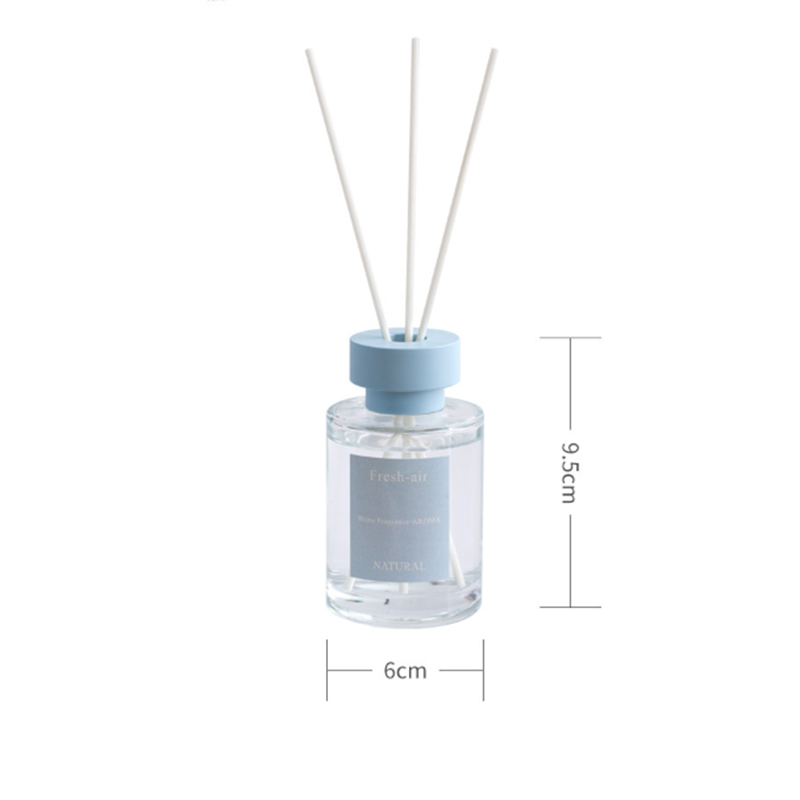 120ml Fire-Free Home Reed Diffuser with Multiple Natural FragrancesThis large-capacity reed diffuser offers a long-lasting scent without flame, suitable for bathrooms and other rooms. It includes several fragrance options like Norwegian Forest and lavender, and its wider neck supports moderate evaporation for a steady aroma.View Product →
Reed Count and Material
Reeds control how fast the fragrance is released and how long it lasts. A bathroom diffuser with fewer, thinner reeds produces a lighter scent and drains the bottle more slowly. More and thicker reeds create a stronger initial impression but use the oil faster. The practical approach is to buy a diffuser that comes with more reeds than you currently need, so you can remove a couple if the scent becomes too strong. Natural rattan is the standard material because it is consistent, renewable, and inexpensive. Some premium products use fibre-reinforced reeds or specially treated rattan that resists clogging in humid conditions, which is a genuine advantage in a bathroom.
Fragrance Family and Notes
The fragrance family is the most personal factor, and it defines how the bathroom feels every time you enter. For bathrooms, fresh and clean scent profiles are the overwhelming preference: eucalyptus, mint, lemon, tea tree, sea salt, cotton, and light florals such as jasmine or lavender. These profiles mask odours quickly without feeling heavy in a small room. Heavier profiles such as amber, vanilla, and sandalwood can work in large spa-like bathrooms, but they need more space to breathe; in a compact bathroom they can quickly become cloying. Multi-purpose fragrances that combine citrus freshness with a soft green note are a safe choice for retailers because they appeal to a wide customer base.
Bottle Design and Decorative Style
The bottle is the visible part of a bathroom diffuser, so its shape, colour, and finish should match the room. Standard transparent glass bottles suit minimal and modern bathrooms. Frosted glass and ceramic options blend into spa-style decors. Decorative elements such as dried flowers, rattan wraps, or pearl-style beads add a visual layer and are popular in retail settings because they turn the diffuser into a decoration rather than a utility item. The practical consideration is stability: a bottle with a heavy base or a wide footprint is harder to knock over, which matters in a room where bottles share counter space with soap and towels.
Common Bathroom Diffuser Types and Their Characteristics
Bathroom diffusers come in several formats, and the type you choose determines both the visual effect and the practical performance. Manufacturers have developed a range of bottle shapes, decorative styles, and capacities to meet different budgets, room aesthetics, and retail price points. Understanding the differences between these types helps consumers pick the right product for their home and helps procurement teams choose the right SKU for their market.
| Type | Characteristics | Best for | Typical capacity |
|---|---|---|---|
| Classic clear bottle | Transparent glass, simple cap, natural rattan reeds, minimal label | Modern and minimalist bathrooms | 100-180 ml |
| Dried flower decoration | Bottle contains or is wrapped with preserved flowers, reeds arranged among the stems | Private-label home decor, gift sets, retail display | 120-150 ml |
| Pearl or bead style | Beads or pearls covering the reeds above the bottle neck, often paired with a coloured bottle | Bedroom-styled bathrooms, feminine decor | 120-160 ml |
| Triangular or geometric bottle | Unusual bottle silhouette, often combined with dried flowers or tinted glass | Design-led retail ranges, photo-friendly packaging | 130-180 ml |
| Hotel-style large bottle | Oversized capacity, dark or tinted bottle, high reed count, secure collar | Hotels, serviced apartments, large family bathrooms | 200-250 ml |
The classic clear bottle remains the best-selling type because it is easy to produce, easy to label, and fits almost any bathroom shelf. Dried flower versions turn the diffuser into a decorative object and are one of the fastest-growing segments in home fragrance, because they photograph well and command a higher margin at retail. Pearl or bead styles are popular in Asian and European markets, where the visual element of the diffuser matters as much as the scent. Triangular bottles are a niche choice that differentiates a brand on social media and on the shelf. Hotel-style large bottles are the workhorse of the hospitality industry, selected by purchasing teams who need consistent performance and low maintenance.
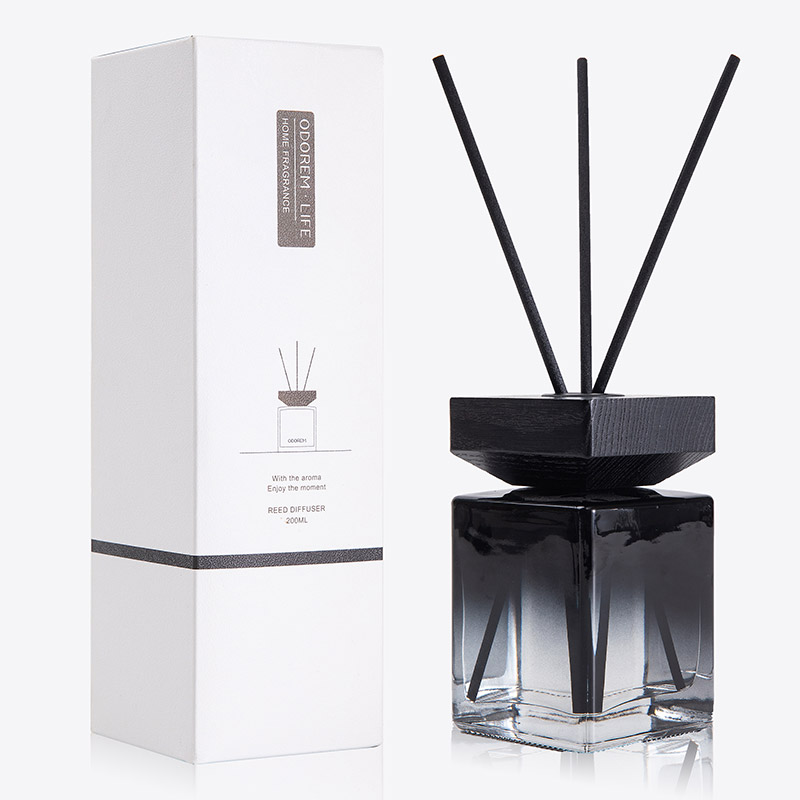
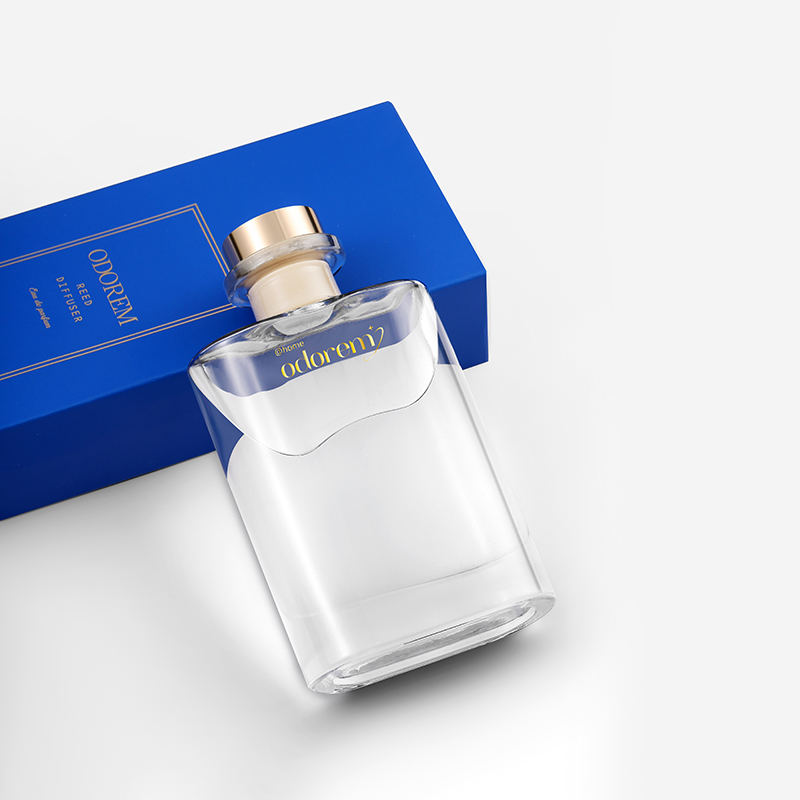 Transparent Bottle Household Reed Diffuser for Air FresheningA classic clear bottle design that fits any bathroom shelf. Made with plant-based essences, it helps absorb odors and provides long-lasting fragrance. The options include English Pear and other scents, and customization services are available.View Product →
How Capacity Affects Bathroom Diffuser Longevity
To see how capacity changes the real-life performance of a bathroom diffuser, compare the average time a filled bottle keeps producing a noticeable fragrance under normal bathroom conditions. The figures below assume a standard 3 to 5 m² bathroom with daily showering, an exhaust fan in use, and the diffuser placed on the vanity. The numbers also assume the reeds are flipped once per week and the bottle is kept away from direct air flow. Under these conditions, the relationship between capacity and service life is surprisingly steady. The chart summarizes typical performance across the most common bottle sizes.
Average fragrance life of a bathroom diffuser by bottle capacity
The most obvious conclusion from this chart is that a bathroom diffuser is a volume-driven product: the larger the bottle, the longer the usable lifetime, but the increase is not perfectly linear. A 100 to 120 ml bottle is the smallest format commonly used in a bathroom, and it works well in a compact powder room where the space can be scented quickly. Stepping up to 150 ml adds roughly two more weeks of consistent throw, which makes it a safe baseline for most residential bathrooms. The 180 and 200 ml formats are the sweet spot for daily use, because they deliver about two to three months of fragrance without requiring frequent replacement. For hotel housekeeping departments and wholesale buyers, the 250 ml option is particularly attractive, because it reduces replacement frequency, labour time, and packaging waste across a large number of rooms.
The chart also reveals an important secondary point: capacity alone does not guarantee a stronger scent. A narrow-neck bottle in a 250 ml format will still evaporate slower than a wide-neck 150 ml bottle, which is why bottle geometry matters as much as volume. Fragrance oil composition also affects the evaporation speed, since lighter top notes such as citrus evaporate more quickly than heavier base notes such as sandalwood. Reed count and thickness either accelerate or slow down the process further, so a 200 ml diffuser with four thick reeds may perform more aggressively than a 200 ml diffuser with three thin reeds. In purchasing decisions, this means retailers should not compare diffusers by millilitres alone; they should check the bottle neck diameter, the reed count, and the absorption properties of the reeds.
The practical takeaway for most users is to choose at least 180 ml for a bathroom that is used every day, and reserve smaller formats for guest washrooms or short-term display. Wholesale buyers should treat this chart as a planning tool for reorder cycles rather than a promise of exact calendar dates, because individual bathrooms vary in size, humidity, and air flow. When a supplier publishes a capacity and a recommended duration, ask what conditions those figures assume; a reputable manufacturer will explain how reed count and oil composition affect the result.
Application Scenarios and Selection Guide
The best bathroom diffuser for a single person living in a studio apartment is not the same as the best choice for a family of four, and neither matches the requirements of a hotel housekeeping team. Matching the product to the scenario is the fastest way to avoid wasted money and disappointing scent performance.
Small Powder Rooms and Guest Washrooms
A powder room or guest washroom is usually the smallest space in a home. In these rooms, the diffuser only needs to keep the air feeling fresh between occasional visits. A 100 or 120 ml bathroom diffuser with three reeds is sufficient, and the bottle can be small enough to fit on a corner shelf or behind the faucet. The scent should be light and fresh, such as eucalyptus or green tea, so that it does not feel overwhelming in a confined area. The decorative aspect matters here because a powder room is a place where guests may spend a few minutes and notice the details.
A family bathroom gets used many times a day, and it often has damp towels, wet floor mats, and occasional odours that need to be masked quickly. This is the scenario that demands a mid-to-large bathroom diffuser and a more assertive fragrance profile. A 150 to 200 ml bottle with five reeds is the practical choice. Citrus, mint, and sea-salt profiles work well because they refresh the air and do not clash with the cleaning products already in the room. Placement should be away from the shower head and the exhaust fan to avoid rapid oil depletion.
Hotel En-Suites and Serviced Apartments
In the hospitality industry, a bathroom diffuser is part of the guest experience and influences the overall cleanliness impression of the room. Housekeeping teams need a product that lasts, performs consistently, and does not require daily attention. A 200 to 250 ml hotel-grade diffuser with six or more reeds is the typical specification, often in a neutral or upscale scent such as lavender, white cotton, or cedarwood. For procurement, what matters most is the cost per usable week, the reliability of the reeds, and the absence of leakage during transport. A supplier that offers custom branding and contract filling is a significant advantage in this segment.
Spa-Style or Large Bathrooms
Large bathrooms with a bathtub, walk-in shower, or dressing area function more like a spa. These rooms have more air volume, so the diffuser needs a higher output, and the scent can be richer. A 200 ml or larger bottle, positioned on the vanity or a shelf away from the bath, provides a blanket of fragrance that complements the relaxing atmosphere. Scent profiles such as lavender, chamomile, and sandalwood are appropriate here because they are calming rather than energising.
|
Small powder room 100-120 ml capacity, 3 reeds, light citrus or green tea scent, compact bottle on a corner shelf. |
Shared family bathroom 150-200 ml capacity, 5 reeds, eucalyptus or mint profile, placed away from the exhaust fan. |
|
Hotel en-suite 200-250 ml capacity, 6+ reeds, lavender or white cotton scent, durable bottle for housekeeping. |
Spa-style bathroom 200 ml+ wide-neck bottle, 5-6 reeds, soft woods or chamomile, placed on a vanity away from the tub. |
The four scenarios above cover the majority of residential and hospitality applications. In every case, buying slightly more capacity than you think you need is a safer decision than buying too little, because a larger bottle gives you the flexibility to remove a reed if the scent is too strong. The reverse is not true: a small bottle with all its reeds in place can only produce a limited throw, and there is no way to make it last longer without reducing its performance.
Bathroom Diffuser Maintenance and Safety Tips
A bathroom diffuser is a low-maintenance product, but it is not a zero-maintenance product. A few minutes of care every week can double the reliability of the scent and keep the diffuser looking clean. This section covers the routine tasks that keep a reed diffuser working at its best in a bathroom environment.
Weekly care
Flip the reeds.
Wipe the bottle neck.
Check the liquid level.
Monthly care
Dust the reeds.
Clean the shelf area.
Adjust reed count if needed.
Every 2-4 months
Replace the reeds.
Refill the bottle.
Give the bottle a thorough clean.
Flip the Reeds on a Schedule
The single most effective maintenance step is flipping the reeds once every seven to ten days. When you flip them, the dry upper ends dip into the oil and become saturated, and the previously soaked lower ends face the air and release a burst of fragrance. This restores the scent throw and keeps the oil moving through the reeds. Be aware that this burst is strong at first, so flip the reeds in the morning rather than right before guests arrive, and give the scent time to settle.
Choose the Right Placement
Placement matters in a bathroom more than in any other room. Keep the diffuser at least one metre away from the shower entrance, the exhaust fan, and any open window. Direct air flow accelerates evaporation and drains the bottle faster, but it can also carry the fragrance out of the room before it has a chance to fill the space. A shelf, the back corner of the vanity, or the top of the toilet tank are generally safe spots. Also keep the bottle out of direct sunlight, which can degrade the fragrance oil and discolour the liquid.
Clean Up Spills and Wipe the Bottle
Fragrance oil can damage some countertop surfaces. If the bottle sweats or a few drops leak during a reed flip, wipe the bottle neck immediately with a dry cloth. Check the reeds occasionally for dust, which builds up faster in bathrooms. A simple wipe with a slightly damp cloth on the visible part of the reeds helps maintain the evaporation rate and keeps the product looking presentable in a room where guests may see it.
Safety Considerations for Children and Pets
Fragrance oil is not drinking water. If the bathroom is used by young children, keep the diffuser on a high shelf or inside a cabinet when not in use. The same applies to pets that like to chew on decorative objects; rattan reeds can be an attractive chew target. In the unlikely event that oil is spilled, clean it promptly. The absence of flame and heat makes the reed diffuser inherently safer than a candle, but it must still be treated as a scented chemical product.
When to Replace Reeds and Refill the Bottle
Reeds lose their effectiveness after two to four months of continuous use because their capillary channels become clogged with dust and oil residue. If you flip the reeds and the scent throw does not improve, it is time to replace them. Some suppliers sell reed replacement packs; others include reeds with the refill bottle. The liquid level is a helpful indicator for refill timing, but the scent is the real signal: when the room no longer holds a subtle fragrance after a flip, the bottle is nearly empty and it is time for a refill or a new unit.
Sourcing Bathroom Diffusers from a Manufacturer
For retailers, e-commerce brands, and hospitality buyers, a bathroom diffuser is not just a fragrance product; it is an SKU that must be consistent, compliant, and competitively priced. Working with an experienced manufacturer is the most direct way to achieve these three goals. This section explains what to look for in a bathroom diffuser manufacturer and why supplier credentials matter.
The OEM and ODM Model in Home Fragrance
The home fragrance industry is built on OEM and ODM relationships. In an OEM arrangement, the buyer specifies the design, the fragrance, and the packaging, and the factory produces to those specifications. In an ODM arrangement, the manufacturer proposes its own designs and the buyer selects from the existing product range, sometimes with minor customisation. Both models are common in the bathroom diffuser segment. The ODM model is often more efficient for smaller brands, because the factory already has tooling, packaging layouts, and tested fragrance formulas, which eliminates months of development time.
When evaluating a bathroom diffuser manufacturer, consider four dimensions: production scale, quality control, compliance certifications, and experience with international markets. A quick checklist for supplier qualification includes:
- Is the factory certified under BSCI or WCA social and workplace audits?
- Does the manufacturer offer ODM designs, or only OEM production to buyer drawings?
- What is the minimum order quantity for custom bathroom diffusers?
- Are the fragrance oils IFRA compliant for international retail?
- Can the factory deliver mixed containers with candles, room sprays, and other home fragrance products?
Production Scale and R&D Capability
The physical capacity of the factory determines whether the supplier can handle your order volume and still meet deadlines. A manufacturer with a dedicated production facility, multiple production lines, and a stated annual capacity is better positioned to serve a growing retail or wholesale account. R&D capability matters for a different reason: a bathroom diffuser line with new decorative styles, new bottle shapes, or new fragrance blends can give your brand a point of differentiation in a crowded market. A supplier that can move from a concept sketch to a sample in a short time is a valuable partner for seasonal product launches.
Quality Control and Certifications
Trust in the fragrance industry is built on consistency. The bottle should not leak, the reed absorption should be consistent from batch to batch, and the fragrance should smell the same from the first unit to the ten-thousandth. A manufacturer that follows a documented process from development, raw material control, production, quality inspection, and warehousing through to shipping is far less likely to deliver an inconsistent product. International certifications are a useful short-cut for assessing a supplier. BSCI and WCA factory audits confirm that the factory meets internationally recognised social compliance and workplace standards, which is a basic requirement for retailers in Europe and North America. Some manufacturers also hold fragrance-specific certifications such as IFRA compliance for the oils they use. Ask for these documents during the supplier qualification process.
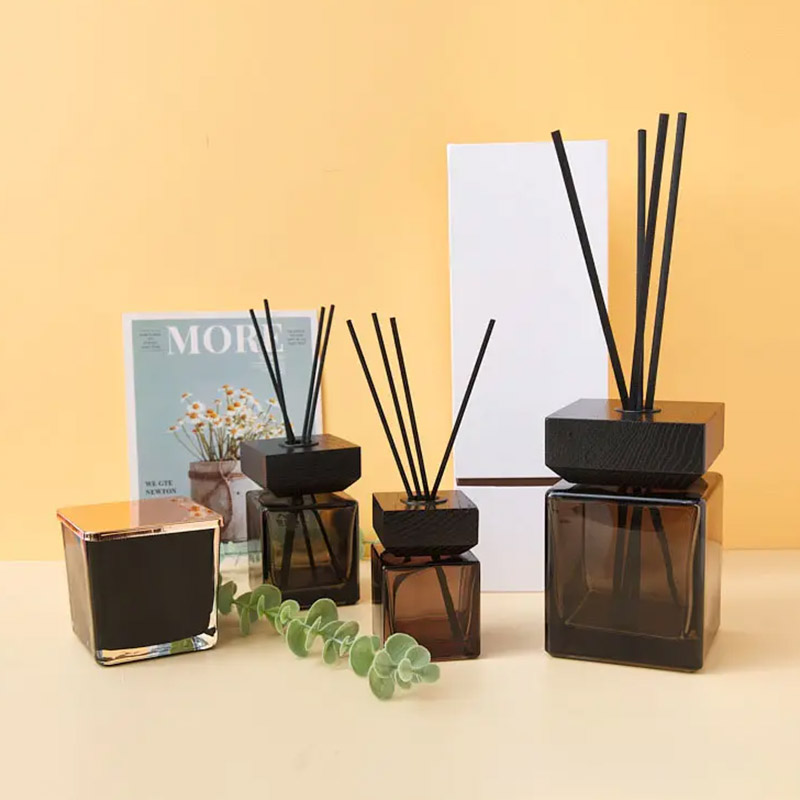 200ml Large Bottle Flameless Reed Diffuser with Slow-Release TechnologyThis larger 200ml bottle uses natural plant essences to eliminate smoke and mildew odors. Its slow-release technology ensures a persistent fragrance, helping to relax and improve sleep. Ideal for bathrooms with daily use, reflecting consistent performance.View Product →
Customisation Options for Retailers and Wholesalers
A bathroom diffuser can be customised at several levels. The bottle shape, colour, and label can carry your brand identity. The fragrance can be selected from the manufacturer's library or developed exclusively for your line. The reed count and cap design can be adjusted to suit the fragrance intensity you want. The packaging can be a simple box, a gift set, or a display-ready carton. For wholesale buyers, the most common options are custom filling volumes, private-label packaging, and mixed-container orders that combine bathroom diffusers with candles and other home fragrance products.
A Practical Example: What a Full-Service Supplier Looks Like
A manufacturer such as Ningbo Habest Home Co., Ltd. illustrates the profile of a full-service supplier. The company operates a 6,500 m² factory with five production lines, which gives it the capacity to handle mid-to-large orders across categories such as reed diffusers, scented candles, room sprays, and air fresheners. It has been in business since 2012 and supplies international customers including retailers and brands in Japan, the United States, Europe, and the United Kingdom. Its stated philosophy, "Trust comes from quality", is reflected in a control process that covers development, raw materials, production, inspection, warehousing, and transport. The factory has passed BSCI and WCA audits, confirming that its social compliance and workplace conditions meet international expectations. For a buyer looking for a reliable partner, these signals are more meaningful than a low price alone.
Related resources: Browse the full reed diffuser range, or read about the factory's quality commitment.
Frequently Asked Questions About Bathroom Diffusers
How long does a bathroom diffuser last?A standard bathroom diffuser lasts between 4 and 13 weeks, depending on the bottle capacity, the number of reeds, and the ventilation of the bathroom. A 120 ml bottle lasts about 4 to 6 weeks in a typical bathroom, while a 250 ml hotel-style bottle can last 11 to 13 weeks. Higher humidity and direct air flow will shorten the lifespan. |
Can I use a reed diffuser in a small windowless bathroom?Yes. A windowless bathroom is actually one of the best places for a reed diffuser, because there is less air exchange and the fragrance stays in the room longer. Use a lighter scent and monitor the intensity; in a closed bathroom, even a small 100 ml diffuser can fill the space quickly. |
How many reeds should I put in my bathroom diffuser?Start with the number of reeds supplied with the product. If the scent is too strong, remove one or two reeds. If it is too weak, flip the reeds more often or add one more reed if the product allows. More reeds create a stronger throw but consume the oil faster, so the right number is a balance between intensity and longevity. |
What is the best scent for a bathroom diffuser?Fresh, clean profiles work best in a bathroom: eucalyptus, mint, lemon, sea salt, green tea, jasmine, and lavender are the most popular choices. These scents quickly mask odours and do not feel heavy in a small, humid room. If the bathroom is large or spa-style, richer notes such as cedarwood and sandalwood can also work. |
Is a reed diffuser safe to use in the bathroom?Yes. A reed diffuser has no open flame, no heat source, and no electrical components, which makes it inherently safer than candles or plug-in air fresheners in a wet environment. Keep the bottle out of reach of children and pets, and keep the reeds away from the shower stream to avoid splashing. |
Can I refill a bathroom reed diffuser bottle?Yes. You can buy refill fragrance oil and pour it into the existing bottle, which is more economical and less wasteful. Replacement reeds should also be purchased, because the original reeds become clogged after two to four months and lose their ability to draw the oil upward. |


 INTERACT WITH US
- Phone:+86-15888548612
- Tel:+86-0574-88408268
- E-mail:[email protected]
- Address:312 Kemao Road, Jishigang Town, Haishu District, Ningbo City, Zhejiang Province, China.



