
 English
 Español
 عربى
عربى
How Does a Reed Diffuser Work? Complete Guide
Content
- 1 Reed Diffuser Basics: What This Home Scent Solution Delivers
- 2 Common Types of Reed Diffusers and Their Key Characteristics
- 3 How a Reed Diffuser Works: Structure and Diffusion Principle
- 4 Reed Material Comparison: Rattan, Synthetic Fiber, and Bamboo
- 5 Application Scenarios and Selection Guide for Reed Diffusers
- 6 Reed Diffuser vs Other Home Fragrance Formats: A Detailed Comparison
- 7 Fragrance Longevity and Maintenance Guidance
- 8 Reed Diffuser Manufacturing Standards and Sourcing Considerations for Businesses
- 9 Frequently Asked Questions About Reed Diffusers
- 9.1 Q1: How long does a reed diffuser typically last?
- 9.2 Q2: How many reeds should be used for a normal-size room?
- 9.3 Q3: Should reed diffuser sticks be flipped regularly?
- 9.4 Q4: What is the difference between natural and synthetic reeds?
- 9.5 Q5: Can a reed diffuser be used safely around pets and children?
A reed diffuser is a flameless home fragrance tool that uses a set of thin reed sticks to draw scented oil upward through natural capillary action, then release that fragrance steadily into the surrounding air without heat, electricity, or an open flame. This makes a home scent reed diffuser one of the simplest ways to maintain a consistent background fragrance in a living room, bedroom, hallway, or small office, since the diffusion process runs continuously once the reeds are placed in the oil and requires no daily attention.
Because a reed diffuser relies on evaporation rather than combustion, it is commonly chosen by households and hospitality businesses that want a low-maintenance alternative to candles or plug-in air fresheners. An aroma reed diffuser oil blend, paired with the right reed material and stick count, can be adjusted to suit a small bathroom or a larger open-plan living area, which is why understanding diffuser types, structure, and care matters before selecting one. The sections below walk through how these diffusers are built, how their performance compares across formats, and what buyers and sourcing teams should look for when evaluating a diffuser for personal or commercial use.
Reed Diffuser Basics: What This Home Scent Solution Delivers
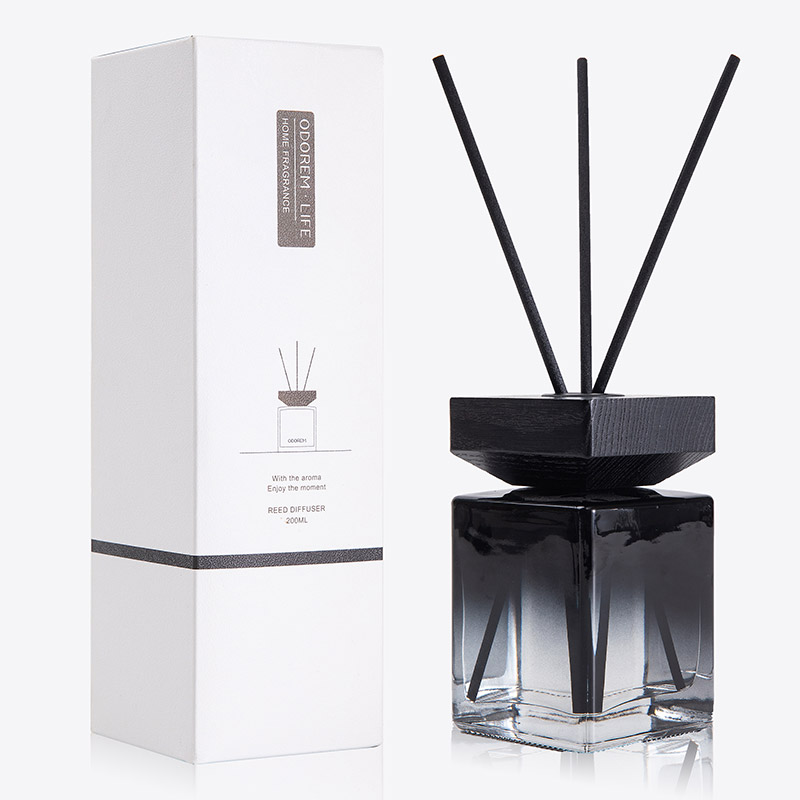
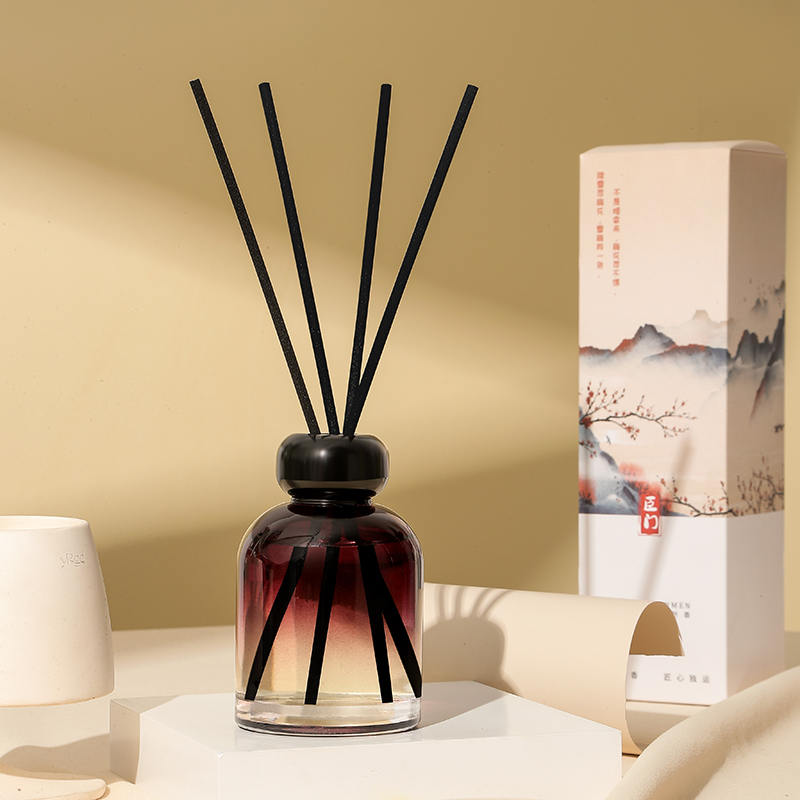
A typical reed diffuser set includes three components: a bottle or vessel, a scented liquid base, and a bundle of reed sticks. The liquid base generally combines a carrier such as a light oil or alcohol-based solvent with a fragrance concentrate, and the ratio between carrier and concentrate has a direct effect on how strong and how long-lasting the scent throw will be. Once the reeds are inserted, the porous structure of the sticks draws liquid upward, and the exposed surface area at the top of each reed allows the fragrance to evaporate gradually into the room.
Compared with scented candles, a diffuser of this type does not require supervision, does not produce soot, and can be placed safely in areas where an open flame would be unsuitable, such as near curtains, on a bookshelf, or in a child-accessible room. Compared with electric or ultrasonic diffusers, a reed diffuser needs no power source, which makes it a practical choice for hallways, guest bathrooms, closets, and hospitality settings where an outlet is not always nearby. This combination of passive operation and consistent fragrance output is the main reason reed diffusers remain a staple category within the broader home fragrance market.
- No flame, no heat source, and no electrical connection required for operation
- Fragrance intensity can be adjusted by changing the number of reeds exposed to the air
- Suitable for continuous, low-level scenting rather than short bursts of fragrance
- Commonly used in residential rooms, guest accommodations, and retail display areas
Key takeaway: a reed diffuser delivers steady, passive fragrance without flame or power, which is why it remains a preferred format for continuous home and hospitality scenting.
Common Types of Reed Diffusers and Their Key Characteristics
Reed diffusers are generally grouped by vessel design, reed material, and intended use rather than by fragrance alone. A home scent reed diffuser for a living room usually sits in a mid-size glass bottle with six to ten reeds, while a compact version designed for a car, drawer, or small bathroom may use only two or three reeds in a smaller container. Gift-oriented sets often pair a decorative bottle with a shorter reed count, since the visual presentation matters as much as the diffusion volume in that context.
Classic Rattan Reed DiffuserUses natural rattan reeds and a mid-size bottle, suited to living rooms and bedrooms where a moderate, even scent throw is preferred. Fiber and Synthetic Reed Diffuser
Uses manufactured fiber reeds with more uniform pore structure, often chosen where a stronger and more consistent scent throw is wanted. Compact and Travel Reed Diffuser
A smaller bottle and fewer reeds designed for cars, drawers, closets, and small bathrooms where only light scenting is needed. Gift and Seasonal Reed Diffuser Set
Combines a decorative vessel and packaging with a moderate reed count, positioned for gifting occasions and seasonal retail display.
| Diffuser Type | Typical Reed Count | Common Setting | Typical Scent Throw |
|---|---|---|---|
| Classic Rattan | 6 to 8 | Living room, bedroom | Moderate |
| Fiber or Synthetic | 8 to 10 | Larger open rooms | Strong |
| Compact or Travel | 2 to 3 | Car, drawer, small bathroom | Light |
| Gift or Seasonal Set | 5 to 7 | Entryway, gifting occasions | Moderate |
Reed count is one of the clearest levers for adjusting how far a diffuser's fragrance will travel across a room. Before looking at the chart below, it helps to understand a few points about how this relationship generally behaves. Each additional reed adds exposed surface area at the top of the stick, which increases the rate of evaporation into the air. This effect is not perfectly linear, since a room's airflow, ceiling height, and furnishings all influence how far a scent actually spreads. Even so, the general pattern of more reeds producing wider coverage holds across most rattan and fiber reed formats used in home settings.
The chart above shows a typical progression from a compact three-reed configuration up to a twelve-reed configuration, with approximate room coverage rising alongside reed count. At the lower end, a three-reed diffuser is generally appropriate for a small bathroom, closet, or car interior, where only light scenting is needed and strong fragrance could feel overwhelming in an enclosed space. As the reed count moves to six or eight, coverage expands to suit a bedroom or medium living room, which is the range most commonly selected for everyday home use. Ten to twelve reeds are typically reserved for larger open-plan areas, entryways, or commercial spaces such as a hotel lobby or retail showroom, where a broader and more noticeable scent presence is desired. It is worth noting that coverage figures in this chart are approximate and illustrative, since actual results vary with room ventilation, temperature, and the specific fragrance oil concentration used. Buyers sourcing a diffuser product line for multiple room types often stock more than one reed-count configuration so that customers can match the format to the size of their intended space. This is also a practical consideration for a reed diffuser manufacturer or private-label buyer, since offering a small range of reed counts within one collection allows a single fragrance formulation to serve several room sizes without reformulating the oil itself. In practice, many households start with a mid-range six-to-eight reed set and adjust the number of reeds exposed to the air over time rather than purchasing a new product when their preferred intensity changes.
How a Reed Diffuser Works: Structure and Diffusion Principle
The mechanism behind a reed diffuser is capillary action, the same physical process that allows a paper towel to draw up spilled liquid. When a reed stick is placed into the scented oil, the liquid is pulled upward through tiny internal channels in the reed material, moving against gravity without any pump or motor. Once the liquid reaches the exposed upper portion of the reed, it spreads across the surface and evaporates into the surrounding air, carrying the fragrance with it as it does so.
The Reservoir and Oil BaseThe bottle holds the fragrance oil blend, which combines a carrier solvent with fragrance concentrate. The carrier controls how easily the liquid travels through the reed, while the concentrate determines the strength and character of the scent released. |
The Reed SticksNatural rattan reeds have an off-center pith channel that draws liquid efficiently, while fiber reeds use engineered channels for more consistent uptake. Reed material affects both diffusion speed and how long a set of reeds remains effective before replacement. |
Flipping the reeds periodically exposes a fresh, saturated section of each stick to the air, which restores a stronger scent throw once the exposed tips have dried out or become coated with dust. This is why manufacturers commonly recommend turning the reeds every one to two weeks rather than leaving the same ends facing upward for the entire life of the product. The number of reeds used and how deep they are inserted also influence the rate of diffusion, since more reeds and greater immersion depth generally increase the volume of oil that can be drawn upward at any given time.
Key takeaway: diffusion relies entirely on capillary action and evaporation, so reed material, reed count, and periodic flipping are the main factors that control scent output.
Reed Material Comparison: Rattan, Synthetic Fiber, and Bamboo
The material used for the reed sticks is one of the most overlooked factors in overall diffuser performance, yet it has a meaningful impact on absorption speed, consistency, and how long the reeds continue to function well. Natural rattan reeds are prized for a soft, gradual scent release and a look that suits many home interiors. Synthetic fiber reeds are engineered with more uniform internal channels, which tends to produce a stronger and more predictable diffusion rate. Bamboo reeds sit between the two, offering a natural appearance with moderate absorption characteristics. Before comparing these three options directly, it is useful to look at how they perform across several practical dimensions side by side.
The radar chart above compares three common reed materials across five practical dimensions, using a relative scale rather than fixed measurements, since actual results depend on the specific oil formulation used. Synthetic fiber reeds generally score highest on absorption rate, diffusion consistency, and scent throw, which explains why they are frequently selected for spaces that require a stronger or more even fragrance presence. Natural rattan reeds show strong eco-friendliness and a moderate, gradual scent throw, which suits buyers who prefer a natural material and a softer fragrance experience over time. Bamboo reeds fall in the middle across most dimensions, offering a natural look with more balanced performance than either of the other two options. Durability differences are generally smaller than absorption differences, since all three materials will eventually require replacement once the channels become saturated or clogged with residue. Eco-friendliness is the dimension where synthetic fiber trails furthest behind, since manufactured fiber reeds are typically made from petroleum-based materials rather than a renewable natural resource. For a product line aimed at environmentally conscious buyers, rattan or bamboo reeds are usually the more suitable default choice, while fiber reeds are better suited to spaces where a stronger scent throw is the primary requirement. Many home scent reed diffuser collections offer both a natural rattan version and a fiber version of the same fragrance so that the end customer can select based on personal preference rather than being limited to a single reed type. Sourcing teams evaluating a reed diffuser supplier often ask about available reed material options for exactly this reason, since offering both formats broadens the appeal of a single fragrance line. Ultimately, the right reed material depends on the intended room size, the desired scent intensity, and whether a natural material is a priority for the end buyer.
Application Scenarios and Selection Guide for Reed Diffusers
Selecting the right reed diffuser starts with matching room size and setting to reed count and fragrance strength. A bedroom or home office generally calls for a gentler, less concentrated scent, since fragrance sits closer to where people spend extended time. A hallway, entryway, or larger living area can generally support a stronger formulation without becoming overwhelming, since these spaces have more air volume and often more airflow from doors and windows.
Residential Selection Tips
|
Commercial and Hospitality Tips
|
Reed diffusers appear across a wide range of settings, and understanding where they are most commonly used helps explain why product ranges are typically built around a few standard configurations. Residential use remains the largest single application, since a diffuser suits nearly any room in a home without requiring installation or power access. Hospitality businesses such as guest accommodations frequently rely on reed diffusers for common areas and guest rooms, since they provide a consistent ambient scent without staff needing to manage an open flame. Retail environments and showrooms use fragrance diffusers to shape the customer experience within a physical space. Gifting and seasonal retail also represent a meaningful share of overall use, particularly around holiday periods when scented gift sets are popular. The chart below illustrates roughly how these four categories typically divide.
The donut chart above breaks down typical reed diffuser demand across four broad application categories, based on general patterns observed across the home fragrance industry rather than a single fixed data source. Residential use accounts for the largest share, which aligns with the diffuser's core appeal as a low-maintenance, always-on fragrance solution for everyday living spaces. Hospitality applications form the second-largest category, reflecting how frequently reed diffusers are chosen for guest rooms, lobbies, and common areas where a consistent ambient scent supports the overall guest experience. Retail and showroom use makes up a smaller but still significant portion, since physical retailers often use fragrance to reinforce a brand atmosphere within their stores. Gifting and seasonal use represents the smallest of the four segments, though this category tends to see sharp seasonal spikes around holidays and gift-giving occasions rather than staying flat throughout the year. These four categories are not mutually exclusive in practice, since a single fragrance formulation is frequently packaged differently to serve more than one segment at once. A wholesale buyer sourcing a diffuser range for multiple retail channels often needs product configurations that can flex across residential, gifting, and retail display use simultaneously. Understanding this distribution also helps explain why many manufacturers offer both a standard home format and a smaller gift-oriented format within the same fragrance line. For businesses evaluating a reed diffuser wholesaler relationship, matching the right configuration to the intended sales channel is often as important as the fragrance itself.
Key takeaway: matching reed count and fragrance strength to the specific room type and application is the most reliable way to select an appropriate reed diffuser.
Reed Diffuser vs Other Home Fragrance Formats: A Detailed Comparison
Reed diffusers are one of several common home fragrance formats, alongside scented candles, electric or ultrasonic diffusers, and aerosol or pump sprays. Each format has different strengths depending on whether the goal is continuous background scenting, a short burst of fragrance, or an ambient atmosphere paired with light or sound. The table below outlines how these formats generally compare across several practical dimensions relevant to both home and commercial buyers.
| Format | Continuous Scent | Flame-Free | Power Needed | Routine Maintenance |
|---|---|---|---|---|
| Reed Diffuser | Yes | Yes | No | Low |
| Scented Candle | While burning only | No | No | Moderate |
| Electric or Ultrasonic Diffuser | While powered | Yes | Yes | Moderate |
| Aerosol or Pump Spray | No | Yes | No | Frequent reapplication |
Reed diffusers stand out for combining continuous scent output with flame-free operation and no dependence on electricity, a combination that no other format in the table fully matches. Scented candles offer a pleasant, sometimes stronger fragrance while burning, but they require supervision, cannot be left unattended, and stop releasing fragrance once extinguished. Electric and ultrasonic diffusers can distribute scent more actively and sometimes cover a larger area, but they depend on a power outlet and typically need periodic cleaning to prevent residue buildup inside the device. Aerosol and pump sprays deliver an immediate, strong burst of fragrance but fade quickly and require repeated reapplication throughout the day, making them less suited to spaces where a steady ambient scent is the goal. For settings where reliability and minimal upkeep matter most, such as guest rooms, hallways, and closets, a reed diffuser generally offers the most practical balance of these factors.
Fragrance Longevity and Maintenance Guidance
Fragrance intensity from any reed diffuser naturally declines over time as the oil reservoir is gradually drawn up and evaporated. Understanding this decay pattern helps set realistic expectations for how long a bottle will remain noticeably fragrant, and it also explains why concentration level at the time of purchase makes a measurable difference in overall usage duration. Higher-concentration aroma reed diffuser oil blends generally start stronger and decline more slowly than standard-concentration blends, though both formats follow the same general downward curve over an extended usage period. The chart below compares a typical intensity curve for a high-concentration formulation against a standard-concentration formulation across an eight-week period.
Both curves in the chart above trend downward over the eight-week period, which reflects the expected gradual depletion of fragrance oil as it evaporates through the reeds. The high-concentration line starts and remains noticeably higher than the standard-concentration line at every point on the chart, illustrating how concentrate ratio directly affects perceived scent strength throughout the product's usage life. The gap between the two lines narrows slightly by week eight, since both formulations approach a lower baseline as the reservoir becomes depleted regardless of starting concentration. The standard-concentration line declines more steeply in the earlier weeks, which suggests that lower-concentration blends may benefit more from early reed flipping to help sustain noticeable fragrance for longer. Neither curve reaches zero within the eight-week window shown, though both formulations would be expected to continue declining beyond this period until the oil reservoir is exhausted. This pattern is consistent with general industry understanding of how evaporation-based fragrance delivery behaves, since the rate of diffusion naturally slows as less oil remains available near the reed's base. For buyers comparing options, this data point suggests that a higher-concentration aroma reed diffuser oil may offer a longer noticeable scent life, which can be a relevant factor when planning replacement schedules for hospitality or retail settings. Regularly flipping the reeds, as noted earlier, can help offset some of this natural decline by exposing fresher saturated material to the air. Storing the diffuser away from direct heat and sunlight also helps slow evaporation rate, extending the effective usage period shown in the chart. Recognizing this decay pattern is useful for setting customer expectations, since a diffuser that seems to weaken by week six or seven is following an entirely normal and expected pattern rather than indicating a product issue.
Practical Maintenance Tips
Flip Reeds WeeklyTurning the reeds every one to two weeks refreshes the exposed surface and helps maintain a steadier scent throw. Avoid Direct Sunlight
Placing the bottle away from windows and heat sources slows evaporation and helps protect the oil's fragrance quality. Replace Reeds When Needed
Reeds that appear clogged or discolored can be swapped for fresh ones to restore stronger diffusion. Keep the Bottle Upright
Stable, level placement on a flat surface prevents spills and keeps reeds evenly saturated.
Reed Diffuser Manufacturing Standards and Sourcing Considerations for Businesses
Businesses sourcing a reed diffuser range for retail, hospitality, or gifting channels typically evaluate a potential reed diffuser manufacturer or reed diffuser supplier on several practical factors beyond fragrance alone, including production consistency, packaging options, available reed materials, and the ability to support recurring order volumes. Working with an established reed diffuser wholesaler or manufacturer that maintains dedicated production lines and consistent quality control procedures can help reduce variability between production batches, which matters for brands that need their fragrance and bottle presentation to remain consistent across repeat orders.
Ningbo Habest Home Co., Ltd. was established in Ningbo, China in 2012, and the factory covers 6,500 square meters with five production lines supported by professional equipment. The company has continuously supplied home fragrances, candles, and other home decoration products to customers across multiple regions, with a focus on diversified product development and rapid research and development capability. Long-term business relationships have been developed with customers across Japan, the United States, the European Union, and the United Kingdom, reflecting the kind of sustained, repeat-order relationships that a wholesale diffuser buyer typically looks for when evaluating a long-term manufacturing partner.
The company's operating philosophy centers on the idea that trust comes from quality, which is reflected in close attention to every stage of production, from initial development and raw material control through manufacturing, quality control, storage, and transportation. For a business evaluating a home scent reed diffuser supplier, this kind of end-to-end process oversight is generally a meaningful indicator of production reliability, since consistency in raw material sourcing and quality control directly affects how uniform the finished fragrance and reed performance will be across large order volumes. Buyers building a private-label or wholesale diffuser program often prioritize manufacturers capable of supporting diverse formats, from classic rattan reed sets to fiber reed and gift-set configurations, within a single supply relationship, which reduces the complexity of managing multiple vendors for different product lines.
Key takeaway: consistent quality control across raw material sourcing, manufacturing, and storage is central to reliable reed diffuser production for wholesale and private-label buyers.
Frequently Asked Questions About Reed Diffusers
Q1: How long does a reed diffuser typically last?Most standard-size reed diffuser bottles last several weeks to a few months, depending on reed count, room airflow, and oil concentration. Higher-concentration blends and fewer exposed reeds generally extend the usable period. |
Q2: How many reeds should be used for a normal-size room?Six to eight reeds generally suit a standard bedroom or living room, while smaller spaces such as bathrooms work well with two to three reeds and larger open areas may use ten or more. |
Q3: Should reed diffuser sticks be flipped regularly?Yes, flipping the reeds every one to two weeks exposes a fresher saturated surface to the air, which helps maintain a steadier and stronger scent throw over time. |
Q4: What is the difference between natural and synthetic reeds?Natural rattan reeds tend to offer a softer, more gradual scent release with a natural appearance, while synthetic fiber reeds typically provide stronger and more consistent diffusion due to more uniform internal channels. |
Q5: Can a reed diffuser be used safely around pets and children?Reed diffusers avoid open flame and hot surfaces, which reduces certain risks compared with candles, though the bottle and oil should still be placed out of reach to prevent spills or accidental contact. |


 INTERACT WITH US
- Phone:+86-15888548612
- Tel:+86-0574-88408268
- E-mail:[email protected]
- Address:312 Kemao Road, Jishigang Town, Haishu District, Ningbo City, Zhejiang Province, China.



