
 English
 Español
 عربى

A Practical Guide to room sprays: Uses, Selection, and Key Considerations
Content
- 1 Why Room Sprays Live or Die on the Specification Sheet
- 2 Pump, Aerosol, Continuous Spray and Passive Formats Compared
- 3 How Much Fragrance Oil a Room Spray Really Needs
- 4 Solvent Choice: Alcohol, Glycol and Water-Based Systems
- 5 Scent Throw, Longevity and the Re-Spray Interval
- 6 Compliance: What Buyers Must Confirm Before a Label Goes to Print
- 7 Hardware: Bottles, Pumps, Valves and Leak Risk
- 8 Room-by-Room Briefing: Matching Formats to Spaces
- 9 The OEM and ODM Route: From Brief to Bulk in Ten Steps
- 10 Factory Qualifications That Actually Shorten a Retail Onboarding
- 11 MOQ, Costing and Landed Price
- 12 Cross-Merchandising a Room Spray Program
- 13 Six Sourcing Mistakes That Show Up at Store Level
- 14 Frequently Asked Questions About Room Sprays
- 14.1 What is the difference between a room spray and a linen mist?
- 14.2 How many sprays does a 100 ml room spray bottle deliver?
- 14.3 Do room sprays have to be alcohol-based?
- 14.4 What is a typical minimum order quantity for private label room sprays?
- 14.5 Are room sprays safe to use around children and pets?
- 14.6 Can one fragrance be used across sprays, diffusers and candles?
- 14.7 How long does it take to develop a custom room spray?
- 15 Working With a Room Spray Manufacturer
A buyer closing out a spring home-fragrance plan usually has two room spray samples on the desk. One smells bright and expensive on the blotter and disappears from the air within ninety seconds. The other smells flat on paper, yet forty minutes later the meeting room still carries it. Almost every sourcing decision in this category comes down to that gap between how a room spray smells in the bottle and how it behaves in an actual room.
Room sprays look like the simplest item in a home fragrance range: a bottle, a pump or a valve, a fragrance. In practice they are the format where an incomplete specification surfaces fastest, because the shopper makes the judgement in a single press of the actuator. There is no wick to slowly build a scent, no flame to warm the wax, no second chance after a weak first spray.
Ningbo Habest Home Co., Ltd. has been producing home fragrance in Ningbo, China since 2012, working as an ODM and OEM manufacturer for retail chains, brand owners and distributors across Japan, the United States, the EU and the UK. Our 6,500 square metre factory runs five production lines, and our working motto is a short one: trust comes from quality. That experience is why we treat a room spray as an engineered product rather than a fragrance poured into a bottle.
Why Room Sprays Live or Die on the Specification Sheet
Start with the uncomfortable conclusion: in a room spray, the fragrance concentrate typically accounts for less than half of what the customer actually experiences. The rest is decided by the carrier, the dose per stroke, the spray pattern, the drying behaviour on fabric and the integrity of the seal between bottle and pump.
A finished room spray is built from a small number of parts that must agree with each other:
- Fragrance concentrate. The oil blend, usually with a declared allergen list and an IFRA conformity statement for the air freshener category.
- Carrier or solvent. Ethanol, dipropylene glycol, isopropyl myristate or a water-based emulsion, each with a different drying speed and odour impact.
- Functional additives. Solubilisers and preservatives in aqueous systems, sometimes an anti-corrosion agent.
- Propellant. Only in aerosols, and only where the market regulations permit it.
- Delivery hardware. Pump, valve, actuator, dip tube, gasket and the bottle neck finish that ties them together.
The failure pattern we see most often is a buyer who approves a fragrance oil in isolation and then discovers, three samples later, that the same oil at a different load in a different solvent leaves a wet mark on a velvet cushion or clogs a fine mist actuator after two weeks in a warm warehouse. Changing one element in this chain usually forces a change in the others.
This is also why two suppliers can quote the same fragrance name and deliver very different products. The name of a scent tells you almost nothing. The percentage, the solvent, the pump output and the bottle finish tell you everything.
Pump, Aerosol, Continuous Spray and Passive Formats Compared
Before choosing a fragrance direction, decide which delivery mechanism fits the shelf price, the market and the way the product will be used. Each format carries its own cost structure, its own logistics class and its own customer expectation. The comparison below is indicative rather than fixed, because actual figures move with the brief and the destination market.
| Format | How it delivers | Typical fragrance load | Main cost driver | Best-fit use |
|---|---|---|---|---|
| Pump room spray | Manual fine mist, roughly 0.08 to 0.15 ml per stroke | 3 to 8 percent | Fragrance oil and the pump plus bottle set | Quick refresh of living rooms, bathrooms, guest rooms |
| Aerosol air freshener | Propelled spray with a wide, fast plume | 1 to 4 percent | Tinplate can, valve and propellant filling line | Large rooms, hospitality corridors, high-traffic retail |
| Continuous or bag-on-valve spray | Pressurised spray that works at any angle | 2 to 5 percent | Bag-on-valve assembly and filling complexity | Hard-to-reach corners, car interiors, on-the-go mists |
| Water-based linen and fabric mist | Soft mist with a solubilised fragrance | 1 to 4 percent | Solubiliser plus preservative, and fabric testing time | Bedding, curtains, upholstery, sleep and laundry themes |
| Solid air freshener and aroma beads | Passive evaporation, no actuator at all | 3 to 10 percent | Container and the evaporation control of the base | Closets, drawers, small rooms, cars, gift sets |
Two practical notes follow from this table. First, aerosol formats usually carry a lower fragrance load but a much higher perceived intensity, so the cost per smelling moment is not the same as the cost per gram of oil. Second, a pressurised aerosol is classified as dangerous goods for transport, which changes freight and storage and is often a bigger surprise to a first-time buyer than the unit price.
For buyers building a full home fragrance plan rather than a single item, it helps to review the non-pressurised side of the range at the same time, since it can share shelf space and even share a fragrance name.
 Solid Fragrance Range for Passive Home ScentReview this non-pressurised range to pair solid waxes, gels or creams with a pump spray under one fragrance family.View Product →
Many of our ODM customers end up with a two-format entry: a pump spray for the demonstrated use and a passive product for the quiet corners, both under one fragrance family. That pairing gives the shopper an obvious reason to buy twice without adding a second fragrance development cost.
How Much Fragrance Oil a Room Spray Really Needs
Fragrance load is the number most often argued about in a sampling round, and also the number most often misunderstood. A high percentage does not automatically mean a stronger room presence, and a low percentage does not automatically mean a cheaper smell. What matters is how the oil sits in the carrier, how fast the liquid leaves the actuator and how volatile the top notes are.
The chart below shows the fragrance load ranges we commonly work with across home fragrance formats. It is a planning reference for a first brief, not a target to hit blindly, since a heavy resinous oil and a light citrus oil behave very differently at the same percentage.
1 to 3 percent
1 to 4 percent
3 to 8 percent
6 to 10 percent
15 to 25 percent
Read the chart as a budget map rather than a quality scale. A reed diffuser can carry five times the fragrance load of an aerosol and still feel gentler in the room, because it releases passively over weeks instead of all at once. A pump room spray sits in the middle and offers the best balance for buyers who want a noticeable first impression at a moderate oil cost.
In our sampling work, most pump room sprays settle between 3 and 6 percent, with the upper end used for fragrances built on heavy base notes that need more material to register. Pushing a light citrus blend to 8 percent often makes it harsher instead of stronger, because the top notes dominate and the dry-down collapses.
The load also drives cost directly. On a 100 ml bottle, moving from 4 to 8 percent roughly doubles the fragrance cost component, which is why a buyer should always ask for a costed breakdown at two or three load levels instead of approving a single sample.
Solvent Choice: Alcohol, Glycol and Water-Based Systems
The carrier decides how the spray feels in the air and what happens after it lands. It also decides the shipping documents, which is a detail that catches new buyers off guard. There is no universally correct carrier, only a carrier that matches the claim on the label.
- Ethanol. Fast drying, sharp projection and usually the brightest opening. It carries a flammable liquid classification for transport, and the alcohol smell must be masked well at higher loads.
- Dipropylene glycol or similar glycols. Slower release and a softer landing, well suited to heavy woods and amber. The mist can leave a visible wet film, so it is rarely the right choice for fabric mists.
- Isopropyl myristate and light emollient esters. A middle path with good fabric tolerance and a clean feel, though cost is higher than ethanol.
- Water-based emulsions. The lowest raw material cost and the easiest story for non-flammable claims. They require a solubiliser and a preservative, and they are the systems most sensitive to temperature during storage and transport.
For water-based systems, phase stability is the test that matters. A batch that looks perfect on day one can separate after two weeks at 45 degrees Celsius, and the separation shows up in the field as a clogged nozzle or a cloudy bottle on the shelf. We run accelerated stability on every aqueous brief before any production commitment, and we keep a retention sample from each batch.
Alcoholic systems bring a different checklist. Flash point, UN number, packaging group and the limited-quantity option all need to be settled before the freight quote is credible, and label artwork must carry the correct hazard information for the destination market. A buyer who plans the label after the formula almost always pays for a reprint.
Scent Throw, Longevity and the Re-Spray Interval
Two different questions get mixed up in every room spray review: how strong the first spray feels, and how long the room still smells of it. The first is driven by top notes and droplet size. The second is driven by base notes, fixatives and the ventilation of the room.
A spray with small droplets and a high proportion of volatile citrus or green notes gives a big first impression and a short tail. Adding fixatives such as musks or resins extends the tail but can flatten the opening. Balancing the two is the real formulation work, and it is why a sensory panel matters more than a gas chromatography report when you are judging a room spray.
If the packaging is going to promise a re-spray interval, define the test conditions before the claim is written. In our experience a workable protocol looks like this:
- A room of roughly 20 to 25 square metres with a ceiling around 2.4 metres and normal ventilation.
- A fixed number of strokes, usually two or three, delivered at a defined distance and height.
- A panel of at least five people scoring intensity at 5, 15, 30 and 60 minutes.
- The same protocol repeated on a second day, because room temperature alone can shift results noticeably.
Claims such as long lasting or all day freshness are marketing statements that need either test data or careful wording. In most markets a soft phrasing like a fresh feeling that returns with each spray is safer than a hard number, and it protects the retailer as much as the manufacturer.
Humidity and airflow matter as much as the formula. A guest bathroom with an extractor fan will clear a spray far faster than a carpeted bedroom, so a product tested only in a closed meeting room can feel weak on the shop floor comparison.
Compliance: What Buyers Must Confirm Before a Label Goes to Print
Compliance is the least glamorous part of a room spray project and the part most likely to delay a launch. The reliable approach is to confirm the destination market and the exact product classification at the brief stage, not at the artwork stage.
The documents we prepare for a room spray shipment usually include the following, and buyers should expect to see all of them from any serious supplier:
- An IFRA conformity certificate for the air freshener category, covering the fragrance concentrate as supplied.
- A full allergen declaration so the label can meet the classification and labelling rules of the destination market.
- A safety data sheet in the language required by the market, updated when the formula changes.
- Accelerated stability and packaging compatibility reports for the finished product.
- Transport documentation, including dangerous goods paperwork where the alcohol content or the propellant requires it.
- Artwork proof signed against the actual formula, not against an earlier sample.
Two regulatory areas deserve early attention. Volatile organic compound limits differ by jurisdiction and by product sub-category, and they can rule out an alcohol-rich formula in some markets entirely. Product safety frameworks also continue to tighten, with general product safety rules in the EU now placing clearer obligations on the responsible economic operator and on traceability information. A supplier that can name the responsible party quickly is a supplier that has done this before.
Label artwork itself is a common source of reprints. Hazard symbols, signal words, allergen names, nominal volume, batch code and importer details all have to be correct in the destination language, and artwork that was approved for a candle seldom transfers cleanly to a pressurised spray.
Hardware: Bottles, Pumps, Valves and Leak Risk
Hardware is where a well-formulated room spray turns into a return. A pump that delivers an uneven pattern, a dip tube cut too short, or a gasket that swells in ethanol will all end up as a customer complaint on a review page rather than as a laboratory note.
The key numbers to agree in the specification are not complicated, but they must be written down:
- Neck finish. Standard screw necks such as 20/410 or 24/410 keep tooling cost low, while crimp-on valves are used for aerosols. A mismatch here means no pump on the market will fit properly.
- Dose per stroke. Commonly between 0.08 and 0.15 ml, which on a 100 ml bottle gives roughly 650 to 1,200 sprays and directly shapes the customer perception of value.
- Spray pattern and particle size. A wide cone suits room treatment, while a tighter pattern is better for targeted fabric use. Very fine mists need a lower viscosity liquid and a clean nozzle.
- Dip tube length. Cut to reach the base of the bottle and angled at the tip, so the last few millilitres remain usable.
- Elastomer compatibility. Gaskets and valve seals must be checked against the actual solvent, not against a generic alcohol assumption.
Leak and durability testing is straightforward but must be done every time the pack changes. We run inverted storage at elevated temperature, a drop test from a defined height, and a transport simulation that mimics a palletised load. Bottles that survive the lab but fail the transport simulation almost always fail because of wall thickness or an oversized carton cell, not because of the pump.
For ODM projects, stock bottle and pump combinations get buyers to market fastest. A custom moulded bottle can improve shelf differentiation, but it adds tooling cost and a longer lead time, and it is rarely worth it for a first trial order.
Room-by-Room Briefing: Matching Formats to Spaces
Retail buyers increasingly brief a room spray by the room rather than by the fragrance family. That is a useful shift, because the space tells you which format and which intensity will actually work, and it gives the packaging a reason to exist.
| Space or use case | Recommended format | Fragrance direction | What to watch |
|---|---|---|---|
| Guest bathroom and toilet | Pump room spray, 100 to 150 ml | Citrus, aquatic, green herbal | Fast odour recovery matters more than long dry-down |
| Bedroom and bedding | Water-based linen mist | Lavender, cotton, soft musk | Fabric staining and allergen declaration need swatch testing |
| Kitchen and dining | Pump spray with odour-neutralising positioning | Tea, fig, light spice | Odour removal claims require technical substantiation |
| Hotel corridor and lobby | Aerosol or continuous spray | Woody, amber, white floral | Consistent output across many units and staff training |
| Car interior | Small pump spray, solid or beads | Leather, cedar, clean linen | High cabin temperatures can stress solvents and caps |
| Closet, drawer and small enclosed space | Aroma beads or solid freshener | Soap, powder, dry floral | Evaporation rate and container seal control the life of the product |
The small-space category deserves its own line in a range plan, because it sells on a completely different rhythm from a spray. A shopper replaces beads or a solid freshener when the scent visibly fades, while a spray bottle is replaced when it runs out. Offering both, in the same fragrance family, keeps the customer inside the brand for a second purchase.
Aroma Beads Fresheners for Small-Space ScentSlow-release passive beads for closets, cars and offices give shoppers a repeat purchase in the same fragrance family.View Product →
For fragrance-sensitive environments such as offices and clinics, passive formats are usually the safer recommendation. A pump spray used once in a shared meeting room is acceptable to most people, but a strong alcohol-based spray used every hour will generate complaints regardless of how good the fragrance is.
The OEM and ODM Route: From Brief to Bulk in Ten Steps
Buyers often ask how long a private label room spray takes. The honest answer depends on how many decisions are already made, but a well-run project with a stock bottle and an existing fragrance moves through a predictable sequence.
- Brief. Market, retail price band, target room, fragrance direction, format and any claims the label will carry.
- Regulatory screening. Destination rules on VOC, labelling, propellants and transport classification confirmed in writing.
- Fragrance selection. A scent from the existing library, or a custom brief, with an IFRA check against the air freshener category.
- Laboratory batch. Usually 500 ml to 1 litre, trialled in two carriers so the buyer can compare feel rather than description.
- Hardware matching. Bottle, pump or valve and cap selected from approved tooling, with neck finish and dose confirmed.
- Stability programme. Elevated temperature, low temperature and freeze-thaw cycling, checking colour, clarity, pH and nozzle performance.
- Compatibility and leak testing. Inverted storage, drop test and transport simulation on the packed unit.
- Sensory panel. Intensity scoring at fixed intervals in a defined room, so the re-spray guidance has real data behind it.
- Sample approval and artwork proof. Golden sample signed, artwork checked against the approved formula, safety data sheet issued.
- Bulk production and inspection. Filling, capping, labelling, batch coding, retention samples and pre-shipment inspection.
With an existing fragrance and stock packaging, laboratory samples typically take around a week and production a few weeks after approval. A custom fragrance creation, or a bottle that needs new tooling, extends the front end considerably, and accelerated stability alone usually needs several weeks before a responsible supplier will sign off.
The most common delay is not manufacturing capacity. It is a buyer discovering, at step nine, that the label wording does not match the market rules confirmed at step two. Getting the regulatory screening and the artwork text reviewed early removes most of that risk.
Factory Qualifications That Actually Shorten a Retail Onboarding
For a retail chain or a brand owner, choosing a room spray manufacturer is partly a technical decision and partly a risk decision. The technical side is covered by samples and test reports. The risk side is covered by factory audits and by how the factory behaves when something goes wrong.
Habest holds BSCI and WCA factory certifications, which are among the audits most commonly requested by European and North American retail buyers. In practice these certificates do not guarantee a good product, but they do shorten the onboarding conversation considerably, because they cover the social compliance and workplace conditions that buying teams now screen as standard.
Beyond certificates, we suggest buyers ask four questions of any room spray supplier:
- Can you show batch traceability from fragrance lot to finished carton?
- Do you retain samples from every production batch, and for how long?
- What is the corrective action process when a pre-shipment inspection fails?
- Who signs the safety data sheet, and how quickly is it reissued after a formula change?
A supplier that answers these four questions with documents rather than assurances is usually a supplier that can survive a busy fourth quarter without shipping a problem. Our own production control follows a defined path from development and raw material approval through manufacturing, inspection, warehousing and transport, and every stage has an owner.
MOQ, Costing and Landed Price
Minimum order quantity is the number that ends more room spray projects than any technical issue. The honest position is that an MOQ is not a fixed policy but a consequence of which components are customised. Stock bottle, stock pump and a fragrance from the library give the lowest entry point; a new mould, a new fragrance and a printed sleeve raise it sharply.
| Element | What moves the cost | Effect on MOQ | Practical note |
|---|---|---|---|
| Fragrance | Load percentage, natural ingredients, custom creation work | Library scents allow lower volumes, custom briefs raise them | Ask for costing at two load levels before deciding |
| Solvent system | Ethanol grade, glycol, solubiliser and preservative package | Little effect on volume, clear effect on unit price | Aqueous systems need stability time, not just material cost |
| Bottle | Stock mould versus new tooling, glass versus PET | New tooling typically pushes volume up significantly | Stock moulds are the fastest route for a trial order |
| Pump or valve | Dose accuracy, spray pattern, crimp versus screw | Standard pumps keep volume low, special actuators do not | Confirm elastomer compatibility with the carrier |
| Decoration | Label versus direct print, sleeve, shrink wrap, gift box | Printed film and gift packaging raise both cost and volume | Keep gift formats for the second season |
| Logistics | Dangerous goods class, pallet configuration, carton strength | No effect on MOQ, large effect on landed price | Quote aerosols and pumps separately before comparing |
Landed price comparisons go wrong when a buyer compares two unit prices that sit in different shipping classes. A 100 ml alcohol-based pump spray and a 100 ml aerosol are not like-for-like, even if the shelf price is similar, because one moves as a flammable liquid and the other as a pressurised container. Ask every supplier for the freight basis before the comparison table is built.
Cross-Merchandising a Room Spray Program
A single room spray on a shelf is a trial purchase. A small family of products built around the same fragrance is a repeat purchase, and it is also a lower risk way for a retailer to test the home fragrance category before committing shelf space to candles.
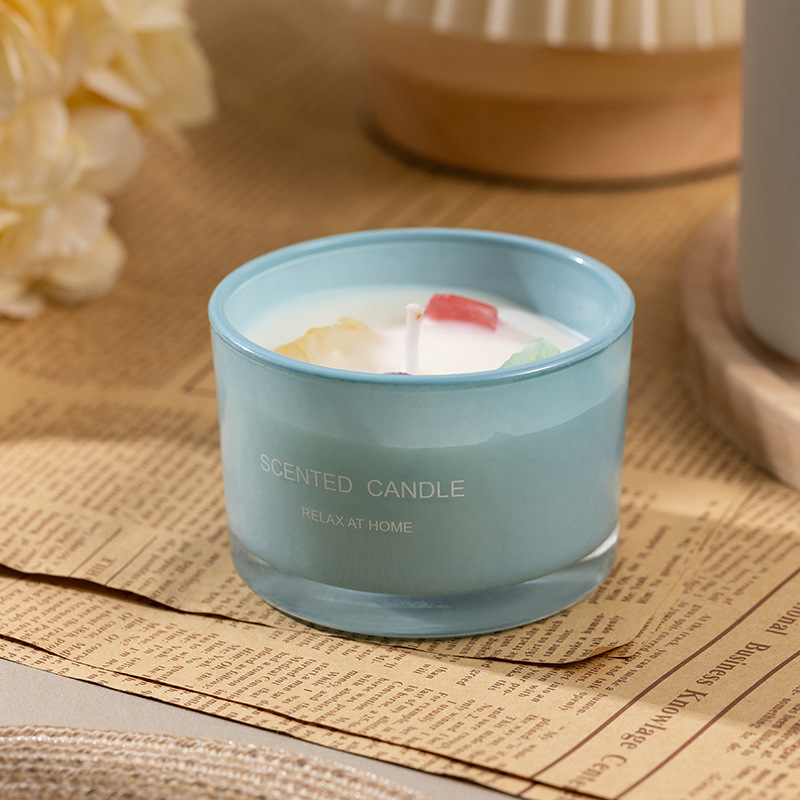
The logic that works for our retail customers is straightforward. The spray demonstrates the scent and converts fastest. The reed diffuser holds the same scent in the room for weeks and justifies a higher price. The candle covers the evening and gift occasions. Put them together and the shopper can choose by habit rather than by fragrance description.
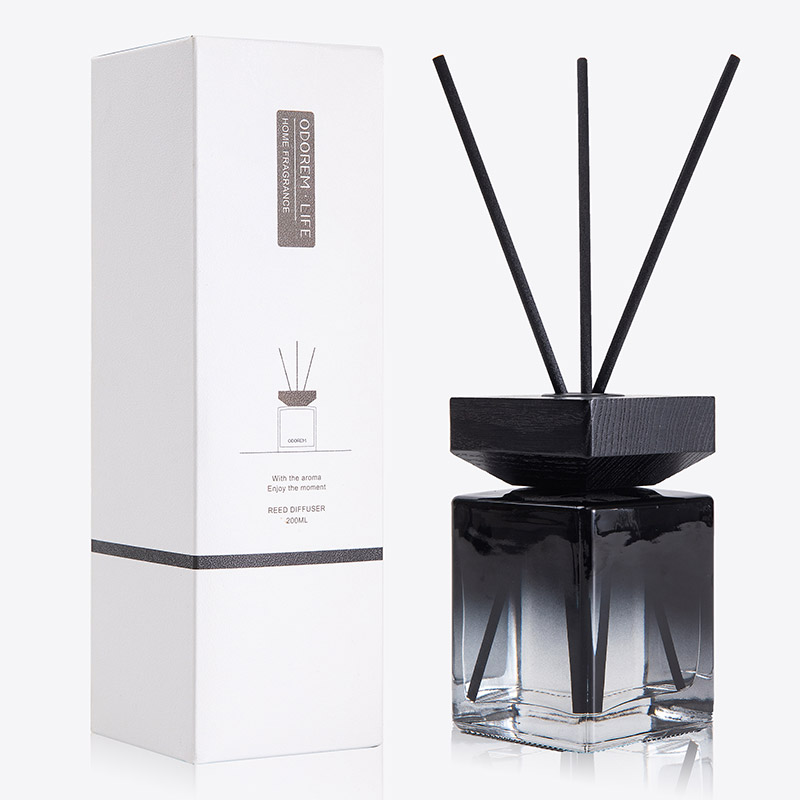
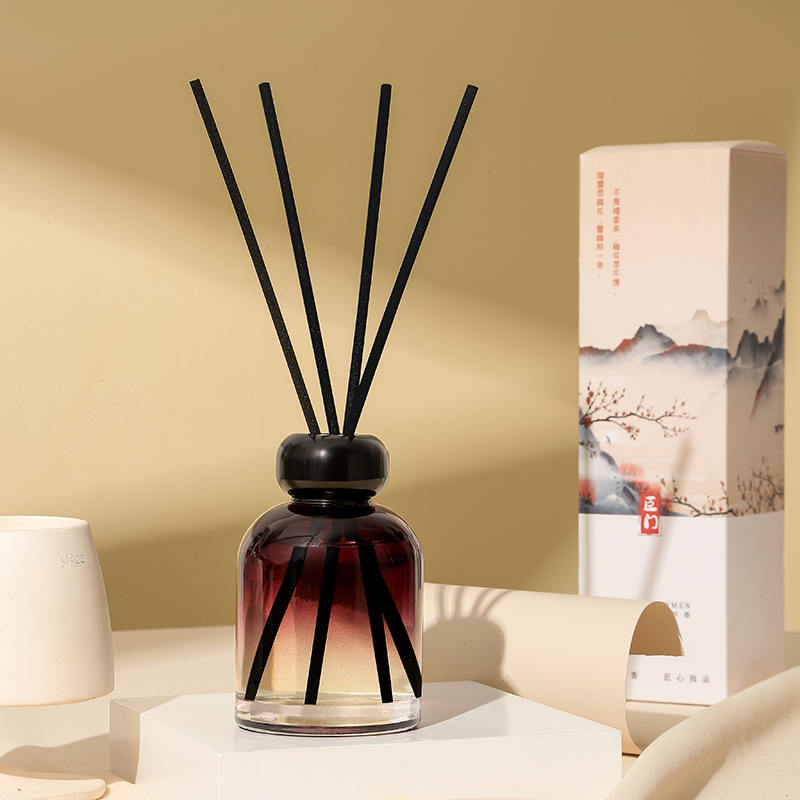 Reed Diffusers for Long-Lasting Home FragranceFlameless reed diffusers hold the same fragrance in a room for weeks and support a higher-priced second format alongside sprays.View Product →
There is a formulation advantage here too. One fragrance brief can be adapted across formats with modest work, because the concentrate is adjusted for load and carrier rather than rebuilt from scratch. That reduces development cost per SKU and keeps the scent recognisable across the family, which is exactly what a shopper expects when they buy the second item.
For buyers planning a seasonal programme, our new product area is a practical starting point when the calendar is tight and there is no time for a full custom development cycle. Existing tooling and tested formulas shorten the path to a shelf-ready sample.
Six Sourcing Mistakes That Show Up at Store Level
Most room spray problems are decided long before the container is loaded, and they usually repeat across buyers. These are the six we see most often, together with the correction that prevents them.
- Approving a fragrance instead of a product. A blotter test says nothing about spray pattern or fabric behaviour. Approve a filled, labelled unit and spray it in a room.
- Ignoring the solvent on the artwork. The carrier sets the hazard wording and the transport class. Artwork signed before the carrier is fixed is artwork destined for reprint.
- Skipping the fabric test. Any product that may be used near upholstery or bedding needs a swatch test on common textiles, including synthetics and dark colours where residue shows.
- Choosing a bottle before a pump. Neck finish dictates pump availability. Select the pair, not the bottle alone.
- Overloading the fragrance to sound premium. A 10 percent load in a light citrus blend often smells harsher than 5 percent and costs more to produce.
- Leaving claims to the marketing team alone. Odour removal, antibacterial and long lasting wording all need technical support before the label copy is fixed.
Each of these mistakes has a small cost at the sampling stage and a large cost after printing or after the first container. The correction is almost always the same: write the specification down and test against the written version rather than against the memory of a good sample.
Frequently Asked Questions About Room Sprays
What is the difference between a room spray and a linen mist?
A room spray is formulated to fill the air, usually with a higher fragrance load and a solvent that evaporates quickly. A linen mist is designed to be sprayed on fabric, so it needs a softer carrier, a solubilised water-based system in many cases, and fabric testing to confirm it does not stain or leave a residue. Some products are sold as dual use, but that claim should be backed by fabric testing across common textiles.
How many sprays does a 100 ml room spray bottle deliver?
It depends on the pump dose. At 0.10 ml per stroke a 100 ml bottle gives roughly 900 to 1,000 sprays, while a higher output pump nearer 0.15 ml brings that closer to 600 to 650. If the pack claims a number of uses, the pump specification must be fixed and documented, otherwise the number on the label will not match reality.
Do room sprays have to be alcohol-based?
No. Alcohol is popular because it dries fast and projects well, but glycol carriers, ester carriers and water-based emulsions are all used commercially. The choice affects drying time, fabric suitability, flammability classification and freight cost. A supplier should be able to present at least two carrier options for the same fragrance before the buyer commits.
What is a typical minimum order quantity for private label room sprays?
With a stock bottle, a standard pump and a fragrance from an existing library, entry volumes are usually far lower than with a custom moulded bottle or a new fragrance creation. Ask for the MOQ quoted against a specific pack combination rather than a general policy figure, because the number changes with every component decision.
Are room sprays safe to use around children and pets?
Used as directed and with reasonable ventilation, room sprays are widely sold for household use. The practical points are to avoid spraying directly at faces or animals, to follow the label instructions on distance and duration, and to store pressurised or flammable products away from heat. For households with fragrance sensitivity, passive formats usually cause fewer complaints than frequent spraying.
Can one fragrance be used across sprays, diffusers and candles?
It can, with adaptation. The concentrate is adjusted for load and carrier, and some notes need reinforcement in one format and reduction in another. Candles in particular change a fragrance profile because of the heat, so a scent that reads beautifully from a spray may need work before it smells the same in wax.
How long does it take to develop a custom room spray?
With an existing fragrance and stock packaging, laboratory samples are often ready within about a week and bulk follows a few weeks after approval. A custom fragrance or new tooling adds time at the front of the project, and accelerated stability testing needs several weeks regardless of how quickly the rest moves. Buyers should plan backwards from the shelf date rather than forwards from the brief.
Working With a Room Spray Manufacturer
A room spray programme is manageable when the decisions are taken in the right order. Format first, then fragrance load and carrier, then hardware, then compliance and artwork. Buyers who follow that sequence usually reach a shelf-ready sample in one or two rounds rather than five, and they arrive at the costing conversation with a specification that suppliers can actually quote against.
Habest works as an ODM and OEM partner for room sprays, reed diffusers, scented candles, solid fragrance and passive air fresheners, with development, raw material control, manufacturing, inspection, warehousing and transport handled under one roof in Ningbo. If you are building a home fragrance plan for the next season, the most useful starting point is a short brief: market, room, price band and the claim you want the label to carry.
Send the brief and we will come back with a format recommendation, a fragrance load proposal and a costed pack, so the discussion starts from a real product instead of a description.



 INTERACT WITH US
- Phone:+86-15888548612
- Tel:+86-0574-88408268
- E-mail:[email protected]
- Address:312 Kemao Road, Jishigang Town, Haishu District, Ningbo City, Zhejiang Province, China.


