
 English
 Español
 عربى

Plug-In Diffusers: A Practical Sourcing Guide for B2B Buyers and Alternatives
Content
- 1 What Plug-In Diffusers Actually Deliver in Real Rooms (and Where They Fall Short)
- 2 The Buying Criteria That Separate a Good Plug-In Diffuser Spec from a Bad One
- 3 Plug-In Diffusers vs. Flameless Reed Diffusers: A Practical Comparison for B2B Buyers
- 4 How to Evaluate Scent Load, Refill Economics, and Safety for Plug-In Diffusers
- 5 When a Plug-In Diffuser Is Not the Right Fit: Flameless Alternatives from a Manufacturer's Perspective
- 6 Sourcing Plug-In Diffusers and Flameless Diffusers from a China Manufacturer: What to Verify
- 7 FAQ: Plug-In Diffusers and Flameless Diffuser Sourcing
- 7.1 Are plug-in diffusers suitable for hotel rooms?
- 7.2 How long does a plug-in diffuser refill last?
- 7.3 What is the difference between a plug-in diffuser and a flameless reed diffuser?
- 7.4 Can I private-label plug-in diffusers and reed diffusers with the same fragrance?
- 7.5 What certifications should a plug-in diffuser supplier provide?
- 7.6 Are flameless reed diffusers safer than plug-in diffusers?
- 7.7 How do I calculate the cost per day of a plug-in diffuser refill?
- 7.8 Can a China manufacturer supply both plug-in diffusers and reed diffusers?
A buyer in the UK orders 20,000 plug-in diffusers for a winter home-fragrance program. The first production sample smells strong at the factory, but by week three on a retail shelf the refill has lost half its intensity, and the customer service team starts fielding complaints about “weak scent” and “empty bottles.” This is not an unusual story. Plug-in diffusers are one of the few home fragrance formats that promise “set it and forget it” convenience—until the refill runs dry, the wick clogs, or the heater output drops after a few weeks of continuous use.
For B2B buyers, plug-in diffusers can still be a strong shelf item. But the specification has to match the real-world use case, the refill economics have to be transparent, and the safety file has to be complete. In many hotel, bedroom, and bathroom scenarios, a flameless reed diffuser delivers a more consistent scent load with fewer electrical components and fewer plug-type headaches. As a manufacturer of flameless home fragrance products, we see this shift in buyer briefs every month: the request is rarely “the cheapest plug-in,” but “the format that keeps scent consistent for 60 to 90 days without a power outlet.”
This guide walks through what plug-in diffusers actually deliver, how to evaluate a specification, where they fall short, and when a flameless reed diffuser is the better commercial choice. It is written for sourcing managers, product developers, and private-label buyers who need to compare formats without relying on vague marketing claims.
Plug-in diffusers work best when the refill volume, heater setting, and room size are specified together; if any one of those is left vague, scent complaints and returns usually follow.
What Plug-In Diffusers Actually Deliver in Real Rooms (and Where They Fall Short)
A plug-in diffuser is a simple system: a liquid fragrance refill, a wick, and a small heating element that draws the scent upward and into the room. The simplicity is the appeal. There is no flame, no match, and no daily ritual. For a bathroom or a hallway, that convenience can be enough. But the same simplicity creates a few predictable limits that buyers need to plan for.
First, output is not linear. A plug-in diffuser with a 20ml refill may last 30 to 45 days on a low setting. On a high setting, the same refill can empty in 15 to 25 days. The scent does not fade gradually in a straight line; it often starts strong, then drops as the wick saturates and the remaining fragrance becomes heavier and less volatile. In a room with strong air exchange—near a door, under an air-conditioning vent, or in a hotel corridor—the perceived scent can fall below the threshold of notice within two weeks.
Second, plug-in diffusers are sensitive to orientation and outlet placement. A unit plugged into a low outlet behind a sofa may scent only the back of the sofa. A unit in a bathroom with a constantly running exhaust fan may never build enough concentration to be noticed. These are not product defects, but they are specification failures if the buyer has not matched the format to the room.
Third, the electrical interface adds variables that a reed diffuser simply does not have. Plug types differ by market: US two-pin, EU two-pin, UK three-pin, and various hotel-specific socket standards. A single plug-in SKU rarely covers global retail without adapters, and adapters add cost, bulk, and safety-file complexity. For a wholesaler or distributor shipping to multiple regions, that can turn a simple fragrance item into a compliance exercise.
None of this means plug-in diffusers are a bad category. It means they are a precision category. When the refill size, fragrance load, heater wattage, and target room volume are aligned, they can perform well in compact spaces. When they are not, the buyer absorbs the cost of returns and markdowns.
Plug-in diffusers are a room-specific tool, not a universal air freshener; the fastest way to reduce complaints is to specify outlet position, room volume, and refill life before production.
The Buying Criteria That Separate a Good Plug-In Diffuser Spec from a Bad One
When a brief says “plug-in diffuser, 20ml, floral,” it is not a specification. It is a category. The difference between a repeat-order SKU and a clearance item usually comes down to a handful of measurable criteria. These are the points we recommend confirming before a sample is approved.
- Refill volume and fragrance load. A 20ml refill with 5% fragrance oil behaves differently from a 20ml refill with 8% oil. Higher load can improve initial impact but may shorten refill life or leave residue on the wick. Ask for the actual fragrance percentage, not just the scent name.
- Wick material and diameter. A wider wick draws more liquid and increases output, but it also empties the refill faster. A cotton or fiber wick that is too tight can starve the heater and cause weak output after a few days.
- Heater wattage and thermal protection. Higher wattage increases scent throw but also energy use and surface temperature. For retail, look for a unit with a thermal cut-off or a self-resetting protector, and confirm the plug and cable specification for each market.
- Safety and compliance file. For the US, UL or ETL listing is common; for the EU, CE and RoHS are baseline. For the UK, a BS plug and relevant safety documentation are expected. A supplier that cannot produce a test report for the heater and plug is a risk, not a bargain.
- Refill economics. Calculate cost per day of scent, not cost per refill. A cheap refill that lasts 15 days can be more expensive per day than a better refill that lasts 35 days. Include packaging, shipping weight, and leak protection in the calculation.
- Packaging and private label. Plug-in refills are liquid; they need leak-proof caps, shrink bands, and cartons that can survive air freight. If the product is sold as a multipack, confirm that the refill bottles are not loose in the outer carton.
For a B2B buyer, the supplier’s ability to document these points is as important as the product itself. A manufacturer that can share refill weights, oil percentages, wick specifications, and safety certificates is easier to audit and easier to scale. A trading company that can only share a photo and a price is a shorter-term option.
The most useful plug-in diffuser specification is one that states refill volume, fragrance load, heater wattage, plug type, and safety certification in the same document.
Plug-In Diffusers vs. Flameless Reed Diffusers: A Practical Comparison for B2B Buyers
The most common sourcing question we hear is not “which plug-in is best?” but “should we buy plug-in diffusers at all, or switch to a flameless reed diffuser?” The answer depends on room type, retail channel, and the cost of maintaining scent over time. The chart below gives a directional view of active scent duration, which is often the first metric buyers use to compare formats.
The chart is not a prediction for every SKU. It reflects common buyer-reported ranges from mid-tier plug-in units and 100–200ml reed diffusers. In practice, a plug-in diffuser on high output can empty a 20ml refill in under three weeks, while a 150ml reed diffuser in a 15-square-meter bedroom often holds scent for two to three months. That difference matters for hotel housekeeping schedules, where replacing refills every 20 days is a labor cost as well as a product cost. It also matters for retail multipacks: a shopper who buys a three-pack of plug-in refills may return the product if the first refill is empty in two weeks. Our reed diffuser category includes 120ml, 180ml, and 200ml formats that can be specified for similar room sizes, with no electrical components or plug adapters.
The table below turns the comparison into a sourcing checklist. It is not a scorecard; it is a way to see which format fits which brief.
| Feature | Plug-In Diffuser | Flameless Reed Diffuser |
|---|---|---|
| Power source | Requires a compatible electrical outlet; plug type varies by market. | No power; passive diffusion through rattan or fiber reeds. |
| Scent output control | Adjustable on some units via high/low setting or vent; not all SKUs offer control. | Controlled by number of reeds, reed material, and room airflow; no electronic adjustment. |
| Refill/replacement interval | Commonly 15–45 days depending on setting and refill size. | Commonly 45–90 days for 100–200ml formats, depending on room conditions. |
| Maintenance | Replace refill, wipe unit, check wick; electrical contacts can collect dust. | Flip reeds weekly; replace reeds if clogged; no electrical maintenance. |
| Safety considerations | Electrical certification, thermal protection, child-resistant refill, plug safety. | Spill risk and pet/child access to fragrance liquid; no electrical risk. |
| Best-fit spaces | Bathrooms, small hallways, laundry rooms, and rooms with convenient outlets. | Bedrooms, hotel rooms, lobbies, retail displays, and rooms without outlets. |
| B2B sourcing notes | Confirm plug standards, safety file, refill leak protection, and retail packaging. | Confirm glass breakage protection, reed quality, fragrance load, and carton drop test. |
For a distributor selling into multiple countries, the plug-in format adds a layer of SKU complexity that is easy to underestimate. A single EU plug version cannot be sold in the UK without a different plug, and a US version cannot be sold in Japan without meeting local electrical expectations. Reed diffusers avoid that entirely. They are also easier to bundle into gift sets because there is no cord or plug to accommodate in the box.
If the brief includes multiple markets, no outlets, or a hotel housekeeping schedule, a flameless reed diffuser usually removes more cost and complexity than it adds.
How to Evaluate Scent Load, Refill Economics, and Safety for Plug-In Diffusers
Scent load is the amount of fragrance oil in the refill, expressed as a percentage of the total liquid. It is not the same as “scent strength” in the room, because wick size, heater temperature, and airflow all change the result. A refill with 6% fragrance oil in a wide-wick unit may smell stronger on day one than a 10% refill in a narrow-wick unit, but the 10% refill may last longer. Buyers should ask for both the fragrance percentage and the recommended room size, then test the unit in a room that matches the target environment.
Refill economics are where many plug-in programs quietly lose margin. A 20ml refill that sells for $3.50 and lasts 20 days costs $0.175 per day. A 30ml refill that sells for $4.80 and lasts 35 days costs $0.137 per day. The second refill looks more expensive on the shelf, but it is cheaper per day of scent. For a hotel or a subscription box, that difference compounds quickly. Buyers should also factor in the cost of leak-proof packaging, because a refill that leaks in transit destroys the economics of the entire carton.
Safety is not a checkbox; it is a file. For plug-in diffusers, the file should include the heater’s electrical test report, the plug’s certification for the destination market, a material safety data sheet for the fragrance, and a child-resistant closure specification if the refill is sold separately. If the fragrance contains essential oils or synthetic aroma chemicals, the buyer should confirm IFRA compliance and any labeling requirements for the destination country. A supplier that treats safety as a last-minute document request is a supplier that will slow down your launch.
For buyers comparing plug-in diffusers with passive formats, it helps to look at how reed diffuser components work together to distribute scent. The same principles—surface area, airflow, and fragrance load—apply to plug-in systems, but the heater adds a variable that passive formats do not have.
Evaluate plug-in diffusers on cost per day of scent and on the completeness of the safety file, not on the refill price alone.
When a Plug-In Diffuser Is Not the Right Fit: Flameless Alternatives from a Manufacturer's Perspective
There are clear situations where a plug-in diffuser is the wrong tool. A hotel room with outlets hidden behind furniture, a bathroom with a constant exhaust fan, a retail display with no power access, or a market where the plug standard changes every few hundred kilometers—these are all cases where a flameless reed diffuser is easier to specify and easier to maintain. A reed diffuser does not need an outlet, does not have a cord, and does not require a separate safety file for a heater. It does require good glass, a well-matched reed set, and a fragrance load that is stable over time.
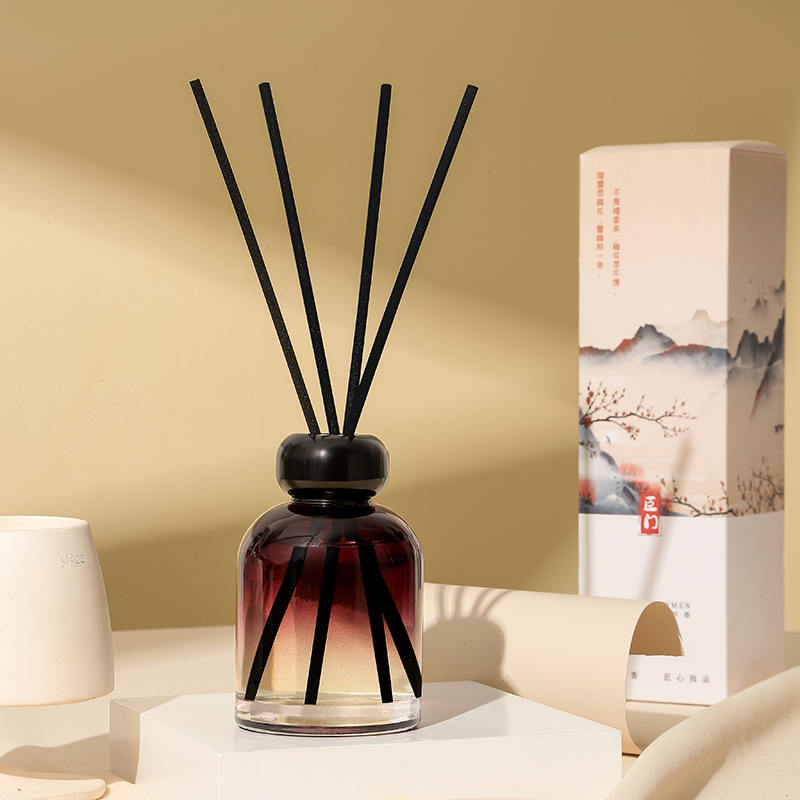
Our reed diffuser category is built around those requirements. The range covers 100ml to 250ml formats, with options for clear glass, black glass, gradient glass, dried flower decoration, and pearl-style reeds. For buyers who need a plug-in alternative for hotel or bedroom programs, the following three SKUs are common starting points.
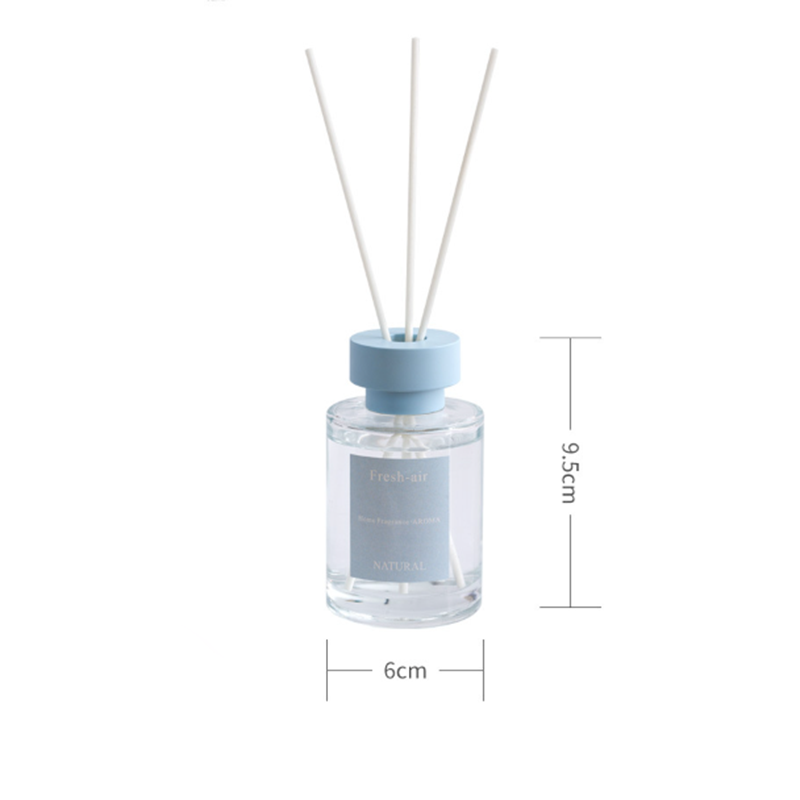 120ml Fire-Free Home Reed DiffuserThis 120ml flameless reed diffuser suits compact bedrooms and bathrooms, with floral and fruit-inspired fragrance options for plug-in-free home fragrance programs.View Product →
 180ml Fireless Reed Diffuser for Bedrooms and Living AreasA 180ml non-electric reed diffuser for standard hotel rooms and living areas, with a 60–75 day scent window and options such as Westin White Tea.View Product →
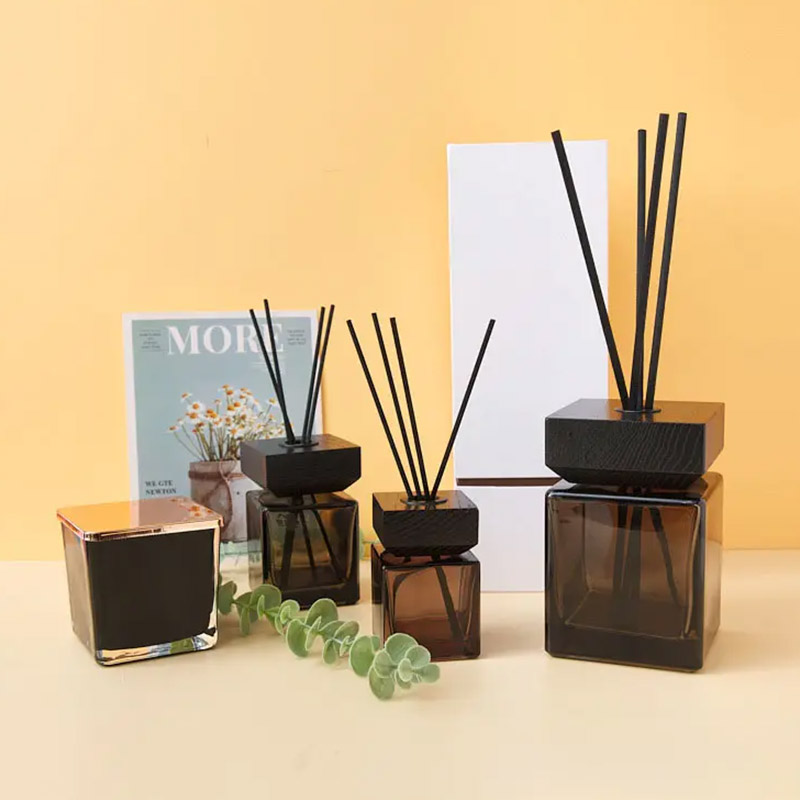 200ml Large-Bottle Flameless Reed Diffuser for Open SpacesA 200ml large-bottle reed diffuser suited to lobby displays and open-plan spaces, offering 6–8 months of use and natural plant extract fragrance options.View Product →
The 120ml format suits compact bedrooms and bathrooms where a plug-in unit would be too close to a sink or shower. The 180ml format is a better fit for standard hotel rooms and living areas, where a 60–75 day scent window reduces housekeeping touchpoints. The 200ml large-bottle format is often used for lobby displays and open-plan spaces where the diffuser is visible as part of the decor. None of these products requires a plug adapter, and all can be packed with leak-resistant inner caps for air or sea freight.
For a private-label program, the advantage is not only the lack of electrical components. It is the ability to use the same fragrance across a plug-in refill and a reed diffuser, creating a coherent scent family without doubling the safety documentation. A retailer can offer a plug-in version for bathrooms and a reed diffuser version for bedrooms, using the same fragrance name and packaging language. That is a merchandising decision that plug-in diffusers alone cannot support.
When the room has no convenient outlet, the market has multiple plug standards, or the maintenance team needs a longer replacement cycle, a flameless reed diffuser is the lower-risk specification.
Sourcing Plug-In Diffusers and Flameless Diffusers from a China Manufacturer: What to Verify
China remains a deep source for home fragrance manufacturing, but the range between a well-run factory and a trading desk is wide. For plug-in diffusers, the critical verification points are electrical safety, refill leak protection, and plug-market coverage. For flameless diffusers, the critical points are glass quality, reed consistency, fragrance stability, and carton drop performance. A supplier that can handle both formats is useful because it can help a buyer compare costs and lead times without switching vendors.
Our factory in Ningbo covers 6,500 square meters with five production lines and dedicated equipment for glass filling, reed assembly, and candle production. We hold BSCI and WCA factory certifications, which are commonly requested by international retailers and brand owners. The company was established in 2012, and our customer base includes retailers and distributors in Japan, the US, the EU, and the UK. For a buyer evaluating a new plug-in diffuser or flameless diffuser program, the practical audit points are:
- Factory profile and capacity. Confirm the actual production site, the number of lines, and the annual capacity for the specific format. A manufacturer that produces reed diffusers may not have the same electrical assembly experience for plug-in heaters.
- R&D and sampling speed. Ask how long a custom fragrance sample takes, how many rounds of revision are included, and whether the supplier can match a scent across a plug-in refill and a reed diffuser.
- Incoming material control. For glass bottles, check the inspection standard for bubbles, cracks, and neck finish. For reeds, check straightness and absorbency. For fragrance, check the batch certificate and storage conditions.
- Quality control process. A documented process from development through raw material control, manufacturing, inspection, warehousing, and shipping is more useful than a single final inspection report.
- Compliance and labeling. Confirm the safety file for the destination market, the language requirements on the label, and the disposal symbols where applicable. For plug-in diffusers, confirm the plug standard and any adapter requirements.
- MOQ and lead time. Ask for MOQ by SKU and by fragrance, not just by category. A low MOQ on a stock fragrance is different from a low MOQ on a custom scent.
For wholesalers and private-label buyers, it also helps to ask whether the manufacturer can support mixed containers. A container that combines reed diffusers, scented candles, and plug-in refills can reduce freight cost, but only if the supplier has the packing discipline to keep liquids and glass separated. That is a warehouse and documentation question as much as a production question.
Verify the factory, the safety file, and the refill economics before you compare unit prices; those three checks usually reveal more risk than a price list.
FAQ: Plug-In Diffusers and Flameless Diffuser Sourcing
Are plug-in diffusers suitable for hotel rooms?
They can be, but only in rooms with accessible outlets and a housekeeping schedule that matches the refill life. In hotels with hidden outlets, exhaust fans, or mixed international guests, a flameless reed diffuser is often easier to maintain and easier to standardize across rooms.
How long does a plug-in diffuser refill last?
Most 20ml refills last 15–45 days depending on the heater setting, room airflow, and fragrance load. High setting shortens refill life; low setting extends it. Buyers should request a tested duration for the specific unit and refill rather than relying on a generic claim.
What is the difference between a plug-in diffuser and a flameless reed diffuser?
A plug-in diffuser uses a heater and a wick to release fragrance, and it requires an outlet. A flameless reed diffuser uses passive capillary action through reeds, with no electricity. The plug-in can be more compact and adjustable; the reed diffuser usually lasts longer per refill and avoids plug-type complexity.
Can I private-label plug-in diffusers and reed diffusers with the same fragrance?
Yes, if the manufacturer can match the fragrance across both bases. The fragrance oil may need adjustment for the heater versus passive diffusion, so ask for a side-by-side olfactory test rather than assuming the same formula will perform identically.
What certifications should a plug-in diffuser supplier provide?
For the US market, UL or ETL listing for the electrical components is common. For the EU, CE and RoHS documentation are baseline. For the UK, a BS plug and relevant safety file are expected. The fragrance should also have a safety data sheet and, where applicable, IFRA compliance.
Are flameless reed diffusers safer than plug-in diffusers?
They remove electrical risk, but they still contain fragrance liquid that should be kept away from children and pets, and glass bottles should be placed where they will not be knocked over. The safer choice depends on the room and the user; there is no universal answer.
How do I calculate the cost per day of a plug-in diffuser refill?
Divide the refill price by the number of days it lasts in the intended setting. Include packaging and shipping cost if the refill is sold as a multipack. A higher-priced refill that lasts twice as long can be cheaper per day than a low-priced refill that empties quickly.
Can a China manufacturer supply both plug-in diffusers and reed diffusers?
Some can, but the electrical assembly and the passive fragrance assembly are different processes. Ask for the specific production line, the safety documentation, and the sampling lead time for each format. A supplier with both capabilities can simplify vendor management, but only if both lines are audited.
The most reliable sourcing decision comes from comparing tested refill life, safety documentation, and plug-market coverage side by side, not from choosing the lowest unit price.
Plug-in diffusers will continue to have a place in bathrooms, hallways, and compact retail programs where an outlet is available and the refill cycle is short. But the category rewards buyers who specify refill volume, fragrance load, heater wattage, plug type, and safety certification together. When any of those is left open, the product tends to fail in the room rather than on the spec sheet.
For programs that span multiple markets, serve hotel rooms without convenient outlets, or need a longer replacement cycle, a flameless reed diffuser is often the more practical format. It removes the electrical variable, reduces plug-type complexity, and gives the buyer a scent window that aligns better with monthly or quarterly maintenance schedules. The right answer is not “plug-in versus reed” in the abstract; it is which format matches the room, the channel, and the cost per day of scent.
Match the diffuser format to the room and the maintenance cycle first; then negotiate price on a specification that already includes refill life and safety documentation.



 INTERACT WITH US
- Phone:+86-15888548612
- Tel:+86-0574-88408268
- E-mail:[email protected]
- Address:312 Kemao Road, Jishigang Town, Haishu District, Ningbo City, Zhejiang Province, China.


