
 English
 Español
 عربى

Essential Oil Diffusers for B2B Buyers: Sourcing, Specifications, Samples
Content
- 1 Essential Oil Diffusers: Start With Format, Not Fragrance
- 2 The Specification Sheet for Essential Oil Diffusers
- 3 Reed Diffuser Construction and Scent Load
- 4 Safety, Labeling, and Claims for Essential Oil Diffusers
- 5 Packaging, Hotel Programs, and Retail Shelf Presence
- 6 Sample Testing and Wholesale Planning
- 7 Quality Control and Supplier Vetting
- 8 Common Buying Mistakes
- 9 FAQ: Essential Oil Diffusers for Wholesale Buyers
- 10 Next Step: Build a Clearer Diffuser Brief
An import buyer once asked our team to match a competitor sample by smell alone. The sample arrived without a specification sheet: no bottle volume, no reed count, no fragrance load, and no target evaporation window. That is a common starting point for essential oil diffusers, and it is also where rework begins. The practical answer is to treat the diffuser as a system: format first, construction second, fragrance third, and packaging last. For B2B buyers, that sequence protects margin, shortens sampling, and gives the factory a clear brief instead of a vague target.
Essential oil diffusers are not one product category. They include passive reed diffusers, ultrasonic units, nebulizing units, heat diffusers, and smaller car or sachet formats. Each has a different supply chain, compliance profile, and retail story. A buyer sourcing for a hotel program may need a flameless reed diffuser with a sealed bottle and neutral label. A retailer building a gift set may need decorative glass, a printed box, and a fragrance that survives shelf life. The first decision is not the scent name. It is the format and the use case.
Start every essential oil diffuser brief with format, room size, and maintenance expectation before discussing fragrance.
Essential Oil Diffusers: Start With Format, Not Fragrance
For wholesale sourcing, the word essential oil diffusers covers several product families. Passive reed diffusers release scent through reeds and ambient airflow. Ultrasonic diffusers use water and a small amount of oil to create mist. Nebulizing diffusers use pressure and do not dilute the oil. Heat diffusers use gentle warmth. These formats differ in unit cost, packaging, safety text, and consumer expectation. A buyer who compares only fragrance names will miss the cost drivers that sit inside the format.
Habest's public product range centers on reed diffusers and scented candles, with adjacent home fragrance items. That makes the passive reed diffuser the most relevant reference point for buyers who want a cord-free, flameless, low-maintenance essential oil diffuser program. The table below is a practical comparison, not a ranking. It helps a buyer decide which format fits a bedroom, hotel room, bathroom, or retail shelf.
| Format | How scent is released | Typical fit | Buyer checks |
|---|---|---|---|
| Passive reed diffuser | Reeds wick oil into the air through capillary action and airflow | Bedroom, hotel room, bathroom, retail gift set | Reed count and material, bottle seal, fragrance load, evaporation target |
| Ultrasonic diffuser | Water and oil are mixed and released as a fine mist | Small rooms and consumer electronics retail | Tank material, cleaning instructions, motor quality, safety labeling |
| Nebulizing diffuser | Pressurized air disperses oil without water | Larger spaces and higher-intensity use | Noise level, seal quality, oil compatibility, maintenance |
| Heat diffuser | Low heat encourages fragrance release | Compact plug-in use and small rooms | Temperature control, plastic compatibility, plug standards |
A retailer that needs a flameless, cord-free product should not begin with an ultrasonic spec sheet. A hotel buyer that needs housekeeping-friendly refills should not begin with a decorative gift box. Format selection narrows the factory brief, the testing plan, and the compliance path. It also prevents a supplier from quoting a product that looks close in a photo but behaves differently in a room.
Choose the diffuser format before the fragrance, because format controls cost, safety text, and the use case.
The Specification Sheet for Essential Oil Diffusers
A usable brief has at least eight lines: capacity, bottle material and finish, reed material and count, fragrance type, target intensity, evaporation target, label requirement, and packaging format. Add tolerances where they matter. Capacity may need a small fill tolerance because glass volume and fill weight are not the same. Fragrance fill weight should be stated in grams, not only milliliters. Reed length and diameter should be stated in millimeters. Label placement should include a tolerance for bottle curvature.
For a bedroom-oriented 180 ml program, the product card below is a useful reference point. It shows how a flameless reed diffuser can be positioned for household use without turning the brief into a generic air freshener. Buyers can use it as a starting point for bottle shape, capacity, and presentation, then adjust fragrance, label, and carton to their market.
 180 ml Household Bedroom Flameless Reed DiffuserA 180 ml flameless reed diffuser for bedroom and household fragrance programs, useful for reviewing bottle shape, capacity, presentation and adjustable fragrance direction.View Product →
A specification sheet should also name the decision maker for approvals. If the buyer approves a fragrance but the packaging team approves a different bottle, the sample can pass one review and fail another. Keep one master sheet with revision numbers. Ask the supplier to return the signed sheet with the sample. That small step reduces the chance of a bulk order being produced against an old brief.
A diffuser spec sheet is only useful when capacity, fill weight, reed count, and tolerances are written in measurable terms.
Reed Diffuser Construction and Scent Load
Reed diffusers are simple in appearance and fussy in construction. The bottle neck controls airflow. The reed material controls wicking. The fragrance base controls evaporation and color stability. The seal controls transport risk. A larger bottle does not automatically last longer if the reed surface area is too small or the neck opening is too narrow. A higher fragrance load does not automatically mean better value if the oil climbs the reeds too quickly, leaves a sticky film, or changes the label adhesive.
Buyers should ask for the reed count, reed material, and recommended flip interval. More reeds can raise early intensity, but they may also shorten the perceived life of the product. Fewer reeds can slow release and suit a smaller room. For private label programs, test the same fragrance in two reed counts before choosing a retail claim. Also test the bottle on a tilted shelf. A slow leak is easier to catch in a retention sample than in a finished carton.
Fragrance load should be discussed with the factory as a range, not a single magic number. The right range depends on oil viscosity, alcohol or carrier level, bottle opening, and target market. A hotel buyer may prefer a quieter scent that does not overwhelm a small room. A gift set buyer may prefer a stronger opening for shelf impact. Both can be valid, but they need different samples and different instructions.
Reed count, neck opening, and fragrance load work together; changing one without testing the others can change the whole product.
Safety, Labeling, and Claims for Essential Oil Diffusers
Safety text is part of the product, not a sticker added at the end. Reed diffuser labels usually need warning language for eye contact, skin contact, flammable liquid, and keeping the product away from children and pets. Instructions should explain how to insert reeds, how to flip them, and what to do if oil spills. Hotel and bulk buyers may need multilingual labels. Retail buyers may need a batch code, barcode, and country of origin. These details should be settled before artwork approval.
Factory audits and product claims are different things. BSCI and WCA audits support supplier vetting, but they do not prove that a fragrance is 100% natural or that a diffuser is child-safe. Habest holds BSCI and WCA factory certifications, and that is useful for international retail supply. Still, product-specific claims need product-specific evidence. Avoid absolute language such as "chemical-free" unless the formulation and local rules support it. Clear, modest claims reduce returns and regulatory friction.
For essential oil diffusers, the word "essential oil" should be used with care. Some products use a blend of fragrance oils and essential oils. Some use synthetic aroma materials for consistency. The label should reflect what is actually in the bottle. Buyers should ask for the formulation sheet, safety data sheet where required, and any market-specific documentation before printing a claim.
Keep factory audits, product tests, and marketing claims separate; each needs its own evidence.
Packaging, Hotel Programs, and Retail Shelf Presence
Packaging changes the perceived value of a reed diffuser more than many buyers expect. A 100 ml bottle in a rigid gift box can look like a premium home fragrance. The same bottle in a plain carton can look like a utility product. For hotel programs, the priority is usually different: neutral bottle design, secure cap, compact housekeeping instructions, and easy carton handling. For retail, the priority is shelf presence, clear capacity, fragrance name, and a box that survives shipping and handling.
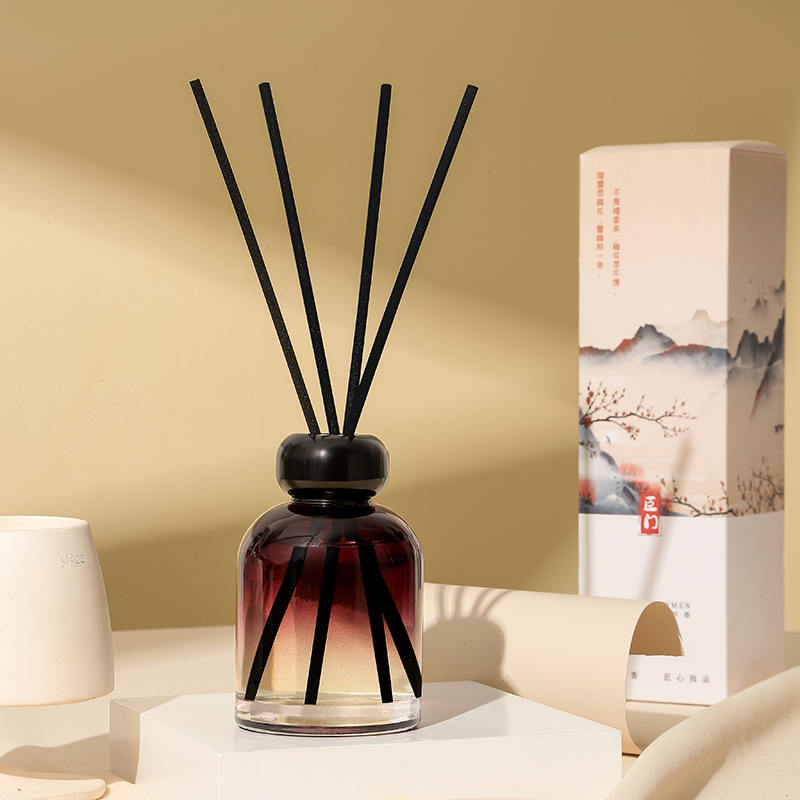
A hotel-oriented format often benefits from a darker bottle and dried flower decoration because it hides minor oil color shifts and fits a calm room aesthetic. The product card below is an example of that direction. It is still a flameless reed diffuser, but the presentation is tuned for hospitality rather than supermarket promotion.
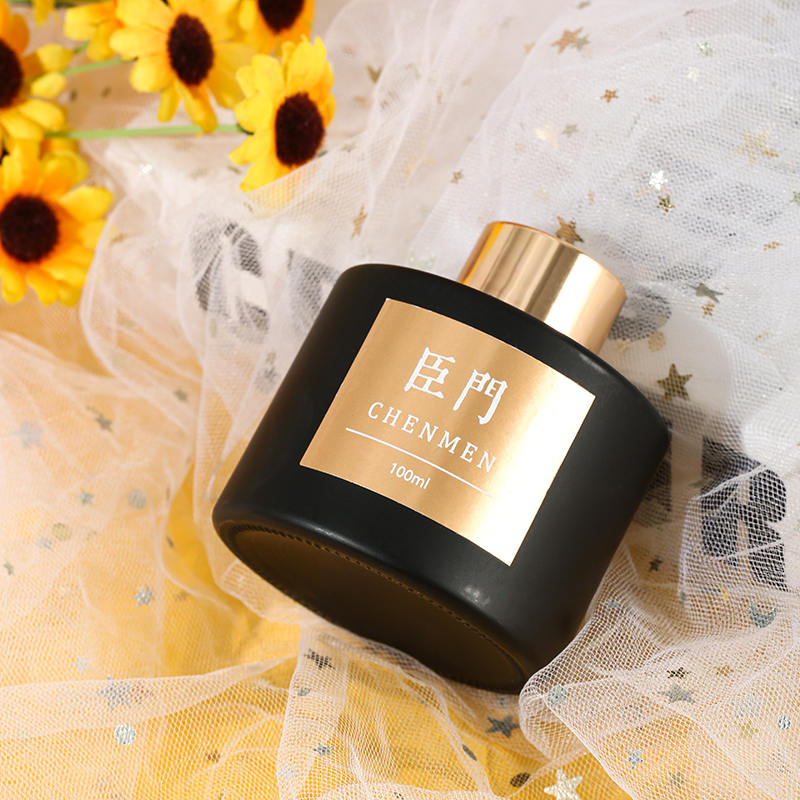 Black Bottle Dried Flower Hotel Reed DiffuserA 100 ml flame-free reed diffuser with black bottle and dried-flower decoration, suited to hospitality presentation and adjustable fragrance intensity for hotel-style spaces.View Product →
Buyers should test the full pack, not only the bottle. Drop-test the retail carton. Check whether the reed bag rubs the label. Confirm that the cap does not loosen under vibration. For gift sets, check that the box insert holds the bottle upright after a handling test. These details are less visible than fragrance, but they drive damage rates and customer complaints.
Test the complete pack, because a good bottle can still fail in transport or on shelf.
Sample Testing and Wholesale Planning
A fair sample test uses the same room, temperature, and evaluation time for every candidate. Record intensity at day 1, day 7, day 14, and day 21. Note whether the reeds need flipping, whether the label curls, and whether the oil changes color. The chart below is an illustrative assortment planning mix for reed diffuser capacities. It is not a market statistic; it is a simple way to discuss range balance before a buyer commits to a full line.
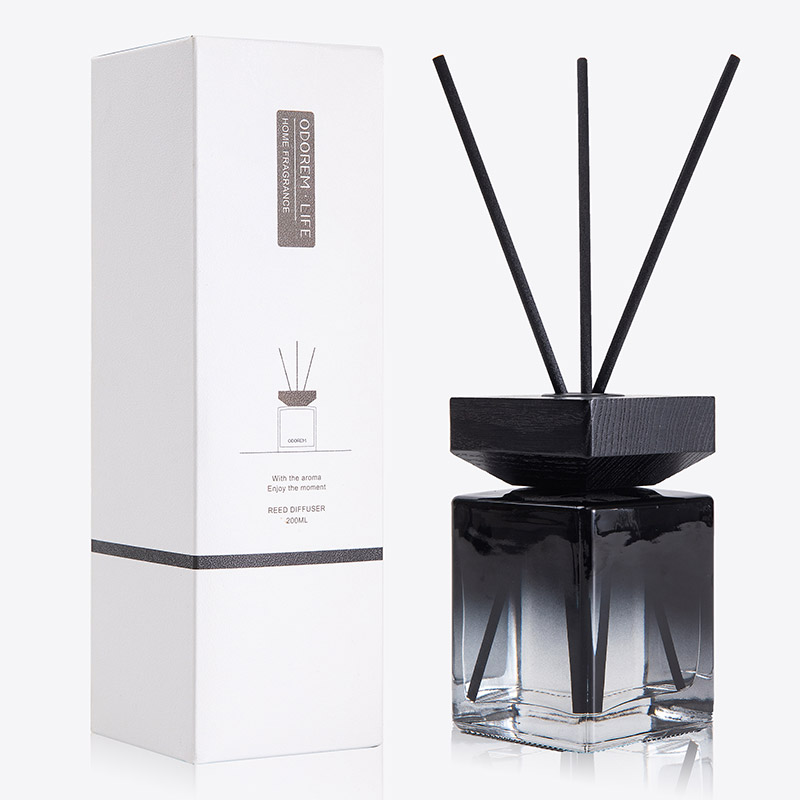
This kind of planning view helps a buyer avoid a range that is too narrow. A compact size can work for trial, travel, or bathroom use. A mid-size bottle often carries the main retail or hotel program. A large bottle can support gift sets or longer-use positioning. The exact mix should follow the sales channel, shelf space, and price band. For a large-format reference, the product card below shows a 200 ml flameless reed diffuser direction.
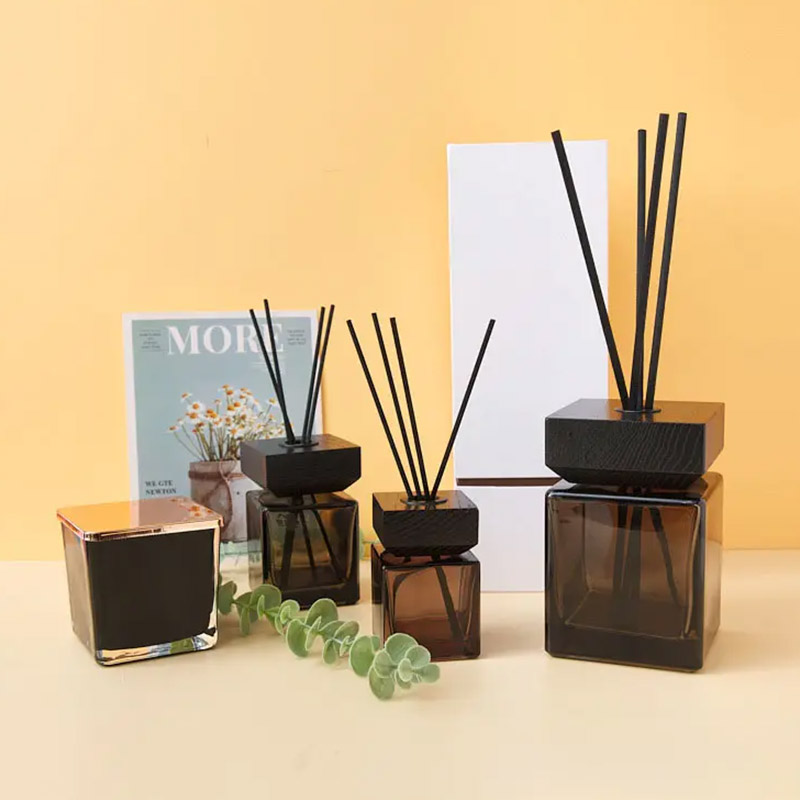 200 ml Large Bottle Flameless Reed DiffuserA 200 ml large-format reed diffuser for longer-use retail or gift programs, with plant extracts, imported fragrance essence and multiple scent options.View Product →
Wholesale planning should also include retention samples. Keep one unopened sample from each production lot. If a customer reports a change in scent or color months later, the retention sample gives both sides a reference. For private label, store the approved artwork and signed specification with the sample. That record is often more useful than a photo taken on a phone.
Test diffusers on a timeline and keep retention samples, because first-day scent is not the same as three-week performance.
Quality Control and Supplier Vetting
A diffuser supplier should be able to describe quality control in process terms, not only certificate terms. Ask how incoming fragrance is checked, how bottles are leak-tested, how fill weight is monitored, and how labels are aligned on curved glass. Ask whether reed straightness and length are inspected. Ask for the carton drop-test method. These questions reveal whether the factory manages the product or only assembles it.
Habest operates a 6,500 square meter factory with five production lines and ODM/OEM experience for international markets. That background is relevant for buyers who need private label reed diffusers, scented candles, and related home fragrance items. The useful vetting step is to compare the audit scope with the order scope. A factory certificate is a starting point. The buyer still needs to confirm the line, the materials, and the packaging process that will be used for the specific program.
Supplier capacity should also be checked against the launch plan. A fast sample does not always mean a fast bulk order. Ask for the production slot, carton lead time, and label approval cut-off. For a seasonal retail launch, a two-week delay in artwork approval can be more damaging than a small difference in unit price.
Vet the process behind the certificate, because quality control happens on the line, not in the audit logo.
Common Buying Mistakes
Most sourcing problems are predictable. They usually appear before the purchase order, not after it. The list below covers the issues we see most often in reed diffuser and home fragrance programs.
- Choosing a fragrance before confirming the diffuser format and room size.
- Approving a sample without a signed specification sheet or retention sample.
- Asking for "strong" scent without defining intensity, test room, and evaluation day.
- Ignoring reed count and neck opening when comparing two bottles.
- Printing a natural or safety claim before checking the formulation and local rules.
- Testing only the bottle and not the full retail carton or gift box.
A buyer does not need a laboratory to avoid these mistakes. A written brief, a fair sample plan, and a factory that answers process questions clearly will prevent most of them. The goal is not to make sourcing complicated. It is to make the important details visible before they become expensive.
Most diffuser rework comes from vague briefs, not from difficult products.
FAQ: Essential Oil Diffusers for Wholesale Buyers
Are essential oil diffusers the same as reed diffusers?
No. Essential oil diffusers is a broad term that can include reed diffusers, ultrasonic diffusers, nebulizing diffusers, and heat diffusers. A reed diffuser is a passive, flameless format that uses reeds to draw fragrance into the air. Buyers should name the format in the inquiry so the supplier quotes the right product.
What should a wholesale buyer ask for first?
Start with capacity, bottle material, reed count, fragrance direction, target use case, label language, and packaging format. Then ask for a sample timeline and a retention sample policy. If the product is for private label, ask for artwork tolerances and carton drop-test details.
How do I compare scent strength fairly?
Use the same room, temperature, reed count, and evaluation days for each sample. Record notes at day 1, day 7, day 14, and day 21. Do not compare a fresh sample in a small meeting room with a three-week-old sample in a large open office. The test conditions matter as much as the fragrance.
What certifications should I request?
Ask for the factory audit that matches your market and customer base. BSCI and WCA are common social compliance and workplace condition audits. They support supplier vetting, but they do not replace product-specific safety or formulation documents. Request both factory and product documents where applicable.
Can bottles, reeds, labels, and gift boxes be customized?
For ODM/OEM programs, customization usually covers bottle shape and color, reed length and count, fragrance, label, retail box, and carton marks. The exact scope depends on tooling, order quantity, and artwork approval. A clear specification sheet helps the factory confirm what is standard and what needs a new mold or print run.
How should a buyer plan MOQ and lead time?
MOQ should be checked against the bottle, fragrance, and packaging combination, not only the finished unit. Lead time should include fragrance approval, artwork approval, production, and carton lead time. For seasonal launches, work backward from the retail delivery date and keep a buffer for label revisions.
Ask format-specific questions in the first inquiry; it saves a full sampling round later.
Next Step: Build a Clearer Diffuser Brief
A good essential oil diffuser program is not built on a single scent test. It is built on a clear format decision, a measurable specification, a fair sample timeline, and a factory that can explain its process. That approach helps retailers, hotel buyers, and wholesale distributors compare quotes on the same basis. It also gives the manufacturer enough detail to propose a realistic construction instead of a guess.
Explore related pages
Use the product pages to shortlist a capacity and bottle direction, then send a brief with room size, target market, label language, and packaging format. A focused inquiry is easier to quote, easier to sample, and easier to produce without surprises.
A focused brief turns essential oil diffuser sourcing from a scent guess into a repeatable product program.


 INTERACT WITH US
- Phone:+86-15888548612
- Tel:+86-0574-88408268
- E-mail:[email protected]
- Address:312 Kemao Road, Jishigang Town, Haishu District, Ningbo City, Zhejiang Province, China.


