
 English
 Español
 عربى

Home Fragrances Sourcing Guide for Retail Buyers, Brand Owners, and Distributors
Content
- 1 Why Home Fragrances Deserve a Serious Place in Your Product Plan
- 2 Start With Format and Room, Not Just the Fragrance Name
- 3 Reed Diffusers: The Quiet Workhorse of Home Fragrances
- 4 Scented Candles: Atmosphere, Safety, and Repeat Purchase
- 5 Solid Fragrance, Sprays, Sachets, and Adjacent Formats
- 6 Fragrance Selection by Room and Customer Profile
- 7 Quality, Compliance, and the Details Buyers Audit
- 8 Packaging and Private Label: Where Margin Is Won or Lost
- 9 MOQs, Lead Times, and Seasonal Planning
- 10 How to Compare Home Fragrance Suppliers Without Getting Lost
- 11 A Practical Sourcing Checklist for Home Fragrances
- 12 FAQ: Home Fragrances Sourcing Questions Buyers Ask
- 12.1 What is the best home fragrance format for a first retail program?
- 12.2 How many home fragrances should a buyer include in one range?
- 12.3 Can a home fragrance manufacturer help with private label?
- 12.4 What should I check in a reed diffuser sample?
- 12.5 How do I compare candle quality between suppliers?
- 12.6 What certifications should a home fragrance supplier have?
- 12.7 How long does a home fragrance program take to produce?
- 12.8 Can you supply home fragrances for hotels and retail chains?
- 12.9 What is the difference between a home fragrance supplier and a wholesaler?
- 12.10 How do I keep fragrance quality consistent across repeat orders?
A retail buyer once told me that home fragrances are the easiest category to underestimate. The shelf space looks simple: a few bottles, a few candles, a few sachets. Then the reorder data comes in, and the same buyer discovers that scent is one of the few product categories customers touch, smell, and remember. That is why the category works best when you treat it as a planned program, not a last-minute add-on.
For wholesalers, retail chains, brand owners, and distributors, home fragrances sit at an unusual intersection of fashion, function, and compliance. The product has to smell good, look right on a shelf, survive shipping, meet safety expectations, and fit a price architecture. A home fragrance manufacturer or supplier is not simply filling bottles. The better suppliers are helping buyers make decisions about format, fragrance load, packaging, MOQ, and market fit.
This guide is written for the people who have to make those decisions. It covers the main formats, the practical differences between them, the details buyers audit, and the questions worth asking before a purchase order is signed. The goal is not to turn every buyer into a perfumer. The goal is to make the sourcing conversation clearer, faster, and less risky.
Why Home Fragrances Deserve a Serious Place in Your Product Plan
Home fragrances are often treated as a seasonal impulse item. That is a mistake. In many retail programs, the category has three jobs: it adds margin, it supports basket building, and it gives customers a reason to return. A customer who buys a reed diffuser for a bedroom may come back for a candle for the living room, a sachet for a drawer, or a car diffuser for a gift. The category can stretch across price points without losing its identity.
The commercial logic is straightforward. A home fragrance product can be developed in multiple sizes, scent families, and packaging formats. That gives a buyer room to build a good-better-best ladder. It also gives a brand owner room to test a scent direction before committing to a full seasonal program. The risk is equally straightforward: a weak fragrance, a leaking bottle, a candle that tunnels, or packaging that arrives damaged can turn a promising category into a returns problem.
That is why the sourcing plan should start with the shopping mission. Is the product meant for a supermarket aisle, a home décor shelf, a hotel amenity program, a discount chain, or an online gift set? Each channel has a different tolerance for unit cost, packaging complexity, and fragrance intensity. A luxury hotel diffuser and a value-pack sachet may both be home fragrances, but they are not the same product system.
From a factory perspective, the most efficient projects are the ones where the buyer has already defined the channel, the target retail price, and the desired scent direction. When those three items are clear, a supplier can recommend the right format, vessel, fragrance load, and packing method. When they are unclear, the sampling process becomes a series of guesses. Good briefs save time on both sides.
Start With Format and Room, Not Just the Fragrance Name
Buyers often begin with a scent name: linen, vanilla, sandalwood, sea salt, fig. Those names are useful, but they are not a product plan. The first decision is format. A reed diffuser, a scented candle, a room spray, a solid fragrance, a sachet, and a gel bead pack all behave differently in the home. They release scent at different speeds, require different maintenance, and carry different safety expectations.
A simple way to sort the category is by room and routine. Bedrooms usually need a quieter, longer-lasting background scent. Living rooms can carry a stronger statement. Bathrooms need freshness that recovers quickly after use. Hallways and entryways benefit from a consistent but not overwhelming presence. Hotel rooms and guest spaces need a scent that is clean, recognizable, and easy to control across many units. Car diffusers and sachets are smaller, more concentrated, and often used as add-on purchases.
The table below compares the most common formats from a sourcing point of view. It is not a ranking. It is a practical map for matching format to use case, maintenance expectation, and buyer risk.
| Format | Best-fit spaces | Scent release style | Maintenance | Key sourcing considerations |
|---|---|---|---|---|
| Reed diffuser | Bedroom, living room, hallway, hotel room | Continuous, low-to-medium intensity | Turn reeds occasionally; replace refill or bottle when scent fades | Vessel quality, reed count, fragrance load, leak-proof packing |
| Scented candle | Living room, dining area, gift set, seasonal display | Warm, localized, medium-to-high intensity while burning | Trim wick, manage burn time, keep away from drafts | Wax type, wick sizing, vessel heat resistance, safety labeling |
| Room spray | Bathroom, kitchen, entryway, quick refresh | Immediate, short-lived burst | Spray as needed; no continuous maintenance | Spray mechanism, droplet size, alcohol or water base, labeling |
| Solid fragrance | Drawer, closet, small room, travel | Slow, subtle release | Replace when scent weakens | Gel or wax matrix stability, heat resistance, packaging barrier |
| Scented sachet | Drawer, wardrobe, luggage, gift with purchase | Passive, low intensity | Replace every few weeks or when scent fades | Fragrance loading, paper or fabric pouch quality, moisture control |
| Gel beads | Bathroom, small room, decorative display | Continuous, visual format | Monitor evaporation; replace when beads shrink | Container seal, evaporation rate, color stability, child-safe packaging |
| Car diffuser | Vehicle, small enclosed space | Concentrated, steady release | Adjust vent clip or replace when scent fades | Heat resistance, clip strength, leakage control, labeling |
The table makes one point clear: there is no universal best format. A buyer who wants a high-turn impulse item may choose sachets or room sprays. A buyer who wants a higher-ticket home décor item may choose a glass reed diffuser or a ceramic candle. A hotel program may need both: a discreet diffuser for guest rooms and a fast-acting spray for housekeeping. The format mix should match the customer's routine, not the supplier's production convenience.
Reed Diffusers: The Quiet Workhorse of Home Fragrances
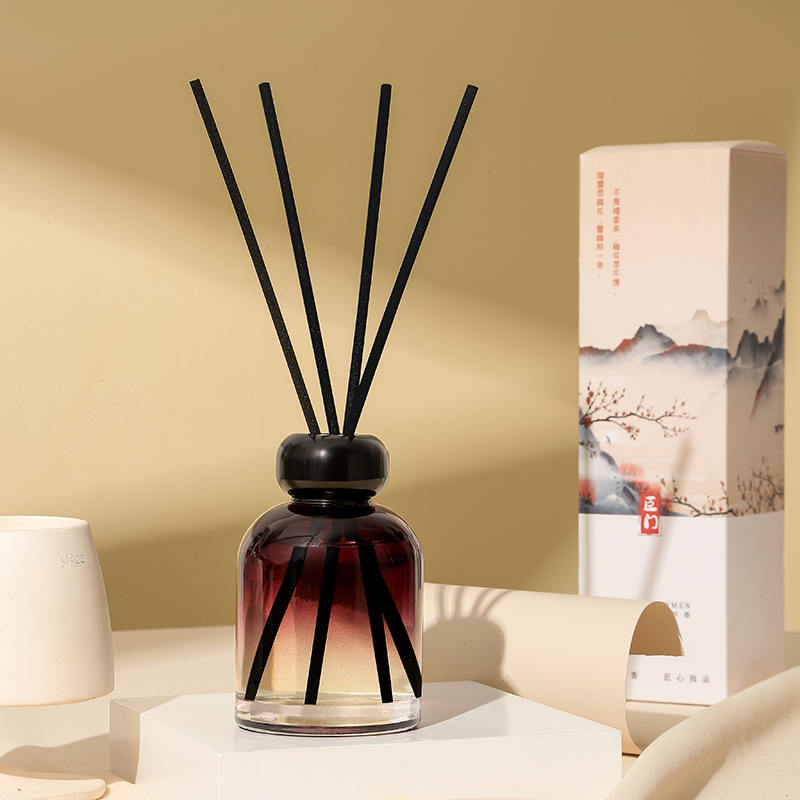
Reed diffusers are the quiet workhorse of the home fragrances category. They do not need a flame, they do not demand attention, and they can sit on a shelf for weeks while continuing to release scent. That makes them attractive for bedrooms, hotel rooms, hallways, and anywhere a buyer wants a steady background fragrance without electricity or fire. For many retail programs, the reed diffuser is the anchor item that gives the category stability.
The product looks simple, but the variables matter. A reed diffuser is a system: the fragrance oil, the solvent, the vessel, the reeds, and the opening size all work together. If the fragrance is too light, the customer may not notice it after a few days. If the fragrance is too heavy, the product can become cloying in a small room. If the reeds are too few or too thin, the scent may not travel well. If the bottle neck is too wide, the oil may evaporate faster than expected.
What buyers should check in a reed diffuser sample
When a sample arrives, do not judge it only by the first sniff from the bottle. Set it up in a room similar to the target use case. Check how quickly the scent develops, how it behaves at the two-hour mark, and how it smells after a few days. A fragrance that is impressive on the first sniff can become tiring over time. A fragrance that seems subtle at first can be the better long-duration choice.
Also check the physical details. Is the bottle stable on a shelf? Does the cap fit securely? Are the reeds straight and consistent in length? Does the label sit flat? Does the pack survive a simple drop test? Buyers often focus on the scent and forget the handling experience. A leaking bottle in transit can erase the margin on an entire shipment.
- Confirm the fill volume and headspace; the bottle should not be filled to the neck.
- Check reed count and thickness against the bottle opening and target room size.
- Ask for fragrance load and solvent information, not just a scent name.
- Review leak-proof packaging, including cap liners and shrink wrap.
- Test the product in a room with normal airflow, not a closed sample box.
Common sourcing risks with reed diffusers
The most common risk is inconsistency between the sample and the production batch. Fragrance oils can vary slightly by lot, and solvent quality can change how the scent opens. A supplier with a controlled incoming inspection process should be able to show how it checks fragrance lots, fill weights, and bottle dimensions. The second risk is packaging failure. Glass bottles are heavy, and a carton that works for a local delivery may not survive an international shipment. The third risk is a mismatch between the scent strength and the market. A value retailer may want a noticeable scent at a low unit cost; a premium home décor brand may want a more restrained, complex scent even if it costs more.
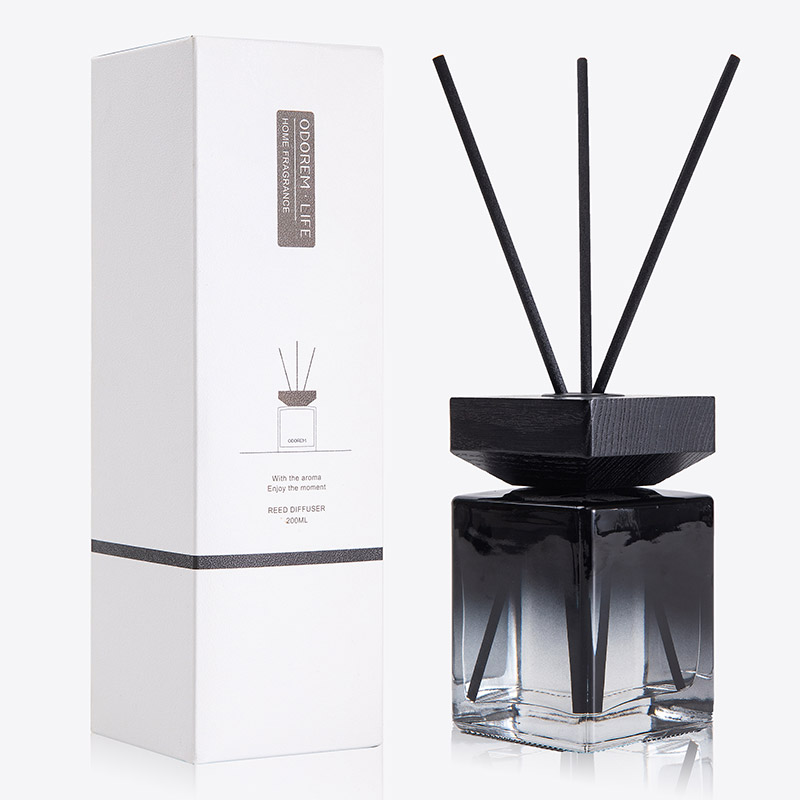
For buyers who need a defined starting point, a 180 ml household bedroom diffuser is a practical size for a mid-tier retail program. It has enough volume for a meaningful life cycle, but it does not require the shipping weight of a large-format bottle. Larger bottles can work well for hotel lobbies or premium gift sets, while smaller 100 ml to 120 ml formats suit trial purchases, travel, and add-on displays.
 180 ml Household Bedroom Fireless Reed DiffuserA practical 180 ml flame-free reed diffuser for bedrooms and living spaces, with long-lasting fragrance and odor-neutralizing formulation suited to mid-tier retail programs.View Product →
Scented Candles: Atmosphere, Safety, and Repeat Purchase
Scented candles are the most emotional product in the category. They create a focal point, they change the light in a room, and they invite a ritual. That emotional pull is exactly why the sourcing details matter. A candle that burns unevenly, smokes, or loses its scent after twenty minutes damages the brand experience more than a diffuser that is simply too subtle.
For buyers, the first decision is wax. Organic eco soy wax is a common choice for retail programs that want a cleaner-burning story and a softer, creamy look. Paraffin blends can offer strong scent throw and a lower unit cost, but they may not fit every brand position. The wax choice affects how the fragrance carries, how the surface sets, and how the candle behaves in different temperatures. It also affects the language on the pack, so the buyer should align the wax story with the actual formulation.
Wax, wick, and vessel choices that affect shelf appeal
Wick sizing is not a minor detail. A wick that is too small can tunnel, leaving wax on the sides. A wick that is too large can overheat the vessel and produce a larger flame than intended. The right wick depends on the wax, the fragrance load, the vessel diameter, and the intended burn time. A supplier should be able to show burn tests, not just a finished sample.
The vessel is part of the product. A glass jar gives a clean, classic look and lets the customer see the wax. A cement cup gives a more textured, décor-led feel. A decorative vessel can justify a higher retail price, but it also adds weight, breakage risk, and packing cost. The buyer should compare the shelf appeal against the total landed cost, not just the unit price.
- Ask for burn test results at multiple points in the candle's life.
- Confirm wick type, wick length, and wick centering.
- Check fragrance load against the wax type and vessel size.
- Review vessel heat resistance and label placement.
- Plan for seasonal temperature changes in storage and transit.
Safety and compliance details that protect your brand
Candles carry safety expectations that diffusers do not. The label needs clear instructions: trim the wick, burn within sight, keep away from children and pets, and stop using when only a small amount of wax remains. The supplier should provide safety data sheets and relevant test reports. If the candle is sold in a market with specific labeling rules, the artwork should be reviewed before production, not after.
A glass jar soy wax candle is a good example of a balanced retail item. It can carry a clean ingredient story, a visible wax pool, and a reusable vessel. For a brand owner, the same shape can be used across several scent families, which reduces packaging complexity. For a retailer, the format is easy to display and easy to gift.
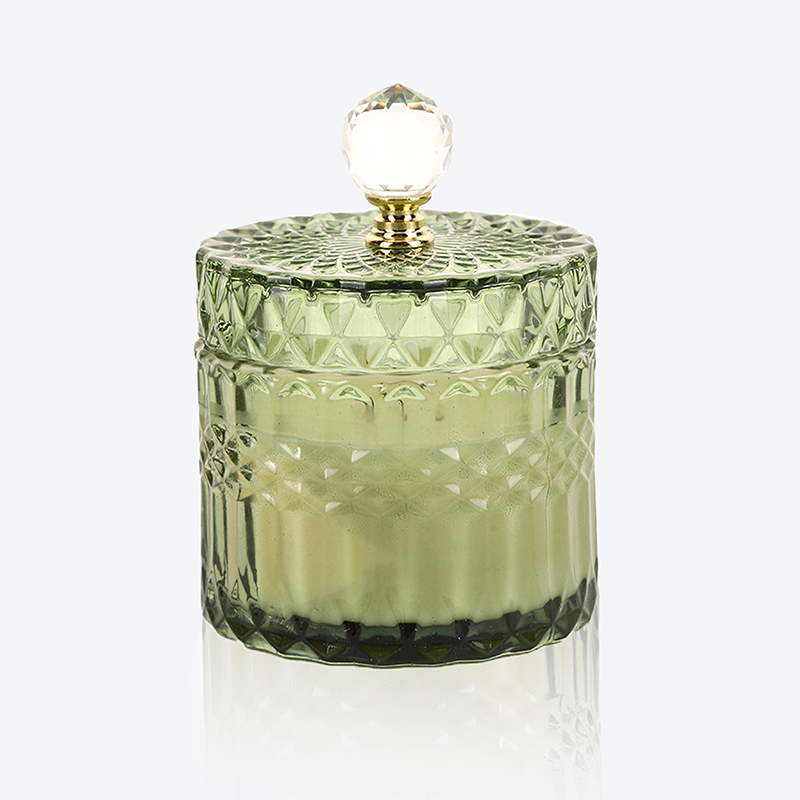 L5200B Organic Soy Wax Glass Jar CandleA glass-jar soy wax scented candle with an organic wax and essential-oil story, offering a display-friendly, giftable format for several scent families.View Product →
Solid Fragrance, Sprays, Sachets, and Adjacent Formats
Not every home fragrance program needs a flame or a bottle. Solid fragrances, room sprays, sachets, gel beads, and car diffusers give buyers lower-cost entry points and smaller-format add-ons. These formats are especially useful for gift-with-purchase, travel retail, subscription boxes, and seasonal displays where the buyer wants a low unit price without looking cheap.
Solid fragrance is a broad term. It can be a gel, a wax-like block, or a small scented piece designed for a drawer or closet. The appeal is control: there is no liquid to spill and no flame to manage. The challenge is consistency. The scent must release slowly over time, and the product must hold its shape in different temperatures. A solid fragrance that softens in a warm warehouse or dries out in a cold one will not perform the same way at retail.
Room sprays are the opposite. They are immediate, obvious, and easy to understand. A good room spray delivers a clean burst without leaving a wet residue or an overpowering cloud. The spray mechanism matters as much as the fragrance. A poor trigger can drip, clog, or produce a stream instead of a mist. For buyers, the format is attractive because it has a low unit cost and a clear use case, but the packaging and labeling still need the same attention as a premium diffuser.
Sachets and car diffusers are small-format products that work well as add-ons. A scented sachet can sit in a drawer or a suitcase; a hanging car diffuser can clip into a vehicle. Both formats need a fragrance that is noticeable in a small space without becoming harsh. They also need packaging that protects the scent until the customer opens it. If the scent leaks through the packaging in the warehouse, the product will arrive weak or inconsistent.
- Match the format to the expected use cycle: immediate, daily, or long-term.
- Check the barrier packaging for sachets and solid formats.
- Review spray triggers for drip, mist quality, and compatibility with the formula.
- Confirm heat and humidity stability for car diffusers and gel beads.
Fragrance Selection by Room and Customer Profile
Once the format is set, the next question is scent direction. This is where many buyers get stuck, because fragrance is personal and every stakeholder has an opinion. The useful approach is to build a small, balanced range rather than chase a single perfect scent. A range gives the customer choice and gives the buyer a way to compare sell-through across scent families.
A practical range often includes four directions: fresh, floral, woody, and sweet. Fresh scents, such as citrus, green leaves, or sea salt, work well in bathrooms, kitchens, and entryways. Florals, such as jasmine, rose, or peony, suit bedrooms and gift sets. Woody scents, such as cedar, sandalwood, or amber, work in living rooms and hotel spaces. Sweet scents, such as vanilla, tonka, or baked notes, are strong in seasonal and gift programs. The exact names can change by market, but the underlying families are a useful planning tool.
The chart below gives an indicative view of how long different formats tend to stay noticeable in normal indoor use. It is not a specification sheet. It is a planning aid to help buyers compare the rhythm of each format before they commit to a program.
The numbers are midpoints, not promises. A reed diffuser may last longer in a cool, low-airflow room and shorter near a window or air vent. A candle's life depends on burn time, wick trim, and draft. A sachet may fade faster in a warm closet. The value of the chart is comparative: it helps a buyer see which formats support a long-use story and which formats are better for quick refresh or add-on purchases.
For our own home fragrance programs, the room logic usually leads to a three-tier assortment. The first tier is a long-duration anchor, such as a reed diffuser or a candle. The second tier is a quick-refresh item, such as a room spray or gel beads. The third tier is a small add-on, such as a sachet or car diffuser. This structure gives the retailer a clear shelf story and gives the customer a reason to buy across formats.
For hotel and guest-room programs, the same logic applies with a tighter control on intensity. A no-fire reed diffuser with a clean bottle, a secure cap, and a restrained fragrance can support a consistent guest-room scent without requiring housekeeping to manage a flame. The packaging should also be easy to store and quick to replace.
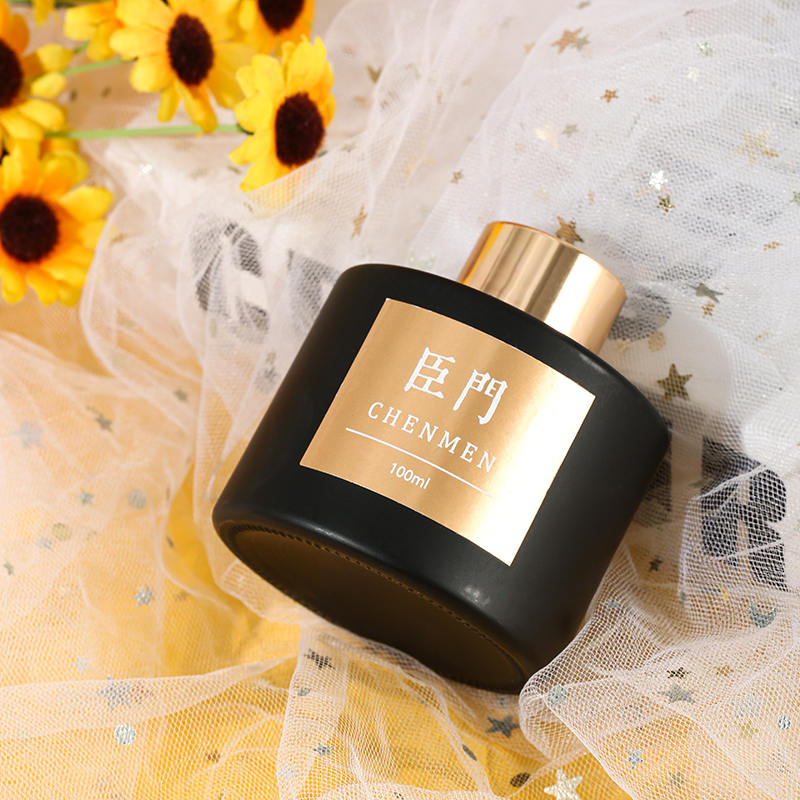 Black Bottle Dried Flower Hotel Reed DiffuserA 100 ml flame-free hotel reed diffuser with dried-flower decoration and adjustable fragrance intensity, suited to guest-room scenting and easy replacement.View Product →
Quality, Compliance, and the Details Buyers Audit
Quality and compliance are where a home fragrance program either becomes repeatable or turns into a series of fire drills. The category touches fragrance chemistry, packaging, safety, and international shipping. A buyer does not need to be a chemist, but the buyer should know which documents and checkpoints matter.
The first checkpoint is the fragrance itself. Ask for the safety data sheet, the allergen declaration where required, and the recommended usage level. A supplier should be able to explain whether the fragrance is suitable for the intended format. A fragrance that performs well in a candle may not perform the same way in a reed diffuser, and vice versa. The second checkpoint is the substrate: wax, solvent, gel, or carrier. The combination of fragrance and substrate determines how the product releases scent and how stable it will be over time.
What factory certifications actually tell you
Factory certifications such as BSCI and WCA are not product certifications. They tell a buyer that the factory has been assessed against social compliance and workplace conditions criteria. That matters for retail chains and brand owners who have supplier audit requirements. It does not replace product testing, but it reduces the risk of a compliance surprise during onboarding. A supplier that already holds these audits is often easier to add to a retail vendor list.
Product compliance is separate. Depending on the market, a home fragrance item may need labeling for allergens, flammable liquids, child safety, or transport classification. A candle may need burn instructions and warning text. A room spray may need aerosol or flammable liquid labeling. The buyer should confirm the destination market and the channel requirements before artwork is approved. It is much cheaper to fix a label in the design stage than to rework a shipment.
Incoming inspection and batch consistency
Consistency is the quiet requirement behind every repeat order. The fragrance should smell the same from batch to batch, the fill weight should stay within tolerance, the color should match the approved standard, and the packaging should assemble the same way. A factory with a documented incoming inspection process should check raw materials, fragrance lots, bottles, caps, reeds, wicks, and labels. The buyer should ask for the inspection points, not just the final quality report.
For reed diffusers, fill weight and leak checks are critical. For candles, burn tests and wick centering are critical. For sprays, trigger function and leakage are critical. For sachets, fragrance loading and barrier packaging are critical. A single checklist cannot cover every format, so the quality plan should be format-specific.
- Request safety data sheets and allergen information for each fragrance.
- Confirm the test reports required by the destination market.
- Ask how fragrance lots are compared against the approved standard.
- Review fill weight, leak, and drop-test records for liquids.
- Check burn test records and wick specifications for candles.
- Confirm label artwork approval before mass production.
Packaging and Private Label: Where Margin Is Won or Lost
Packaging is where many home fragrance programs win or lose margin. The product itself may cost a few dollars, but the box, insert, label, shrink wrap, and carton can change the landed cost significantly. Packaging also carries the brand story. A reed diffuser in a plain brown box and the same diffuser in a structured gift box are not the same retail item, even if the liquid inside is identical.
For private label buyers, the first packaging decision is the level of customization. A stock bottle with a custom label is the fastest route. A custom bottle with a custom cap and a printed box takes longer and usually requires a higher MOQ. The buyer should match the packaging investment to the expected sell-through. A seasonal gift set can justify more packaging because the customer is buying the complete presentation. A value-channel item should keep packaging simple and protective.
There is also a practical shipping issue. Glass bottles are heavy, and candles are fragile. The packaging must protect the product through transit, storage, and shelf handling. A box that looks beautiful but collapses in a humid warehouse is not a good box. Buyers should ask for transit tests, carton configuration, and pallet patterns. The cheapest unit price can disappear if the damage rate is high.
- Choose between stock, semi-custom, and fully custom packaging based on volume.
- Confirm label material and adhesive for glass, plastic, and textured surfaces.
- Review gift box structure, insert fit, and unboxing sequence.
- Ask for carton drop-test and palletization details.
- Keep packaging dimensions efficient to reduce freight cost.
MOQs, Lead Times, and Seasonal Planning
MOQs and lead times are often discussed too late. A buyer finds a product, falls in love with the sample, and then discovers that the MOQ is far above the forecast or the lead time does not fit the season. The better approach is to discuss volume and timing before the sample is approved. That conversation shapes the format, the packaging, and even the fragrance choice.
MOQs are usually driven by material minimums, printing minimums, and production line efficiency. A stock bottle with a digital label may have a lower MOQ than a custom-colored glass bottle with a printed gift box. A candle in a stock glass jar may be easier to scale than a custom ceramic vessel. If the buyer needs a low initial order, the supplier may recommend a stock component with a custom label, or a smaller fill size that uses existing tooling.
Lead times should be planned backward from the retail set date. The calendar usually includes sample approval, fragrance confirmation, packaging artwork, component lead time, production, quality inspection, and sea or air freight. A seasonal program that misses the set date can lose the entire selling window. Buyers should ask for a production schedule with buffer, not a single lead-time number.
- Confirm MOQ by format, fragrance, and packaging combination.
- Ask which components are stock and which are custom.
- Build a timeline that includes sample rounds and artwork approval.
- Plan for Chinese New Year and peak-season capacity constraints.
- Decide which items can ship by sea and which need air freight.
How to Compare Home Fragrance Suppliers Without Getting Lost
Comparing home fragrance suppliers is not only a price exercise. Two quotes for the same reed diffuser can look similar until you compare the fragrance load, the bottle weight, the cap quality, the reed count, the packaging, the certification status, and the payment terms. A lower unit price can be more expensive if it comes with a weaker fragrance, a thinner bottle, or a higher damage rate.
A useful comparison starts with a common brief. Give every supplier the same format, fill size, scent direction, packaging level, destination market, and target order quantity. Then compare the responses on the same basis. The supplier that asks good questions is often the better partner. The supplier that quotes without asking about the market or the use case may be guessing.
The factory profile matters as well. A home fragrance manufacturer with in-house fragrance development, filling, and packing can usually control more of the process. A trading company may offer more flexibility on sourcing but less control on production. Neither model is automatically better. The buyer should understand where the product is made, who checks the quality, and who owns the corrective action if something goes wrong.
At Ningbo Habest Home Co., Ltd., our factory in Ningbo has been producing home fragrance and household products since 2012. The site covers 6,500 square meters, with five production lines and a focus on ODM and OEM programs for international retailers and brand owners. We hold BSCI and WCA audits and work from development through raw material control, manufacturing, inspection, warehousing, and shipping. That does not make every project identical, but it gives buyers a clear starting point for a supplier conversation.
Related pages for your sourcing review
Use these pages to compare formats and see current product directions before you brief a supplier.
A Practical Sourcing Checklist for Home Fragrances
A sourcing checklist keeps the conversation practical. It also makes it easier to compare quotes and samples without relying on memory. The list below is not exhaustive, but it covers the items that most often decide whether a home fragrance program runs smoothly.
- Define the channel, retail price, and target customer before sampling.
- Choose the format by room, use cycle, and maintenance expectation.
- Set the fragrance family and intensity target, not just a scent name.
- Confirm the fill size, vessel, reed or wick specification, and packaging level.
- Request safety data sheets, test reports, and labeling requirements.
- Check factory audit status, quality process, and corrective action system.
- Agree on MOQ, sample timeline, production lead time, and shipping method.
- Approve the golden sample and keep it as the production reference.
- Plan incoming inspection and damage-rate targets before the first shipment.
- Review the reorder plan while the first batch is still in production.
FAQ: Home Fragrances Sourcing Questions Buyers Ask
What is the best home fragrance format for a first retail program?
There is no single best format. For a first program, a reed diffuser or a glass jar candle is often easier to present because the use case is clear and the product has a visible gift or décor value. A room spray or sachet can work well as a lower-cost add-on. The right choice depends on the retail price, the shelf space, and the customer's routine.
How many home fragrances should a buyer include in one range?
A focused range usually works better than a wide one. Four to six scent directions across two or three formats give the customer choice without overwhelming the shelf. The range should include a fresh option, a floral option, a woody option, and a sweet or seasonal option. The exact number depends on the channel and the space available.
Can a home fragrance manufacturer help with private label?
Yes. A manufacturer with ODM and OEM experience can support label design, vessel selection, fragrance development, packaging, and production. The buyer should confirm the MOQ for each component, the artwork approval process, and the sampling timeline. Private label works best when the buyer has a clear brand position and a realistic volume forecast.
What should I check in a reed diffuser sample?
Check the scent development over several days, not just the first sniff. Confirm the fill volume, reed count, bottle stability, cap fit, and leak resistance. Ask for the fragrance load and solvent information. Test the product in a room with normal airflow, and compare the sample against the production specification before placing a bulk order.
How do I compare candle quality between suppliers?
Ask for burn test records, wick specifications, wax type, fragrance load, and vessel heat resistance. A good candle should burn evenly, not smoke excessively, and maintain its scent for a reasonable portion of the burn time. The label should include clear safety instructions. The cheapest candle is not necessarily the best value if it tunnels or produces a weak scent.
What certifications should a home fragrance supplier have?
BSCI and WCA are common factory audits for international retail supply chains. They cover social compliance and workplace conditions, not product performance. Product compliance depends on the destination market and may include safety data sheets, allergen declarations, transport classification, and label requirements. Buyers should confirm both factory and product compliance.
How long does a home fragrance program take to produce?
The timeline depends on the format, packaging, and customization level. A stock component with a custom label is faster than a fully custom vessel and gift box. A realistic plan includes sample approval, fragrance confirmation, artwork approval, component lead time, production, inspection, and freight. Buyers should build in buffer for seasonal capacity and Chinese New Year.
Can you supply home fragrances for hotels and retail chains?
Yes. Hotel and retail programs usually need consistent scent, reliable packaging, and documentation. A supplier with experience in ODM and OEM production can support both. The buyer should define the room size, desired intensity, maintenance routine, and packaging format before sampling. For hotel use, a no-fire diffuser and a fast-acting room spray often work well together.
What is the difference between a home fragrance supplier and a wholesaler?
A supplier may manufacture, develop, or source the product. A wholesaler typically carries stock and sells in smaller quantities. For custom programs, a manufacturer or ODM supplier is usually the better fit because it can control fragrance, packaging, and production. For low-volume testing, a wholesaler may be more convenient. The buyer should confirm who owns the quality check and the corrective action.
How do I keep fragrance quality consistent across repeat orders?
Approve a golden sample, document the fragrance specification, and require incoming inspection for each lot. Ask the supplier how it compares fragrance lots, fill weights, and component dimensions against the standard. Keep the approved packaging and label artwork on file. Consistency is a process, not a single test.
Home fragrances are a category that rewards planning. The product has to smell right, look right, ship safely, and meet the compliance expectations of the destination market. Buyers who start with the format and the room, then move to the fragrance and the packaging, usually get a better result than buyers who start with a scent name and work backward.
For retailers, brand owners, and distributors, the practical next step is to build a small range around clear use cases: a long-duration anchor, a quick-refresh item, and a small add-on. Then compare suppliers on the same brief, the same quality checkpoints, and the same landed-cost basis. That approach keeps the category creative without making it chaotic.
If you are reviewing a home fragrance program for an upcoming season, start with the format mix and the room story. The fragrance can be refined, the packaging can be adjusted, and the price can be negotiated. The one thing that is hard to fix later is a product that was never designed for the channel it is meant to sell in.


 INTERACT WITH US
- Phone:+86-15888548612
- Tel:+86-0574-88408268
- E-mail:[email protected]
- Address:312 Kemao Road, Jishigang Town, Haishu District, Ningbo City, Zhejiang Province, China.


