
 English
 Español
 عربى

How to Become a Perfumer: Training Routes, Skills, and Home Fragrance Careers
Content
- 1 The short answer: how to become a perfumer
- 2 What a perfumer actually does all day
- 3 The four realistic routes into perfumery
- 4 Core skills to build before you call yourself a perfumer
- 5 How to train your nose without wasting a year
- 6 From formula to product: the part that separates hobby from profession
- 7 Applying perfumery to home fragrance and candles
- 8 Working with a home fragrance manufacturer, supplier, or wholesaler
- 9 Costs, timeline, and career expectations
- 10 Common myths and practical risks
- 11 FAQ: How to Become a Perfumer
- 11.1 Do you need a chemistry degree to become a perfumer?
- 11.2 How long does it take to become a perfumer?
- 11.3 Can you become a perfumer without a formal school?
- 11.4 What skills should a beginner practice first?
- 11.5 Is perfumery only about fine fragrance?
- 11.6 How do home fragrance products differ from alcohol perfumes?
- 11.7 How do you know if a scent can be manufactured?
- 11.8 What should a buyer ask a reed diffuser manufacturer or scented candle supplier?
- 12 Next steps for an aspiring perfumer
A product developer opens a sample vial, smells it twice, and asks a practical question: can this scent be repeated at 5,000 units without losing its character? That question sits at the center of how to become a perfumer. The work is creative, but it is also technical, documented, and tied to production. The most reliable path is to build three things at the same time: a trained nose, safe lab habits, and a portfolio of formulas that can survive real manufacturing.
Formal education can help, especially for roles inside large fragrance houses, but it is not the only route. Independent perfumers, home fragrance developers, candle makers, and product managers often enter through short courses, lab assistant work, application testing, or years of self-study. What separates a hobby from a profession is not the number of oils on a shelf. It is the ability to evaluate a scent, record it clearly, test it in the final product base, and explain why it will or will not work at scale.
Key takeaway: becoming a perfumer is a practice built on scent memory, safety, documentation, and product testing, not a single certificate.
The short answer: how to become a perfumer
There is no single license that makes someone a perfumer. In commercial fragrance, the title usually reflects a combination of training, supervised experience, and proven ability to create or adapt formulas for a brief. Some perfumers spend years in formal perfumery schools. Others enter through a chemistry, food science, cosmetic science, or application lab route and learn on real projects. A growing number of independent makers build skills through structured self-study, small-batch production, and direct work with brands.
For most beginners, the practical sequence looks like this: learn basic material safety and dilution; build a reference library of raw materials; practice smelling blind and describing differences; study simple accords; make small trials with accurate records; test each trial in the intended base, such as alcohol, reed diffuser liquid, wax, gel, or room spray; then repeat. The repetition matters more than the first formula. A perfumer needs to understand why a formula changes after two weeks, why one material disappears in wax, or why a fragrance that smells elegant in a bottle may turn sharp on a reed.
If your goal is a corporate fragrance role, chemistry and formal perfumery training carry more weight. If your goal is home fragrance development, candle design, or an independent brand, a portfolio of tested products and a clear development process can be more persuasive than a certificate alone. A home fragrance manufacturer, scented candle supplier, or fragrance wholesaler will usually care about stability, safety documentation, cost, and batch consistency as much as creativity.
Key takeaway: choose the route that matches your target job, then prove your skill through tested formulas and clear documentation.
What a perfumer actually does all day
The romantic image of a perfumer is a person surrounded by hundreds of bottles, waiting for inspiration. The real work is more structured. A typical day may include reviewing a brief, smelling trials from the previous week, adjusting a formula by tiny percentages, checking how a scent performs on a substrate, and writing notes for the next iteration. In a fragrance house, the perfumer also works with evaluators, application specialists, marketing teams, and production staff.
A brief can be detailed or vague. A brand may ask for “a clean linen scent for a bedroom reed diffuser that does not smell like detergent and still performs after four weeks.” That single sentence hides many decisions: which top notes give lift without becoming harsh, which heart notes support the linen idea, which base materials fix the scent in the carrier, and which raw materials are cost-effective at the target volume. The perfumer must translate mood into materials and then defend the formula through testing.
Documentation is part of the craft. Every trial needs a code, date, formula version, material lot, dilution rate, and test result. Without records, a lucky trial cannot be repeated. This is especially important in home fragrance, where a formula may be produced as a reed diffuser, room spray, candle, gel bead, or sachet. Each format changes how the fragrance is released. A perfume that performs well on skin may fail in a candle because the wax and wick alter the scent path.
Key takeaway: professional perfumery is repeated evaluation and controlled iteration, not a single moment of inspiration.
The four realistic routes into perfumery
People enter perfumery through several paths. The right one depends on your background, budget, location, and the kind of work you want. A formal school is useful for structured material study and access to industry networks. An in-house program at a fragrance house gives real briefs and mentor feedback. A lab or technical route builds process discipline. The independent route offers flexibility but requires you to close your own knowledge gaps. None of these routes is automatically superior; they simply lead to different first jobs and different habits.
It also helps to separate “perfumer” from nearby roles. Fragrance evaluators, application technologists, product developers, quality specialists, and regulatory assistants all work with scent. Some people move into perfumery after years in one of these roles. For a beginner, a related job can be a practical way to learn the language of the industry while earning a salary.
Route comparison
| Route | Typical entry | Strengths | Limitations | Best fit |
|---|---|---|---|---|
| Formal perfumery school | Competitive application, often with chemistry or science background | Structured material study, evaluation discipline, industry exposure | Cost, location, limited seats, high expectations | Learners aiming for corporate fragrance roles |
| In-house fragrance house training | Lab assistant, evaluation, application, or junior perfumer role | Real briefs, mentor feedback, commercial standards | Hard to access without prior experience | People building a long-term career inside a fragrance house |
| Lab or technical route | Quality, application, formulation, or production support work | Strong documentation, safety habits, scale-up knowledge | Creative briefs may come later | Detail-oriented people who enjoy process and testing |
| Independent or artisan route | Self-study, short courses, small brand work, home fragrance projects | Flexibility, fast portfolio building, direct customer feedback | Higher risk of gaps in safety, stability, and performance testing | Founders, home fragrance makers, and career changers |
For independent learners, the danger is not lack of creativity. It is lack of feedback. A maker can spend months refining a scent that smells pleasant in a bottle but fades in a candle or separates in a reed diffuser. Working with a manufacturer, supplier, or experienced evaluator can reveal problems early. Even a small brand should learn basic stability testing, batch recording, and material safety before selling a product.
Key takeaway: the best route is the one that gives you structured feedback, real testing, and a habit of recording every trial.
Core skills to build before you call yourself a perfumer
A perfumer needs more than a good nose. The craft combines sensory memory, material knowledge, safety awareness, creative blending, and commercial judgment. Beginners often focus on recipes, but recipes are the output. The skill is knowing how to adjust a formula when a material changes, when a client asks for lower cost, or when a scent must work in a different product base. The balance below shows where many learners need to invest time, not a fixed score for every career path.
The chart is indicative rather than scientific. It reflects the relative effort many aspiring perfumers need across core areas before their work becomes reliable in a commercial setting.
In our work as a home fragrance manufacturer, we see how quickly a promising scent meets practical limits. A formula may smell balanced at the bench and then become too weak in a 180 ml reed diffuser, or too sweet in a soy wax candle. Testing in the final base is not optional. It changes the choice of top notes, the dosage, and sometimes the entire structure. A perfumer who understands the base can save weeks of rework.
Commercial awareness also matters. A formula that uses rare materials at a high dose may be beautiful but impossible for a wholesale program. A good perfumer can create options at different cost levels without treating lower-cost versions as failures. They can explain trade-offs clearly: this version has more lift, this one lasts longer, this one suits a bedroom reed diffuser, and this one works better in a decorative candle. That kind of communication is valuable to brand owners, retailers, and suppliers.
Key takeaway: technical discipline and base-specific testing turn a pleasant smell into a repeatable product.
How to train your nose without wasting a year
Nose training works best when it is simple and repeatable. Choose a small set of reference materials, smell them on separate paper strips, and write down what you notice before checking the label. Start with recognizable families: citrus, floral, woody, resinous, spicy, green, musky, and gourmand. Then add materials that appear often in home fragrance, such as lavender, eucalyptus, cedarwood, patchouli, vanilla, and clean musk alternatives. The goal is not to memorize every raw material. It is to build reliable comparisons.
Use dilution. Smelling undiluted materials repeatedly can dull your nose and create safety problems. Prepare small, labeled dilutions according to supplier guidance and keep notes on intensity. Practice blind tests with three strips at a time. Ask yourself which is softer, which fades first, which has more lift, and which feels sharp. Then wait ten minutes and smell again. A material that seems weak at first may become stronger, while a bright top note may disappear quickly.
Keep a scent journal with dates, dilutions, descriptions, and context. Note whether you smelled the material on paper, in alcohol, in a reed diffuser base, or in wax. This distinction matters because home fragrance is a product category, not a perfume counter. A scent that is elegant on skin may be too heavy in a room spray or too faint in a candle. Test in the format you plan to sell.
Do not rely only on essential oils. A professional perfumer uses natural materials, synthetic aroma materials, and blends of both. Synthetics can provide consistency, performance, and safety advantages when used correctly. Natural materials can add depth and character, but they vary by harvest and may carry allergen or stability concerns. The skill is in selection and dosage, not in choosing one category as automatically better.
Key takeaway: train with diluted references, blind comparisons, and written records, then repeat the process in the final product base.
From formula to product: the part that separates hobby from profession
A formula is only the beginning. A professional product also needs a stable base, compatible packaging, a safe dosage, a clear label, and a production process that can be repeated. In a reed diffuser, the carrier solvent, fragrance load, reed material, bottle opening, and room airflow all affect performance. In a candle, wax type, wick size, fragrance load, cure time, and vessel diameter matter. A perfume oil that performs well in one system may fail in another.
Testing should follow a schedule. Check the sample at day one, day three, one week, two weeks, and four weeks. Look for color change, separation, sediment, corrosion on the cap, softening of the label, and changes in scent strength. For candles, test burn pools, soot, tunneling, and scent throw. For reed diffusers, test wick saturation, scent intensity over time, and whether the reeds clog or soften. These checks are not glamorous, but they prevent returns and complaints.
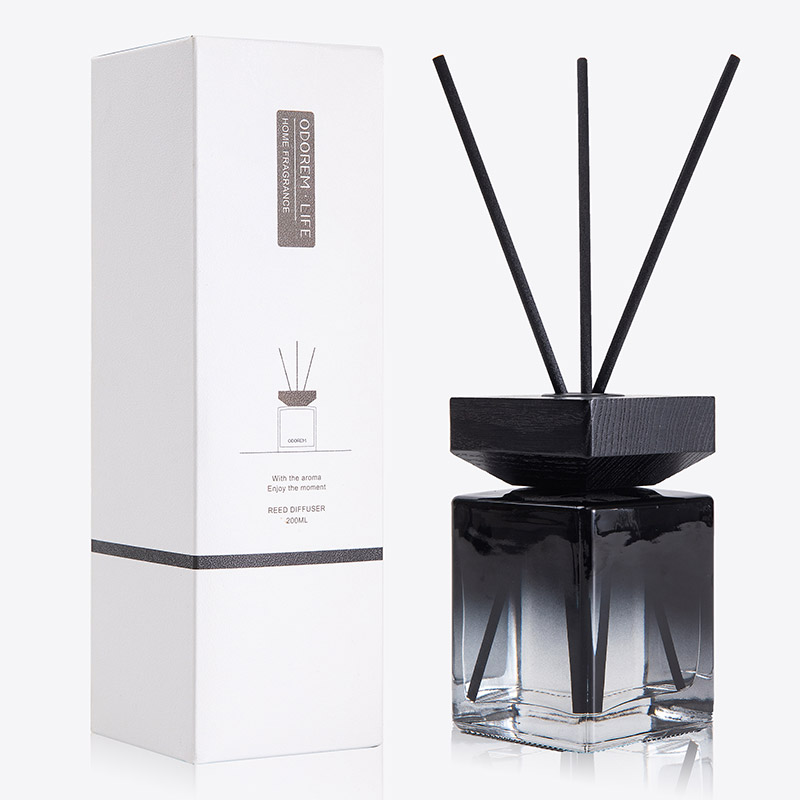
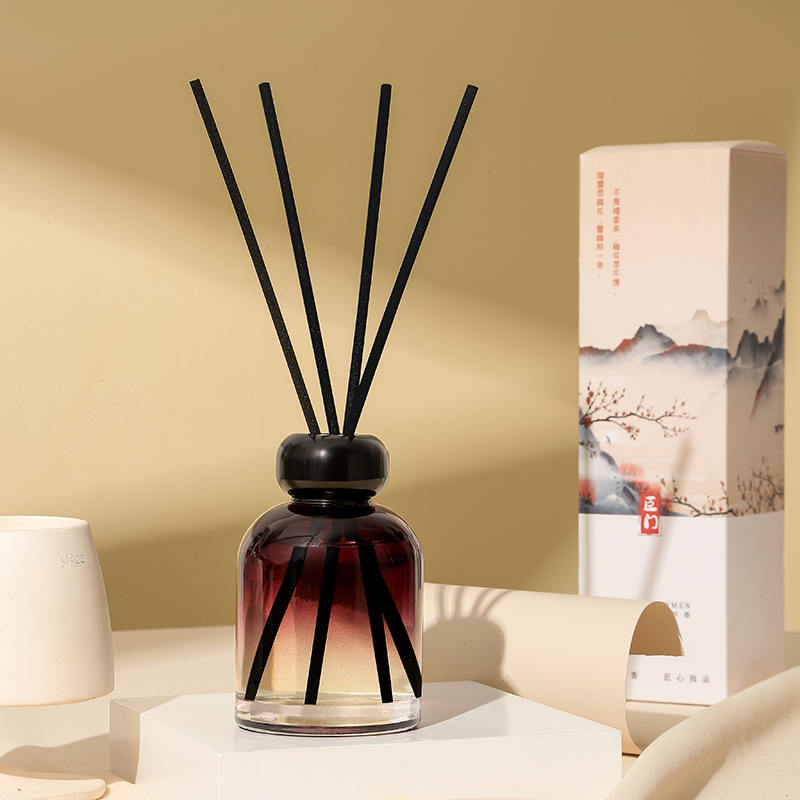
A 180 ml reed diffuser for a bedroom and household setting is a useful example because it sits between small decorative formats and larger room-filling formats. The fragrance must have enough lift to be noticed without becoming overwhelming in a closed room. It also needs to remain stable in the bottle and on the reeds. This is the kind of format where a perfumer’s understanding of base notes and carrier compatibility becomes visible to the end user.
 180 ml Fireless Reed Diffuser for Bedroom UseA flame-free 180 ml reed diffuser for bedrooms and living spaces, combining odor-neutralizing plant extracts with long-lasting fragrance and a 25 cm reed.View Product →
Cost control belongs here too. A formula may need to move from a lab-scale trial to a production batch with ingredients that are available in consistent supply. If a key material is hard to source, the perfumer should have an alternative ready. If a package change alters airflow, the fragrance may need adjustment. Production is not an afterthought; it is part of the design brief.
Key takeaway: a scent becomes a product only after it passes stability, compatibility, and use-testing in the actual package.
Applying perfumery to home fragrance and candles
Home fragrance has different rules from alcohol perfume. A fine fragrance is often evaluated on skin, where body heat changes the scent over hours. A reed diffuser releases scent continuously from a carrier liquid through reeds. A candle releases scent when heated by a flame, and the wax and wick influence what the user smells. A room spray delivers a quick burst that must settle without leaving a harsh residue. These differences shape how a perfumer builds a formula.
For reed diffusers, top notes need to be noticeable without evaporating too fast. Heart notes support the character, while base notes help the scent remain steady over weeks. The carrier solvent must dissolve the fragrance clearly and remain visually acceptable. For candles, the fragrance must be compatible with the wax, wick, and cure process. Some materials that perform well in liquid diffusers can mute or distort in wax. A perfumer who understands these interactions can reduce trial and error.
Decorative formats add another layer. Glass jars, cement cups, colored bottles, dried flowers, and gift packaging all shape the customer’s expectation. A scent called “romantic and long-lasting” carries a promise that must be supported by the product. A “clean linen” scent for a bedroom should smell fresh without turning into a detergent note. A warm woody scent for a hotel lobby should feel composed, not heavy. The perfumer’s job is to match the scent structure to the setting and the package.
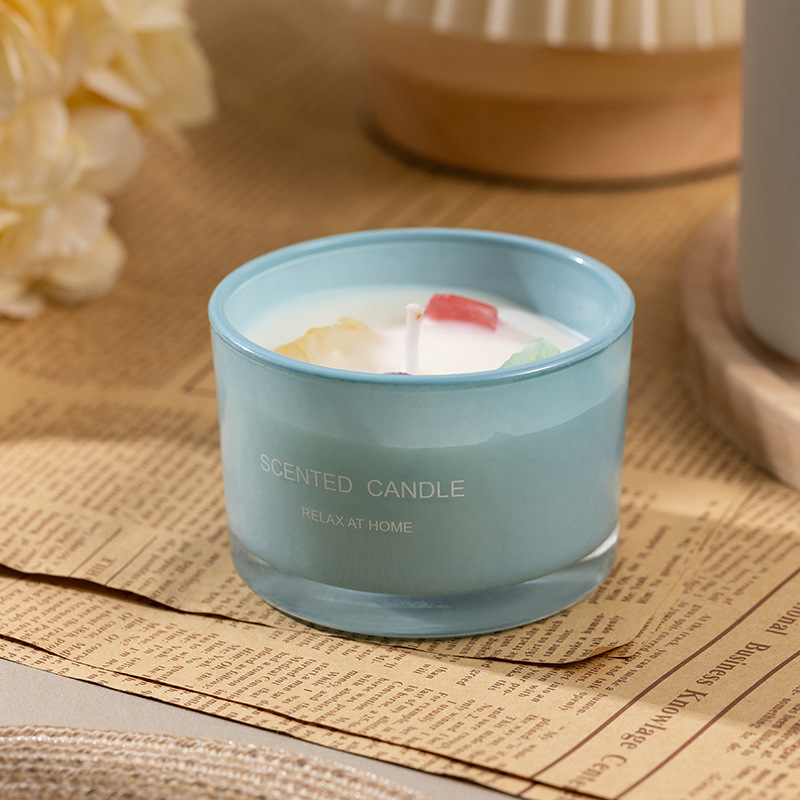
For organic eco soy wax candles, the wax base can affect how clearly the fragrance reads. The perfumer may need to adjust the ratio of top, heart, and base notes to achieve good cold throw and hot throw. Cure time also matters, because a candle that smells strong on the day of pouring may change after a week. The same principle applies to a decorative scented candle that must look attractive on a shelf and still perform when burned.
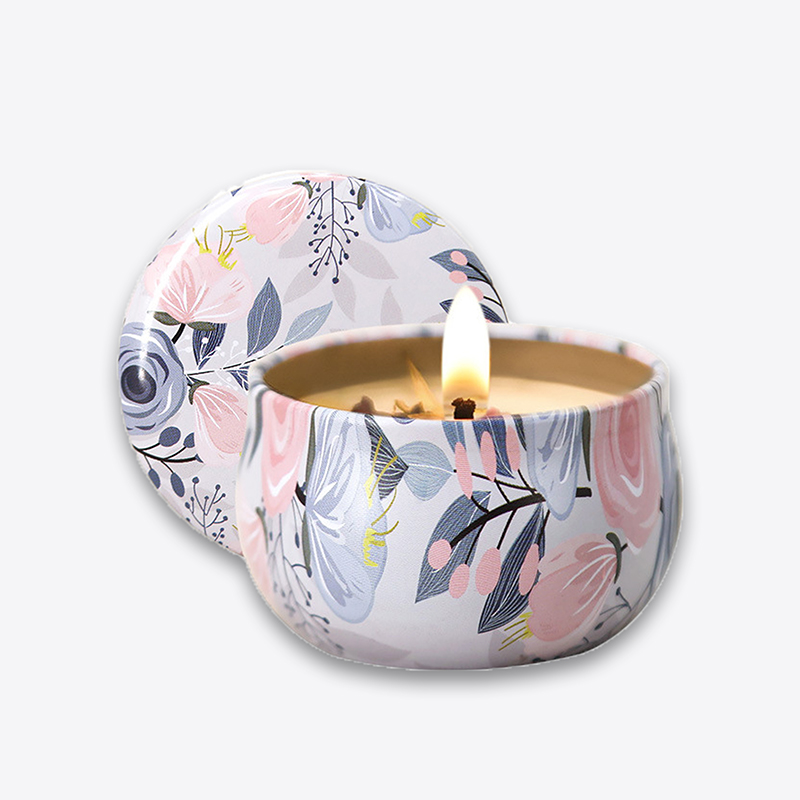 Organic Soy Wax Decorative Scented Candle L5070BA decorative 100% soy wax candle in Westin White Tea and English Pear & Freesia scents, suited to home ambience and gifting.View Product →
This is why brand owners should not brief a candle by mood alone. A useful brief includes the room size, burn time target, wax type, vessel, wick, target cost, and the scent families the brand wants to avoid. The clearer the brief, the faster a perfumer or supplier can propose workable directions. A good home fragrance manufacturer can translate those requirements into sample options without losing the creative idea.
Key takeaway: in home fragrance, the delivery format is part of the formula, so scent design must start with the final product in mind.
Working with a home fragrance manufacturer, supplier, or wholesaler
An independent perfumer can create a beautiful formula, but many brands need a manufacturing partner to turn it into a retail-ready product. A home fragrance manufacturer with ODM or OEM experience can help with fragrance selection, base matching, packaging, stability checks, and production planning. A scented candle supplier may have its own wax and wick systems. A fragrance wholesaler may offer a library of stock scents that can be adapted. Each type of partner solves a different problem.
When comparing suppliers, ask specific questions. Can they show stability test records for the exact base and package? Do they provide safety documentation for the fragrance concentrate? What is the minimum order quantity for a custom scent versus a stock scent? How do they handle color, sedimentation, and label compatibility? What is the sample lead time, and how many revision rounds are included? These questions reveal whether the supplier works with a repeatable process or only promises a pleasant smell.
A large-bottle flameless reed diffuser is a good format for testing a supplier’s range because it combines fragrance load, carrier compatibility, and long-use performance. A 200 ml large bottle format may suit a living area or hotel setting, where the scent needs to remain present without becoming tiring. The supplier should be able to explain how the fragrance behaves over four weeks, not only how it smells on day one.
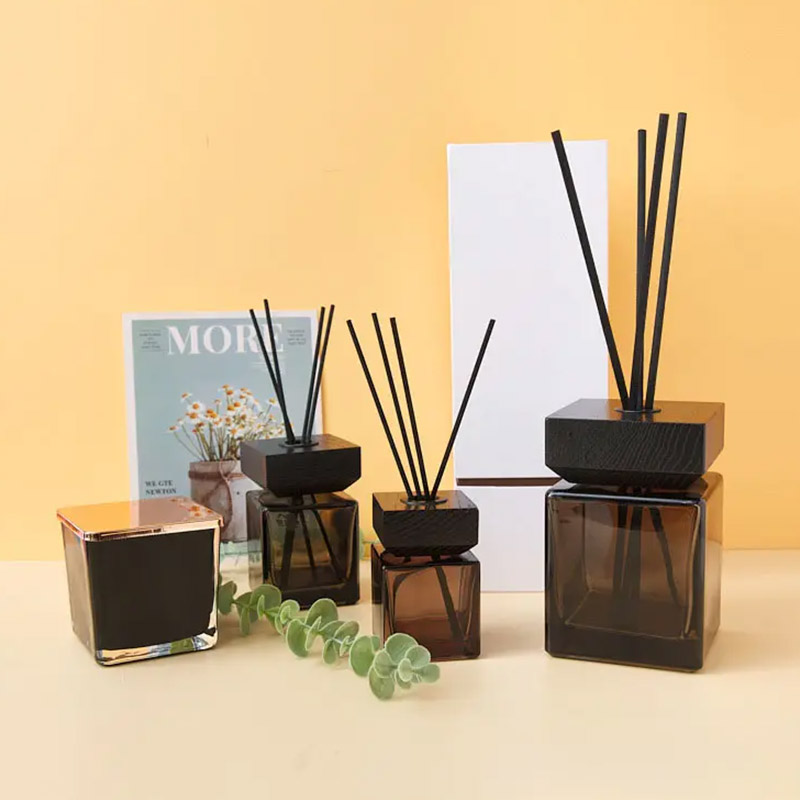 200 ml Large Bottle Flameless Reed DiffuserA 200 ml flameless reed diffuser with slow-release plant extracts, offering 6–8 months of fragrance for living rooms, bedrooms, offices, and hotel-like settings.View Product →
Brand owners should also clarify who owns the formula. If the supplier develops the scent, the brand may receive a production formula with restrictions. If the brand brings its own formula, the supplier needs to confirm that the materials are available and compatible with the base. A written brief, sample approval record, and clear quality standard reduce disputes later.
Key takeaway: choose a manufacturer or supplier that can document stability, safety, and production consistency for the exact product you plan to sell.
Costs, timeline, and career expectations
Becoming a perfumer takes time, but the timeline varies widely. A focused independent learner may build a basic understanding of materials and simple formulas within six to twelve months. That does not make them a seasoned perfumer. Commercial readiness often takes several years because it requires repeated briefs, evaluation feedback, and exposure to production constraints. A formal route can take longer and cost more, but it may open doors to structured training and industry networks.
Costs include raw materials, dilution bottles, pipettes, labels, safety references, courses, and testing. Beginners often underestimate the cost of making many small trials. A single trial may use only a few grams, but the learning comes from comparison across versions. In home fragrance, there are additional costs for bases, wax, wicks, vessels, and stability testing. A brand should budget for sample rounds, not just one prototype.
Career options include perfumer, junior perfumer, fragrance evaluator, application technologist, product developer, quality specialist, and technical sales support. Some roles are more creative, while others are more process-driven. A perfumer in a large fragrance house may work on briefs from many brands. An independent perfumer may spend more time on client communication, sourcing, and packaging. Both paths require clear records and honest claims.
Key takeaway: plan for years of practice, not months, and budget for testing, materials, and sample revisions.
Common myths and practical risks
One common myth is that every perfumer needs a chemistry degree. Chemistry helps, and it is valuable for safety and material understanding, but many independent perfumers learn through structured courses and supervised practice. Another myth is that a scent that smells good in a bottle will automatically work in a candle or diffuser. It may not. The base, heat, airflow, and packaging can change the scent significantly.
A third myth is that natural materials are always safer or better. Natural materials can be beautiful, but they can also vary in composition and carry allergen concerns. Synthetic materials are not automatically inferior. The real issue is correct use, dosage, and documentation. A fourth myth is that one supplier can make every format equally well. Reed diffusers, candles, room sprays, and gel beads require different production knowledge. A supplier that excels in one format may need to prove its capability in another.
Practical risks include weak scent throw, color change, separation, wick problems, label damage, and inconsistent batches. These risks are reduced by clear specifications, sample approval, stability testing, and production checks. A perfumer who understands manufacturing can anticipate many of these issues before they reach the customer.
Key takeaway: test the scent in the real product, document every version, and do not assume a good bottle smell guarantees a good finished product.
FAQ: How to Become a Perfumer
Do you need a chemistry degree to become a perfumer?
Not always. A chemistry degree is helpful for corporate fragrance roles and for understanding safety and material behavior, but independent and home fragrance paths can start with short courses, careful study, and supervised practice. What matters is safe dilution, accurate records, and the ability to test formulas properly.
How long does it take to become a perfumer?
Basic skills can be learned in months, but professional judgment usually takes years. The timeline depends on whether you study formally, work inside a fragrance house, or build an independent portfolio. Regular feedback and testing shorten the learning curve more than collecting recipes.
Can you become a perfumer without a formal school?
Yes, especially for independent and home fragrance work. The independent route requires more discipline because you must seek feedback, study safety, and test in real bases. A strong portfolio of documented trials can show ability, but it does not replace careful testing.
What skills should a beginner practice first?
Start with scent vocabulary, dilution safety, and simple record keeping. Then practice comparing materials on paper strips and in the product base. Creative blending can come later. A beginner who can describe differences clearly and repeat a trial accurately is already building professional habits.
Is perfumery only about fine fragrance?
No. Perfumers work in fine fragrance, personal care, household products, candles, reed diffusers, room sprays, and other scented goods. Home fragrance is a large category with its own technical requirements, including carrier compatibility, heat exposure, and long-use performance.
How do home fragrance products differ from alcohol perfumes?
Alcohol perfumes are usually evaluated on skin, where body heat changes the scent. Home fragrance products release scent through a carrier, reeds, wax, heat, or spray. The base can change intensity, longevity, and character, so a formula must be tested in the exact format.
How do you know if a scent can be manufactured?
Check material availability, cost at the target dose, stability in the base, packaging compatibility, and batch consistency. A scent that works in a small trial may fail if a key material is hard to source or if it separates in the final bottle. Production review should happen before launch.
What should a buyer ask a reed diffuser manufacturer or scented candle supplier?
Ask for stability test records, safety documentation, sample lead times, minimum order quantities, and experience with the exact format. Also ask how they handle fragrance changes after packaging, color variation, and batch-to-batch consistency. Clear answers are more useful than broad claims.
Key takeaway: ask for evidence, not only samples, because a perfumer’s work must hold up in production and in the customer’s home.
Next steps for an aspiring perfumer
Start with a small, safe, and organized practice space. Build a reference set, learn dilution, and write every trial down. Choose one product format to study first, such as a reed diffuser or a soy wax candle, and test each scent in that base. If you want to work with brands, prepare a concise portfolio that shows your brief, formula logic, test results, and final product photos or samples. If you want to launch a product, speak with a manufacturer early so you understand cost, stability, and production limits before you fall in love with a formula.
The path to perfumery is not a single door. It is a series of small, repeated decisions about materials, safety, evaluation, and performance. The people who progress are usually the ones who test honestly, record clearly, and keep learning from the result in front of them.
Key takeaway: begin with one format, one notebook, and one testing routine, then let evidence guide the next formula.


 INTERACT WITH US
- Phone:+86-15888548612
- Tel:+86-0574-88408268
- E-mail:[email protected]
- Address:312 Kemao Road, Jishigang Town, Haishu District, Ningbo City, Zhejiang Province, China.



