
 English
 Español
 عربى
عربى
Travel Fragrances Manufacturing Guide: Formats, Specs and ODM Sourcing
Content
- 1 What Counts as a Travel Fragrance
- 2 The Short Answer: Which Formats Ship Best
- 3 Travel Reed Diffusers: Where Most Programs Start
- 4 Solid Fragrance and Other Leak-Proof Formats
- 5 Hotel and Hospitality Travel Fragrance Programs
- 6 How Travel Fragrance Demand Splits Across Formats
- 7 Specification Checklist for Travel Fragrance Buyers
- 8 Choosing Scents That Work in Small, Enclosed Spaces
- 9 From Brief to Container: How an ODM Program Runs
- 10 Quality Control, Certifications and Factory Reality
- 11 Cost Drivers in Travel Fragrance Manufacturing
- 12 Explore Travel Fragrance Manufacturing Resources
- 13 Frequently Asked Questions About Travel Fragrances
- 13.1 What exactly are travel fragrances?
- 13.2 What is the smallest fill volume that still performs well?
- 13.3 Can reed diffusers be shipped by air?
- 13.4 How long do travel fragrances stay effective?
- 13.5 What minimum order quantity should a buyer expect?
- 13.6 Which scent families work best in hotel rooms?
- 13.7 Are solid fragrances as strong as reed diffusers?
- 13.8 How do manufacturers keep scent consistent across batches?
- 13.9 Who should a buyer contact for OEM travel fragrance production?
Picture a buyer at a European travel-retail chain drafting a brief for next season: 25,000 units of a 30 ml fragrance product that has to survive a summer container, hang on a peg next to sunglasses, and still smell convincing after four weeks in a hotel guest room. That is what travel fragrances look like from the manufacturing side, and the first problem it creates is not a scent problem. It is a containment problem.
The short answer: travel fragrance programs are won or lost on format engineering, not on the poetry of the fragrance. A 30 ml reed diffuser that seeps oil into a carton is a total loss and an expensive claim. A solid fragrance balm that physically cannot leak ships inside the same display with almost no failure rate. Scent decides whether the shopper buys a second unit, but format decides whether the shipment is sellable in the first place.
Ningbo Habest Home Co., Ltd. is a home fragrance manufacturer based in Ningbo, China, founded in 2012 and operating a 6,500 square meter factory with five production lines. The company runs private label and ODM programs for retailers, hotel groups, brands and distributors in Japan, the United States, the European Union and the United Kingdom. Its working principle, "Trust comes from quality," follows every step from development and raw material control through manufacturing, inspection, warehousing and shipping, and the factory holds BSCI and WCA certifications that international retail buyers routinely require before an order is placed.
This guide covers what travel fragrance formats actually ship, how fill volumes and tolerances should be written into a purchase order, which tests catch failures before a container leaves, how hotel and retail channels differ in their requirements, and how to brief an OEM supplier without losing a season to revision rounds.
What Counts as a Travel Fragrance
"Travel fragrances" is a channel-driven category, not a chemical one. The products inside it are defined by where they are used rather than by what they are made of. A fragrance becomes a travel fragrance when it is packed into a suitcase, placed in a hotel room, clipped into a car cabin, or sold from a peg hook in an airport terminal where the shopper has roughly four seconds to decide.
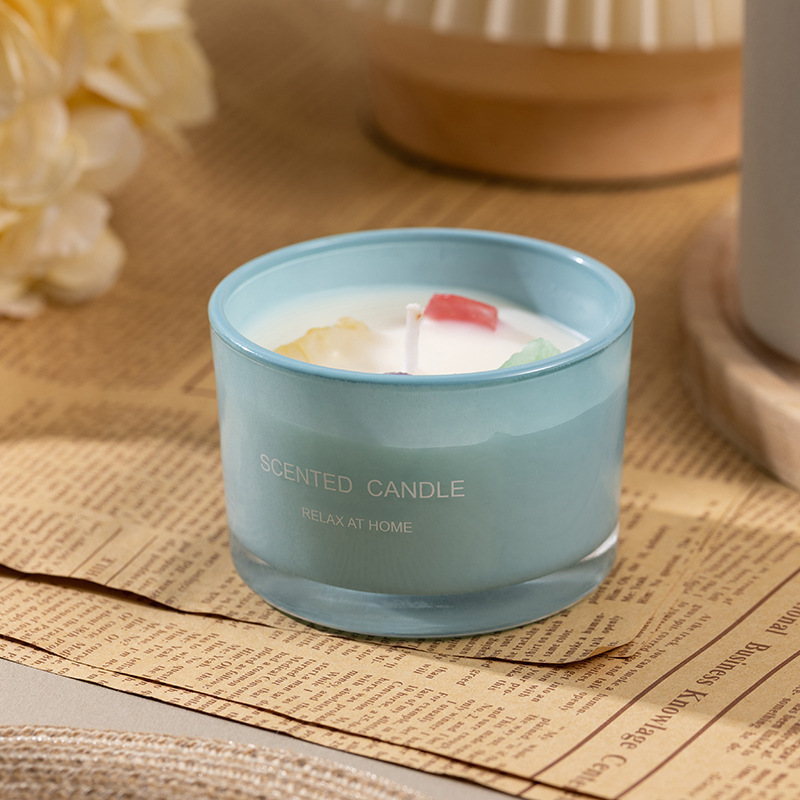
The typical format list is short and practical: mini reed diffusers between 30 ml and 100 ml, solid fragrance balms and wax tins, scented sachets for suitcases and wardrobes, hanging car diffusers, small travel candles in tins or cement cups, and aroma beads. What they share is a small footprint, a sealed or leak-resistant package, and a scent profile that reads clearly in a confined space.
The differences from standard home fragrance are mostly engineering differences. A home reed diffuser in a 200 ml bottle sits on a shelf and never moves again; a 50 ml travel version is thrown into a bag, laid on its side in a delivery van, and stacked eight cartons high in a humid warehouse. Fill volume tolerance, cap torque, neck finish, glass weight and secondary packaging all become order-critical specifications rather than details.
There is also a regulatory layer that home fragrance rarely faces. Alcohol-based sprays travel under transport classification rules and require flash point documentation, while non-liquid formats largely avoid those conversations. For a wholesaler or a hotel group assembling a kit, that single difference can simplify an entire purchasing file.
The Short Answer: Which Formats Ship Best
If a buyer needs one recommendation before reading anything else: build a travel fragrance assortment around a sealed mini reed diffuser as the volume driver, add a solid fragrance or balm as the zero-leak risk absorber, and treat sachets and car diffusers as attachment SKUs that lift basket value. Travel candles belong in the mix only when the container is genuinely gift-worthy, because candle glass adds weight, cost and breakage risk to a product that is supposed to be portable.
| Format | Typical size or fill | Leak risk | Working scent life | Best-fit channel | Spec to nail first |
|---|---|---|---|---|---|
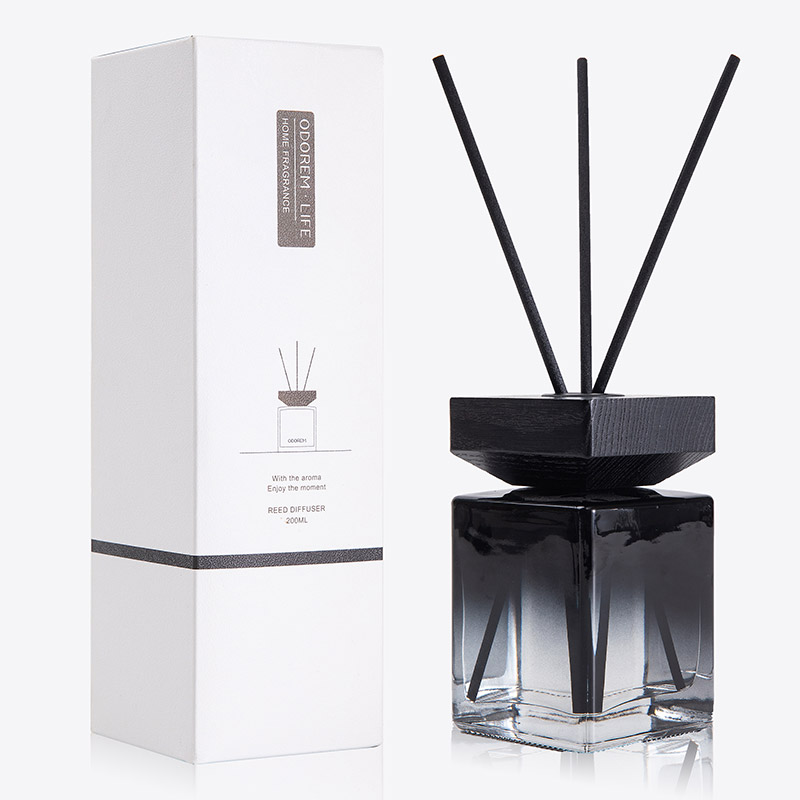
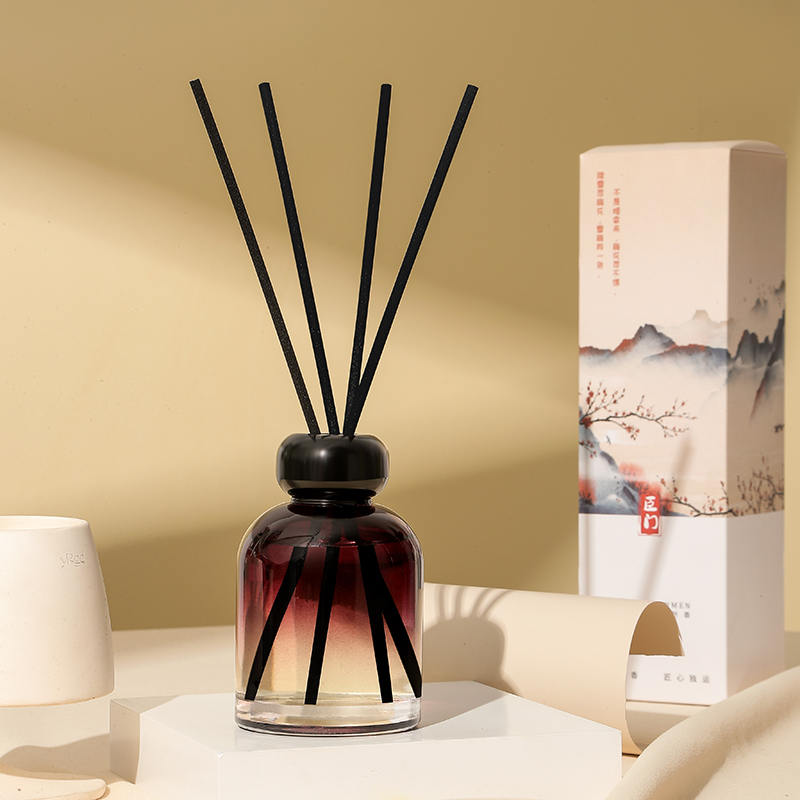
| Mini reed diffuser | 30 ml to 100 ml | Moderate to high | 4 to 8 weeks | Travel retail, hotel, home | Leak test standard and cap torque |
| Solid fragrance or balm | 10 g to 30 g | Very low | 3 to 8 weeks | Airport retail, gift sets | Wax melting point and load |
| Scented sachet | 5 g to 15 g | Very low | 4 to 10 weeks | Luggage, wardrobe, car | Substrate and sealing of the pouch |
| Hanging car diffuser | 4 ml to 8 ml | Low to moderate | 3 to 6 weeks | Car accessories, fuel retail | String strength and heat stability |
| Travel candle | 40 g to 80 g | Very low | 20 to 40 burning hours | Gift, boutique hotel | Wick centring and glass thickness |
| Aroma beads | 30 g to 60 g | Low | 6 to 12 weeks | Home, car, locker | Bead hardness and dust control |
Read the table as a risk map rather than a ranking of quality. Leak risk is the column that costs money, because a diffuser failure contaminates the products around it and converts a partial problem into a full carton loss. A buyer who writes a leak test into the specification buys insurance for a few cents per unit; a buyer who does not writes a claim for several thousand dollars later.
Scent life matters most in channels where the product sits unused for weeks before the customer opens it. A sachet on a luggage tag might be opened three months after delivery, so its substrate and pouch sealing determine whether the first impression survives warehouse time. A reed diffuser placed into service the same week a guest checks in can be specified much more tightly against immediate performance.
Format mix also changes the shipping math. Liquid formats carry fill weight, heavier glass and leakage-prevention packaging; solid formats ship lighter and can often use smaller mailer cartons. On a high-volume program the difference in landed cost is measurable even when the unit price is identical.
Travel Reed Diffusers: Where Most Programs Start
The reed diffuser remains the default travel fragrance format because it needs no flame, no electricity and no attention. Fragrance oil rises through the reed bundle by capillary action, evaporates from the exposed surface, and is carried into the room by natural air movement. Nothing about that mechanism changes when the bottle shrinks from 200 ml to 50 ml, but everything about the engineering does.
A smaller bottle has a smaller oil surface area, which reduces evaporation rate. That is why travel versions usually compensate with a higher fragrance oil concentration, a wider neck opening, or more reeds per bottle. The relationship between reed count, reed diameter, exposed length and throw is the single most misunderstood part of the format, and it is covered in depth in our internal note on how reed diffuser components work together to distribute scent. Buyers who understand that interaction can specify performance instead of hoping for it.
Fill Volume, Bottle Geometry and Tolerance
Fill volume should always be written with a tolerance. A practical industry standard is plus or minus 3 percent on declared fill, checked at the filling line by weight rather than by eye. A "30 ml" travel diffuser that arrives at 27.5 ml is not a rounding issue; in some markets it is a labelling compliance issue.
Bottle geometry decides both cost and stability. A squat 50 ml bottle with a wide base resists tipping inside a suitcase, while a tall slim bottle looks elegant in a gift set but needs a tighter secondary insert. Glass weight is often specified far above what structural safety requires, and trimming 15 to 20 grams per bottle across 50,000 units is a meaningful freight saving.
Neck finish and cap performance deserve the same attention. The cap must hold under vibration and temperature swings, and a torque specification with a tested range is far more useful to a factory than the phrase "tight seal". Headspace also matters: overfilling to the shoulder of the neck increases the chance of oil reaching the cap thread during transport.
Leak Testing and Transport Simulation Before Shipment
Serious travel fragrance suppliers test containment rather than assume it. A workable protocol includes a 48 to 72 hour inverted leak test at 40 degrees Celsius, a simulated transit vibration test, a carton drop test from a defined height on a defined corner, and a compression check on the finished export carton. Each of these tests answers a question that a container crossing the equator will eventually ask.
Heat is the most common cause of failure. Oil expands, pressure builds behind the cap, and a seal that passed room-temperature inspection begins to weep. Testing at elevated temperature is not optional for products shipping in summer months, and it is one of the reasons experienced buyers avoid extremely thin-walled glass in this category.
Solid Fragrance and Other Leak-Proof Formats
Solid fragrance solves the problem that liquid formats cannot fully remove. A balm, a wax tin or a pressed block contains fragrance oil dispersed in a solid carrier, so there is no free liquid to leak, no cap to seal against pressure, and no transport classification to manage. For travel retail buyers who have been burned by a leaking shipment, that is worth a small premium.
The trade-off is performance. A solid format releases scent more slowly and covers a smaller radius than a reed diffuser of comparable oil weight. It is best suited to close-range use: a drawer, a glove compartment, a carry-on, a bedside table. Scent life depends heavily on the carrier, with harder waxes and denser balm bases giving longer but softer release.
Temperature stability is the critical specification. A wax that softens at 45 degrees Celsius will slump in a parked car or a warehouse in July, so higher melting point carriers are usually specified for travel and automotive applications. Fragrance load typically runs higher in solid formats than in candles to compensate for the slower release rate, and the carrier must be tested with that load to confirm the product does not sweat oil at the surface.
Aroma beads and scented sachets sit in the same low-risk family, though they need different controls. Beads must resist dusting and clumping, while sachets depend on the substrate and the sealing of the pouch. Both are excellent attachment items in a travel set because they add perceived value without adding leak exposure.
Hotel and Hospitality Travel Fragrance Programs
Hotel buying works on a completely different rhythm from retail buying. A single property may consume 300 to 600 fragrance units per year, replaced on a housekeeping schedule rather than by customer choice, and a group with 200 properties turns that into a repeating annual program with strict consistency requirements. The purchasing manager is not asking which scent is most exciting; they are asking whether room 412 in one city will smell recognisably like room 412 in another.
That requirement drives three decisions. First, batch coding and retained reference samples, so that each production run can be compared against an approved standard. Second, packaging that reads neutral and premium rather than promotional, typically a black or frosted bottle with restrained decoration. Third, a fill volume that matches the replacement cycle, since a 30 ml bottle in a small bathroom may need replacing every three to four weeks while a 100 ml bottle can stretch to eight.
Black bottle designs with dried flower decoration are a common hospitality choice because they conceal the oil level, look intentional in a bathroom, and remain legible in a lighting scheme that is dimmer than a retail shelf. Hospitality programs also tend to prefer non-flame formats for insurance and guest-safety reasons, which pushes the specification toward reed diffusers, sachets and solid formats.
Practical details matter as much as aesthetics in this channel. A hotel does not want a product that requires assembly, a bottle that leaves a ring on a marble counter, or a fragrance so strong that it generates complaints from guests who are sensitive to scent. Moderate intensity with a clean top note is usually safer than a heavy, sweet profile.
How Travel Fragrance Demand Splits Across Formats
Before a buyer commits to a format mix, it helps to see how travel fragrance demand actually clusters in practice. The distribution below summarises the format split across travel-oriented ODM briefs that reach a working home fragrance factory in a typical season. It is an illustrative planning model built from project intake rather than a published market study, so it should be read as a starting assumption rather than a forecast. The pattern is consistent from season to season: liquid formats absorb most of the volume, while non-liquid formats carry the channels where handling risk is highest. Used carefully, this split can shorten the assortment debate considerably.
The first trend the chart shows is concentration. Mini reed diffusers account for close to half of all travel-oriented briefs, which means the format that carries the most leak exposure is also the format that carries the most revenue. A buyer cannot avoid the risk by dropping the format; they can only manage it with better specifications and testing.
The second trend is that the non-liquid share is far larger than it was a decade ago. Solid fragrance, sachets and car diffusers together represent well over a third of intake, and that share keeps growing in channels where returns and claims are expensive. Scented sachets in particular have expanded beyond wardrobe use into luggage, gym bags and rental apartment kits.
The third trend concerns the candle. Travel candles remain the smallest slice of the mix even though they photograph well, because glass weight, breakage risk and shipping cost work against portability. Where they do appear, they are usually positioned as gift or boutique items rather than as the volume driver of a travel program.
The fourth trend is channel-specific rather than global. Airport retail tends to favour compact, giftable formats with strong shelf presence, while hotel procurement leans toward functional formats that housekeeping can replace quickly. Car accessory channels pull the hanging diffuser share upward, and home fragrance retail pulls it back down.
The fifth trend is that briefs increasingly arrive as mixed-format programs rather than single-SKU orders. A buyer who once ordered only one diffuser size now requests three sizes plus a balm and a sachet, all sharing one scent direction so the set reads as a family on shelf. That shift changes factory planning significantly, because moulds, filling lines and packaging materials must be coordinated across formats instead of managed one at a time.
For planning purposes, a reasonable starting assortment would allocate roughly 40 percent of volume to a mini reed diffuser, 25 percent to a solid or balm format, 15 percent to sachets, 10 percent to a car format and the remainder to a seasonal candle or gift item. Adjust those weights once real sell-through data arrives, because the chart describes how briefs arrive, not how consumers ultimately respond.
Specification Checklist for Travel Fragrance Buyers
A specification that omits performance data forces the factory to guess, and guessing is where revision rounds and late shipments come from. The list below is deliberately practical; every item on it exists because its absence has caused a problem in a real production run.
- Declared fill volume with a stated tolerance, checked by weight at the filling line.
- Fragrance oil load as a percentage of total weight, not as a vague descriptor such as "strong".
- Reed count, reed diameter, reed length and exposed height above the bottle neck.
- Cap torque range with the test method named, plus the closure type and material.
- Leak test protocol including inversion duration, temperature and pass criteria.
- Accelerated stability test at elevated temperature with an agreed observation window.
- Decoration durability requirement, especially for printed or gradient glass.
- Export carton compression strength and drop test height.
- Barcode, warning text and language requirements by destination market.
- Minimum order quantity per format, plus lead time from artwork approval to shipment.
Compliance and Documentation
Fragrance documentation is where inexperienced importers get caught. A competent manufacturer should be able to supply IFRA conformance statements for the fragrance compound, safety data sheets, allergen declarations for labelling, and REACH or equivalent statements for the destination market. Where alcohol-based sprays are involved, flash point documentation and transport classification papers are also required.
Factory-side documentation matters just as much for retail buyers. BSCI and WCA audit reports give a purchasing team evidence of social compliance and workplace conditions, which is often a hard gate before a contract is signed. Ask for the most recent report rather than a certificate from several years ago, and confirm the audit covers the actual production site that will run your order.
Choosing Scents That Work in Small, Enclosed Spaces
Scent behaves differently in a hotel bathroom or a car cabin than in a large living room. Air exchange is lower, the space is smaller, and the same fragrance load that feels elegant at home can feel aggressive at close range. As a rule, travel applications should be specified at lower intensity with a cleaner structure than an equivalent home product.
Fresh profiles dominate travel for a reason. Citrus, green tea, white tea, aquatic and light floral directions read as clean and neutral, which suits hospitality, luggage and car use. Warm woody or amber bases are popular in premium hotel programs because they signal comfort without sweetness, and they tend to hold up better over a longer replacement cycle. Heavy gourmand directions perform inconsistently in small spaces and should be tested with real users before a large order.
Fragrance load also interacts with the container. The same oil at the same percentage will smell stronger from a wide-necked bottle with six reeds than from a narrow-necked bottle with three. That is why scent approval should always be done on the finished format rather than from a scent strip, ideally after the sample has stood for 24 hours in a room-sized space.
Regulatory limits cannot be negotiated away for the sake of intensity. IFRA restrictions on certain materials apply regardless of how the product is used, and allergen labelling requirements vary by market. A supplier that proposes an out-of-specification load to hit a scent target is creating a compliance problem that will surface at customs or in a customer complaint.
From Brief to Container: How an ODM Program Runs
Travel fragrance programs move faster than most buyers expect, provided the brief is complete. A typical OEM or ODM timeline from confirmed brief to shipped container runs 35 to 60 days depending on format complexity, decoration and packaging sourcing. The stages below reflect how a working manufacturer sequences the work.
- Brief review and format recommendation, including fill volume options and a rough cost band.
- Fragrance direction selection from an existing library, followed by sample preparation.
- Sample approval on the finished format, with scent evaluated after a 24 hour rest period.
- Bottle, cap, reed and packaging sourcing with incoming material inspection.
- Artwork, label and carton confirmation, including destination market text.
- Pilot run for new moulds or new decoration techniques, with retained samples.
- Mass production across filling, capping, wick assembly and packing lines.
- In-process inspection plus final random inspection before carton sealing.
- Carton drop and compression checks, then container loading with photo records.
The step that most often delays a schedule is artwork, not production. Language versions, warning icons and barcode placement on a small bottle label leave very little room for late changes, and each revision pushes the label print date. Buyers who lock packaging artwork before the pilot run typically ship two to three weeks earlier than those who treat it as a final detail.
Sampling is the second common bottleneck. Fragrance approval based on a scent strip rarely survives contact with the finished format, so build at least one revision round into the plan. A supplier with in-house development capability can usually turn a modification around in days; one that outsources blending adds a week or more to every iteration.
Quality Control, Certifications and Factory Reality
Quality in fragrance manufacturing is mostly a process question. The failure modes are predictable: a cap that was torqued inconsistently, a bottle that was filled past the shoulder, a reed bundle that was short by two sticks, a carton that was stacked beyond its compression limit. Each of these is prevented by a checkpoint rather than by goodwill.
A workable control chain covers incoming fragrance oil and glass inspection, filling weight checks at defined intervals, torque verification on the capping line, 100 percent visual inspection of filled units, and random final inspection on sealed cartons. Retained samples from each batch allow a buyer to verify consistency months after delivery, which is essential for multi-property hotel programs.
Certification provides the compliance layer that sits around the process. BSCI and WCA audits are the two most frequently requested by European and American retail buyers, and they cover social responsibility and workplace conditions rather than product quality alone. Product-side documentation such as IFRA statements and safety data sheets complements the audit reports but does not replace them.
Buyers should also verify the physical reality behind a quotation. Factory floor area, number of production lines, in-house mould capability and the presence of a dedicated inspection area all affect whether a supplier can repeat a good sample at scale. A 6,500 square meter facility with five lines is a reasonable benchmark for a mid-sized home fragrance manufacturer serving international retail programs.
Cost Drivers in Travel Fragrance Manufacturing
Unit price in this category is built from a small number of visible and invisible elements. Fragrance oil load and oil grade are usually the largest single variable, followed by glass weight and decoration, then reeds, caps and secondary packaging. Labour is comparatively small at volume, which is why small-quantity orders rarely achieve attractive pricing no matter how simple the format.
Decoration is where budgets quietly expand. Frosting, gradient spraying, screen printing, foiling and dried flower inserts each add a process step and a defect opportunity. A buyer choosing between a plain bottle and a decorated bottle is not only choosing a look; they are choosing a yield rate and a longer production schedule.
Order quantity affects cost through material minimums. Glass moulds, custom caps, printed labels and custom cartons all carry minimum order quantities that are independent of the fragrance fill, so a program that mixes three formats at low volume per format will pay more per unit than one that concentrates volume into fewer formats.
Logistics should be costed before the format is finalised. Reed diffusers ship with liquid weight and need protective inserts, while solid formats and sachets pack more densely. On long ocean routes the difference in container utilisation can outweigh a seemingly higher unit price on the non-liquid option.
Explore Travel Fragrance Manufacturing Resources
If the next step is sourcing rather than theory, these two pages are the most useful starting points on this site. The first is a development note on reed diffuser construction and scent distribution; the second is a current travel-friendly product page showing how a 120 ml fire-free diffuser is specified for home and short-stay use.
Both pages are written for buyers and product developers rather than for consumers, so the specifications, materials and usage assumptions are stated directly. Use them alongside a written brief when requesting a quotation, and the first sample round will be considerably more accurate.
Frequently Asked Questions About Travel Fragrances
What exactly are travel fragrances?
Travel fragrances are compact, portable fragrance products designed for transient spaces such as hotel rooms, cars, suitcases and rental apartments. The category includes mini reed diffusers, solid fragrance balms, scented sachets, hanging car diffusers, small travel candles and aroma beads. The defining characteristics are a small format, a sealed or leak-resistant package, and a scent profile that performs well at close range.
What is the smallest fill volume that still performs well?
For a reed diffuser, 30 ml is generally the practical floor for a bathroom-sized room, and it typically delivers three to four weeks of usable scent. Below that volume, the oil surface area becomes too small to sustain a noticeable throw unless the fragrance load is raised and the neck geometry is widened, which increases cost per millilitre rather than reducing it.
Can reed diffusers be shipped by air?
Yes, non-alcohol reed diffusers are commonly shipped by air. They are not classified as dangerous goods in most jurisdictions because they contain no flammable solvent, but carriers still require a safety data sheet. Alcohol-based room sprays are a different matter and require flash point documentation plus transport classification paperwork, which is one reason many travel programs avoid them.
How long do travel fragrances stay effective?
In service, a mini reed diffuser usually remains effective for four to eight weeks, a sachet for four to ten weeks, and a solid balm for three to eight weeks depending on the carrier and the size of the space. In storage before use, sealed products generally hold their performance for twelve to eighteen months when kept away from direct sunlight and sustained heat.
What minimum order quantity should a buyer expect?
Minimum order quantity depends almost entirely on whether the packaging is standard or custom. Programs using existing bottle and cap moulds can start at relatively low volumes per scent, while custom glass moulds, custom caps and printed packaging require significantly higher quantities. The most common mistake is spreading a small total order across many formats and scents, which raises unit cost on every line.
Which scent families work best in hotel rooms?
Clean, moderate fragrances perform most reliably. White tea, green tea, citrus, aquatic, linen and light woody profiles generate the fewest guest complaints, while warm amber and cedar directions support a premium positioning without sweetness. Very strong gourmand or heavily floral scents are risky in small, poorly ventilated bathrooms.
Are solid fragrances as strong as reed diffusers?
No, and they are not meant to be. A solid fragrance releases scent more slowly and covers a smaller radius, which makes it ideal for drawers, luggage, glove compartments and bedside use. In exchange it eliminates leak risk, ships by any mode without special documentation and has a very low damage rate in transit.
How do manufacturers keep scent consistent across batches?
Consistency comes from three practices: buying fragrance compound against a fixed formula from a controlled supply source, retaining an approved reference sample from the first production run, and comparing each new batch against that reference through sensory evaluation. Batch coding on the unit and the carton allows a buyer to trace any deviation back to a specific production window.
Who should a buyer contact for OEM travel fragrance production?
A manufacturer with in-house development, filling and packing capability is the right starting point, ideally one already audited to BSCI or WCA standards. Bringing a written specification covering fill volume, tolerance, scent load, leak test and packaging requirements will shorten the sampling cycle considerably compared with a brief that describes only the desired look and smell.
Travel fragrances reward buyers who think about the journey a product takes before it ever reaches a customer. The format determines whether the shipment arrives intact, the fill tolerance determines whether the label claim survives inspection, the scent profile determines whether the guest or shopper wants a second unit, and the documentation determines whether the container clears customs without a delay.
None of those four things requires a complicated purchasing process. They require a written brief, a factory that tests what it ships, and a format mix that balances volume against risk. A reed diffuser for reach, a solid or sachet format for safety, and a consistent scent standard across every batch will carry most travel programs through a full season without a claim.



 INTERACT WITH US
- Phone:+86-15888548612
- Tel:+86-0574-88408268
- E-mail:[email protected]
- Address:312 Kemao Road, Jishigang Town, Haishu District, Ningbo City, Zhejiang Province, China.



