
 English
 Español
 عربى
عربى
Votive Candles: Sizes, Wax Types, Burn Times, and ODM Sourcing for Global Buyers
Content
- 1 What Actually Qualifies as a Votive Candle
- 2 Why Votive Candles Must Melt Inside Their Holder
- 3 Wax Systems for Votive Production
- 4 Burn-Time Benchmarks Buyers Can Verify
- 5 Fragrance Load, Wick Sizing and Colour Control
- 6 Applications and Selection Points Across Buyer Types
- 7 Compliance, Testing and Documentation
- 8 How to Audit a Votive Candle Manufacturer
- 9 Care Instructions Worth Printing on the Label
- 10 Explore Our Candle Manufacturing Programme
- 11 FAQ About Votive Candles
- 11.1 What is the standard size of a votive candle?
- 11.2 How long do votive candles burn?
- 11.3 Do votive candles always need a holder?
- 11.4 Which wax is best for votive candles?
- 11.5 What is the minimum order quantity for a private label votive range?
- 11.6 How should votive candles be stored before use?
- 11.7 What is the difference between a votive candle and a tealight?
- 11.8 Are votive candles safe for restaurants and food service?
A hotel group in the United Kingdom once rejected a full container of votive candles because the flames drowned two hours into the burn. The candles matched the approved drawing, the fragrance passed the smell panel, and the landed cost was competitive. The problem sat in the wick: it had been sized for a freestanding 45 mm pillar candle rather than for a 45 mm votive burning inside a snug glass holder, where the whole surface liquefies within the first ninety minutes.
Votive candles are therefore easy to buy and surprisingly hard to buy well. Three numbers define the format: a diameter between 38 mm and 50 mm, a wax weight of roughly 40 g to 60 g, and a burn time of 8 to 15 hours depending on wax blend, wick family and holder fit. Anything well outside that band is usually a tealight, a pillar or a small jar candle wearing the wrong label.
For wholesale buyers, private label owners and hospitality purchasing teams, the real question is not what a votive candle is, but which manufacturer can hold those three numbers steady across 50,000 pieces, four fragrances and three colours. As an ODM and OEM candle supplier based in Ningbo, China, Ningbo Habest Home Co., Ltd. builds votive-format and small jar candle programmes for retailers, distributors and brand owners across Japan, the United States, the EU and the UK, which means the tolerances discussed below are the ones that decide whether a shipment is approved or returned.
What Actually Qualifies as a Votive Candle
The word comes from the Latin votum, a vow or offering, because these small candles were originally burned in churches in front of a shrine. The religious use shaped the engineering: a votive candle is designed to liquefy completely, which is why it must sit in a holder that contains the entire melt pool. Remove the holder and the same candle becomes a slow, uneven puddle.
Dimensionally, the mainstream commercial range sits between 38 mm and 50 mm in diameter and 40 mm to 60 mm in height, with a wax weight of roughly 40 g to 60 g. Tealights share a similar diameter but hold only 12 g to 15 g of wax, so they burn for three to five hours and are normally used in warmers or food-service settings where a short, replaceable burn is the point.
| Format | Diameter | Wax weight | Burn time | Typical use |
|---|---|---|---|---|
| Tealight | 38 mm | 12-15 g | 3-5 hours | Warmers, food service, short ambient burn |
| Votive | 38-50 mm | 40-60 g | 8-15 hours | Hotels, spas, retail multipacks, ceremonial |
| Small pillar | 50-75 mm | 100-250 g | 25-50 hours | Freestanding decor, dining tables |
| Small glass jar | 60-80 mm | 150-300 g | 30-60 hours | Gift sets, home fragrance ranges |
A second marker is the wick assembly. Votive production almost always uses a cotton or cotton-paper wick with a metal tab anchored to the base of the glass, so the wick cannot drift as the pool deepens. Buyers who receive votives with a loose, untabbed wick should expect flame height variation between pieces, and often soot on the glass rim.
Why Votive Candles Must Melt Inside Their Holder
Heat management is the whole story. A lit wick melts wax in a widening circle until the pool reaches the glass wall; the glass then reflects heat back into the wax and the pool stabilises at its full diameter. If the holder is too wide, the pool never reaches the wall, the wick sits in a narrowing well, and the candle tunnels, leaving a thick ring of unburned wax that a buyer will notice immediately on a shelf return.
For that reason, the practical clearance between candle and holder is 1 mm to 2 mm. A 40 mm votive belongs in a 42 mm to 44 mm votive glass, and the glass itself should be heat-resistant tempered or borosilicate, generally 2 mm to 3 mm thick. Thin decorative glass may pass a first burn and fail on the fifth, which is why burn tests run in cycles rather than once.
Holder design also affects fragrance release. A narrow glass concentrates heat near the wick and pushes more fragrance into the air; a wide, open bowl runs cooler and gives a softer, slower throw. When a client asks for a stronger scent in a small room, changing the holder geometry is sometimes a cheaper answer than raising the fragrance load.
Wax Systems for Votive Production
Paraffin and paraffin blends
Paraffin gives the strongest hot throw, the cleanest colour saturation and the most predictable shrinkage. It also holds its shape in transit and releases easily from moulds, which keeps unit cost down. The trade-off is the market conversation: many European and North American retail buyers now expect a plant-based claim, and paraffin-based votives are increasingly restricted to traditional, seasonal or price-driven programmes.
Soy wax and hydrogenated vegetable wax
Soy wax is hydrogenated soybean oil, and it behaves very differently. It has a lower melt point, a softer set, and a natural tendency to frost, form sinkholes and sweat fragrance in warm conditions. At 55 g per votive it performs well in a glass holder, but it demands slower cooling, controlled room temperature during pouring, and packaging that survives a summer container. Buyers should expect a wax that looks slightly matte rather than glossy.
Coconut, palm and hybrid blends
Coconut and palm blends bridge the two: better cold throw than pure soy, better plant-based positioning than paraffin, and more stable colour. They cost more per kilogram and are more sensitive to supplier origin, so a blend that passes one season may shift in texture the next. This is precisely why blended formulas should be locked in writing, with an agreed wax certificate of analysis and a retained reference sample.
| Wax system | Hot throw | Colour clarity | Shipping risk | Cost index |
|---|---|---|---|---|
| Paraffin | Strong | High | Low | Low |
| Pure soy | Moderate | Medium | Higher in summer | Medium |
| Soy-paraffin blend | Strong | High | Low | Medium |
| Coconut or palm blend | Moderate to strong | Medium to high | Medium | High |
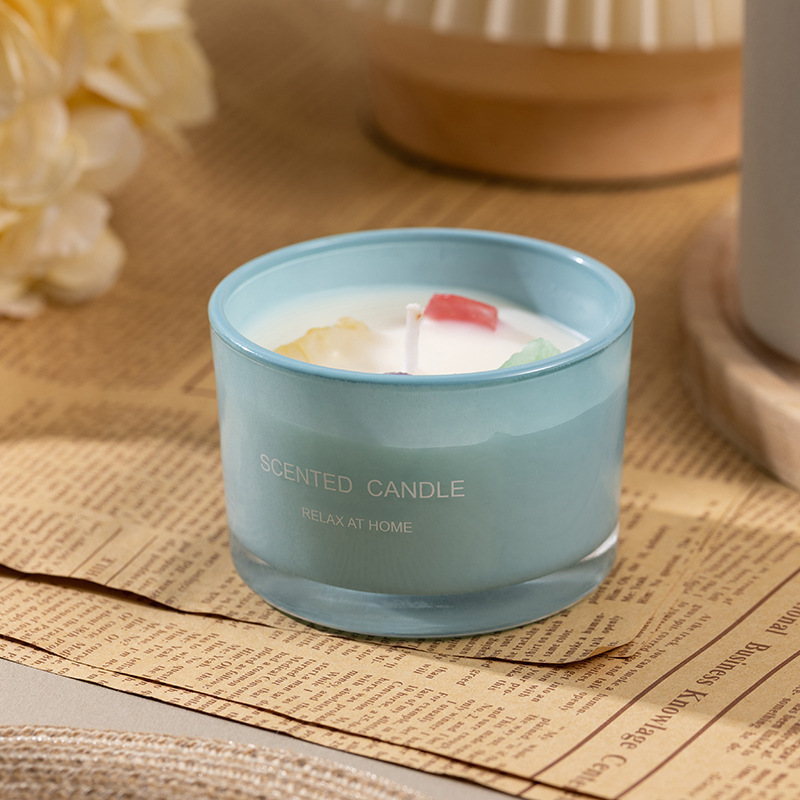
Small-format plant wax candles in glass jars are a common starting point for private label ranges, because the glass carries most of the shipping load and the wax claim can be made without reformulating a whole catalogue.
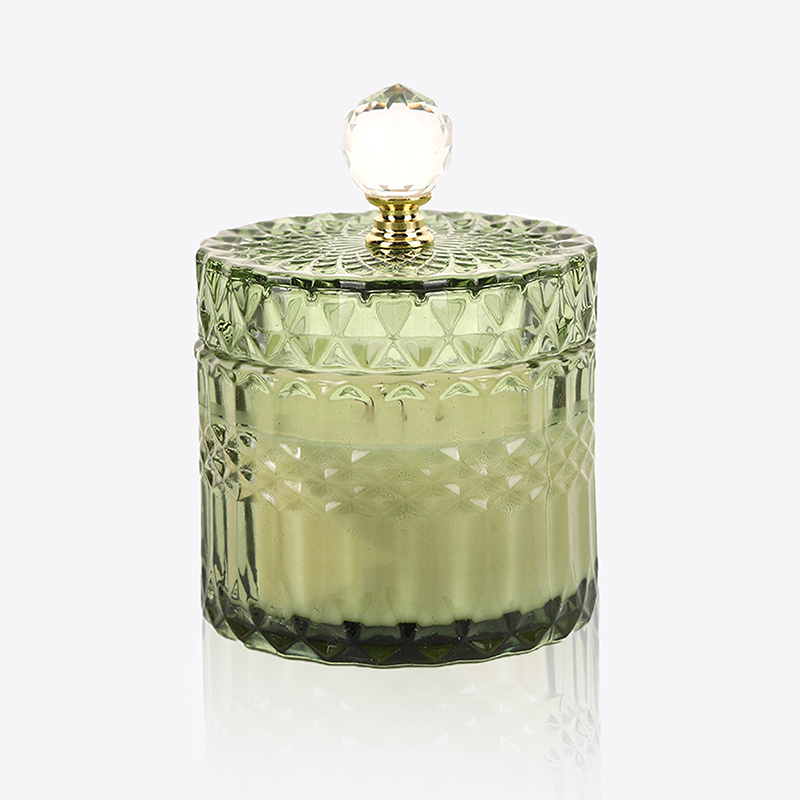 L5200B Glass jar Ogranic Eco soy wax Scented candlesOne of the biggest highlights of L5200B Glass jar Ogranic Eco soy wax Scented candles is the 100% organic soy wax they use. Soy wax is a natural plant wax that does no...View Product →
Burn-Time Benchmarks Buyers Can Verify
Burn time is the specification quoted most often in tenders, and it is also the number most easily overstated. The chart below shows the burn windows we measure in our own testing room for common small candle formats, using a 21 degrees Celsius ambient temperature, a 5 mm wick trim and three-hour burn cycles until the wick no longer supports a flame.
Typical burn time by format, tested in controlled conditions (hours)
The trend is close to linear once the wick and holder are matched to the wax mass, which makes burn time a reasonably honest indicator of how much wax a buyer is actually paying for. Where the curve breaks down is in the middle of the range: a 45 g votive can be pushed towards eleven hours with a slightly larger wick, but the trade-off appears as a taller flame, faster wax consumption and more chance of soot on the glass.
It is also worth reading these numbers as ranges rather than guarantees. Drafts, ambient temperature, wick trimming habits and the height of the holder rim all move the result by one to three hours in either direction. A supplier who publishes a single figure without stating the test conditions is telling you more about their marketing than about their laboratory.
For tenders, the safest approach is to specify a minimum burn time under defined conditions and to ask for the raw burn-test log from the production batch, not only from the golden sample. That log is what protects a buyer when a container arrives in November for a December promotion.
Fragrance Load, Wick Sizing and Colour Control
Fragrance load in a votive candle typically sits between 6 percent and 8 percent by weight, which is roughly 0.9 g to 1.3 g per 50 g candle. Below 5 percent most fragrances are barely perceptible in an average hotel bathroom; above 10 percent the wax can sweat oil, the flame can grow unstable, and the fragrance itself starts to act as a solvent on the dye.
Flash point matters more in small formats than in large jars. A fragrance with a flash point above 65 degrees Celsius behaves predictably during pouring and storage; lower flash point oils need a lower pour temperature and a shorter holding time before packaging. Buyers rarely see this detail, but it explains why one supplier can quote a 40-cent saving per piece and another cannot.
Wick selection is where experience shows. Cotton wicks dominate votive production because they burn steadily in a narrow pool; cotton-paper core wicks suit higher fragrance loads and coloured wax; zinc-core wicks are best avoided in markets with restrictions on heavy metals in consumer goods. The correct wick size is determined by the diameter of the candle in its holder, not by the candle alone.
Colour control is the quiet risk. Dye loads of 0.05 percent to 0.1 percent are normal, but vanilla-heavy fragrances react with dyes and shift towards brown over six to twelve months. If a buyer specifies an ivory candle with a vanilla scent, the specification should include an accelerated ageing test at 40 degrees Celsius for two weeks before the packaging design is signed off.
Applications and Selection Points Across Buyer Types
Hotels, spas and restaurants
Hospitality buyers usually want a burn time that matches a service cycle: six to eight hours for a dinner service, ten to twelve hours for a guest room, and a fragrance that is noticeable without competing with food. Neutral colours and unbranded glass dominate, and the deciding factors are batch consistency, low soot and a wick that self-extinguishes cleanly when the pool becomes shallow. Refill programmes are common, which means the glass must survive repeated washing at commercial temperatures.
Retail chains and discounters
Multi-unit retailers care about shelf presence, unit cost and packaging compression. Votive trios and four-packs with a printed sleeve are standard, and the specification usually fixes the outer carton dimensions to fit a planogram. Fragrance must survive eighteen months of warehousing, so cold throw at room temperature is tested before shipment rather than only at burn.
Gift, wellness and private label ranges
This segment pays for story: plant wax, reusable glass, and a fragrance name that fits a mood. Smaller volumes per scent mean the buyer needs a manufacturer flexible enough to run 3,000 pieces of one scent without charging a full-line changeover. Emotional and long-burning fragrance concepts work well here, especially in the run-up to seasonal gifting.
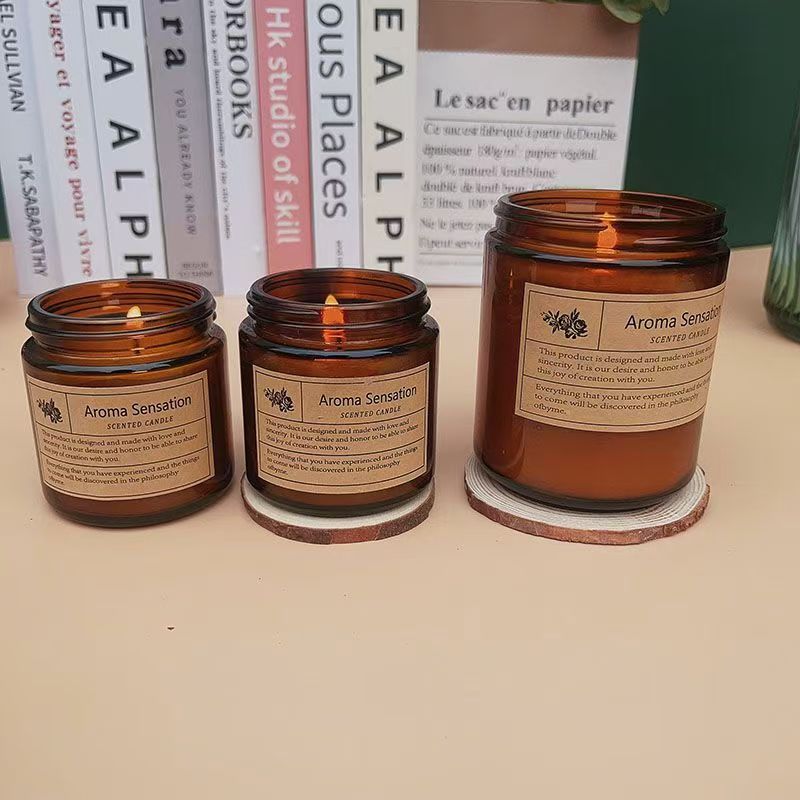 Romantic and long-lasting aromatherapy candles for home useArbitrary, customizableView Product →
Ceremonial and devotional use
Religious and memorial buyers order in large, steady volumes and prioritise a clean, odourless burn with a predictable duration. Unscented or lightly scented white votives still dominate, and the specification tends to be conservative: paraffin or a firm blend, a tabbed cotton wick and tempered glass. Substitution of wax or wick without notice is treated as a serious breach in this segment.
| Buyer type | Target burn | Wax preference | Key risk |
|---|---|---|---|
| Hotel and spa | 8-12 hours | Blend or soy | Soot and batch variation |
| Retail multipack | 8-10 hours | Paraffin or blend | Packaging fit and storage life |
| Gift and private label | 8-15 hours | Plant-based | Colour drift and small MOQ |
| Ceremonial | 6-10 hours | Paraffin | Undisclosed substitution |
Compliance, Testing and Documentation
Votive candles sold into Europe fall under EN 15493 for safety specification, EN 15494 for safety labelling and EN 15426 for sooting behaviour. In the United States, ASTM F2417 covers fire safety and ASTM F2058 covers labelling. These are not marketing documents; they define flame height limits, stability requirements and the warning text that must appear on the carton and, in some markets, on the glass itself.
Chemical documentation matters just as much. Fragrances should be supported by safety data sheets in the correct language, and REACH registration status should be confirmed for the EU, together with a declaration on substances of very high concern. For the US market, California Proposition 65 declarations are increasingly requested even when a product is not sold in California, because retail chains apply the strictest rule across their whole estate.
Factory-level audits are the other half of the file. Social compliance audits such as BSCI and WCA are standard requirements for European and North American retail programmes, and they cover working hours, wages, fire safety and chemical storage. A candle supplier without a current audit report will usually be rejected at the qualification stage regardless of product quality.
Finally, transport testing deserves a place in the specification. A 72-hour test at 50 degrees Celsius in a sealed carton reveals whether the wax will slump, the fragrance will separate, or the labels will lift before the container ever leaves the port. Buyers who skip this test typically discover the answer in a warehouse in July.
How to Audit a Votive Candle Manufacturer
A factory visit or a remote audit should follow a fixed sequence, so that a good presentation cannot hide a weak process. The list below reflects the checks that most often change a buyer's decision.
- Confirm the wax specification at the raw material store, including batch codes and certificates of analysis for the last three deliveries.
- Watch a wick setting station in operation and verify that wick size is linked to a written matrix rather than operator judgement.
- Request the fragrance dosing record for one production batch and compare it with the approved formula weight.
- Review the burn-test log for the last five batches, including flame height, soot rating and total burn duration.
- Check that samples are retained for at least twelve months and stored under the same conditions as production.
- Inspect the packaging line for glass inspection, sleeve alignment and drop-test records.
- Verify the glass supplier's heat resistance certificate and the incoming inspection criteria for chips and rim cracks.
- Ask how a colour mismatch would be handled after shipment, and what credit or replacement policy applies.
- Confirm current social compliance audit status and the date of the next scheduled audit.
- Test communication speed: request a revised quotation with a formula change and measure the response time in working days.
One practical note on lead times: a new votive programme with a custom glass, a new fragrance and printed packaging typically requires three sampling rounds and 35 to 50 days of production after approval. Compressing the sampling stage to save four weeks usually costs more than it saves, because the burn test is the only place where wick and wax problems show up before mass production.
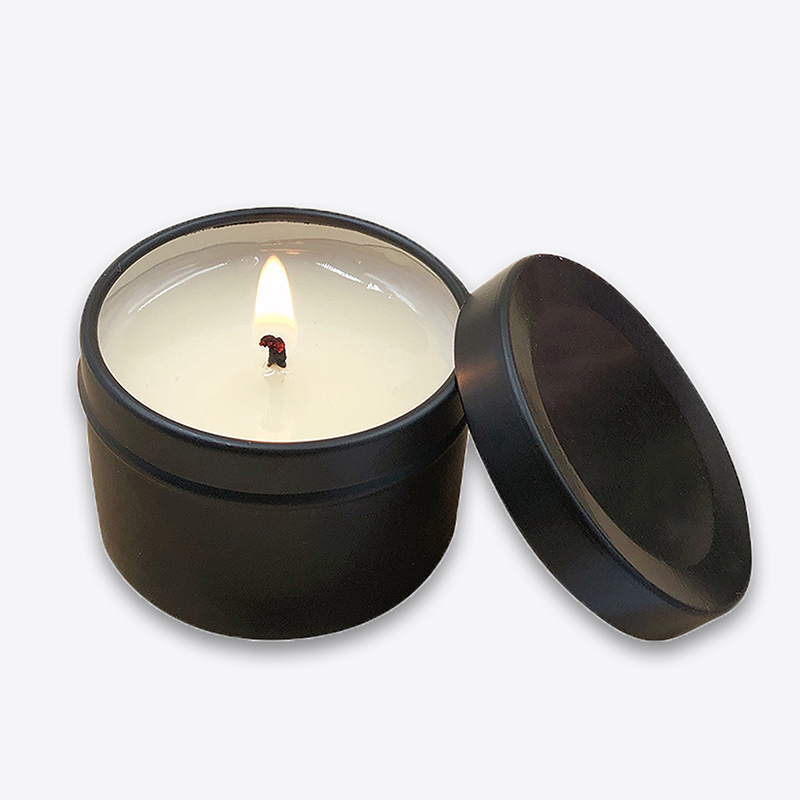 Classic Black Bottle Luxury Soy CandleThe organic soy wax used in L5070A has the characteristics of low-temperature combustion, which allows the candle to burn more evenly and completely. Soy wax produces ...View Product →
Care Instructions Worth Printing on the Label
Most candle complaints trace back to usage rather than manufacturing, and a short, clear instruction block reduces returns more effectively than a stronger fragrance. The following points cover the issues we see most often in customer feedback from European and North American retail programmes.
- Trim the wick to about 5 mm before every burn to keep flame height stable and reduce soot.
- Allow the first burn to reach the full diameter of the holder, usually two to three hours, so the pool forms evenly.
- Never burn a votive candle without a holder; the wax is designed to liquefy completely.
- Keep the candle away from draughts, curtains and open windows, since moving air causes uneven burning.
- Burn for no more than four hours at a time to prevent the glass from overheating.
- Extinguish with a snuffer or by dipping the wick rather than blowing, which avoids smoke and wax splatter.
- Store spare candles below 25 degrees Celsius and away from direct sunlight to protect colour and scent.
- Stop burning when about 10 mm of wax remains, so the wick tab does not overheat the base.
For hospitality programmes, printing these points on the inner sleeve rather than the outer carton improves compliance, because housekeeping staff usually see the sleeve and never the shipper.
Explore Our Candle Manufacturing Programme
Ningbo Habest Home Co., Ltd. is an ODM and OEM manufacturer and supplier of scented candles, small jar candles and home fragrance products, with BSCI and WCA audited facilities and five production lines in Ningbo, China. If you are building a votive or small jar candle range for retail, hospitality or private label, these pages are a useful next step.
FAQ About Votive Candles
What is the standard size of a votive candle?
A standard votive candle is 38 mm to 50 mm in diameter and 40 mm to 60 mm tall, holding roughly 40 g to 60 g of wax. Commercial programmes usually settle on a 45 mm diameter because it fits the widest range of ready-made votive glasses.
How long do votive candles burn?
Most burn for eight to fifteen hours depending on wax mass, wax blend, wick size and holder fit. A 45 g votive in a snug glass typically reaches nine to eleven hours under test conditions of about 21 degrees Celsius with a trimmed wick.
Do votive candles always need a holder?
Yes. A votive candle is formulated to liquefy completely, so it must be burned inside a tight-fitting holder with 1 mm to 2 mm clearance. Without a holder the wax spreads, the wick drowns and the candle will not reach its rated burn time.
Which wax is best for votive candles?
There is no single best answer. Paraffin gives the strongest scent throw and the most stable colour at the lowest cost, pure soy supports a plant-based claim but needs careful cooling and summer packaging, and coconut or palm blends sit between the two on performance and price.
What is the minimum order quantity for a private label votive range?
Typical MOQs run from 3,000 to 5,000 pieces per fragrance and per size, with custom glass or printed packaging pushing the figure higher. Sampling usually takes two to three rounds over two to four weeks, and production follows within 35 to 50 days of approval.
How should votive candles be stored before use?
Store them below 25 degrees Celsius, away from direct sunlight and away from strong odours that the wax can absorb. Cartons should be stacked no more than the printed limit, because compression marks on soft plant wax candles cannot be reversed.
What is the difference between a votive candle and a tealight?
Both are small and round, but a tealight holds only 12 g to 15 g of wax in a thin metal cup and burns three to five hours, while a votive holds three to four times more wax, burns two to three times longer, and is designed to be used in a glass holder.
Are votive candles safe for restaurants and food service?
Unscented or lightly scented votives in tempered glass are widely used in food service because the burn is contained and short. The key requirements are a low-soot wax blend, a tabbed wick and a glass that can be handled and washed repeatedly without cracking.
Buying votive candles well comes down to treating a small product with the same discipline as a large one. Fix the diameter, wax weight and burn time in the specification, confirm that the wick matrix is written down rather than guessed, and hold the supplier to a burn-test log from the production batch. Do that, and the container that arrives in November will behave exactly like the sample approved in June.
For buyers who want to move from specification to sampling, the fastest route is to send the intended holder, the target burn time and the fragrance brief together. Those three pieces of information usually shorten the development cycle by a full sampling round, and they remove most of the ambiguity that turns a simple candle order into a season of returns.


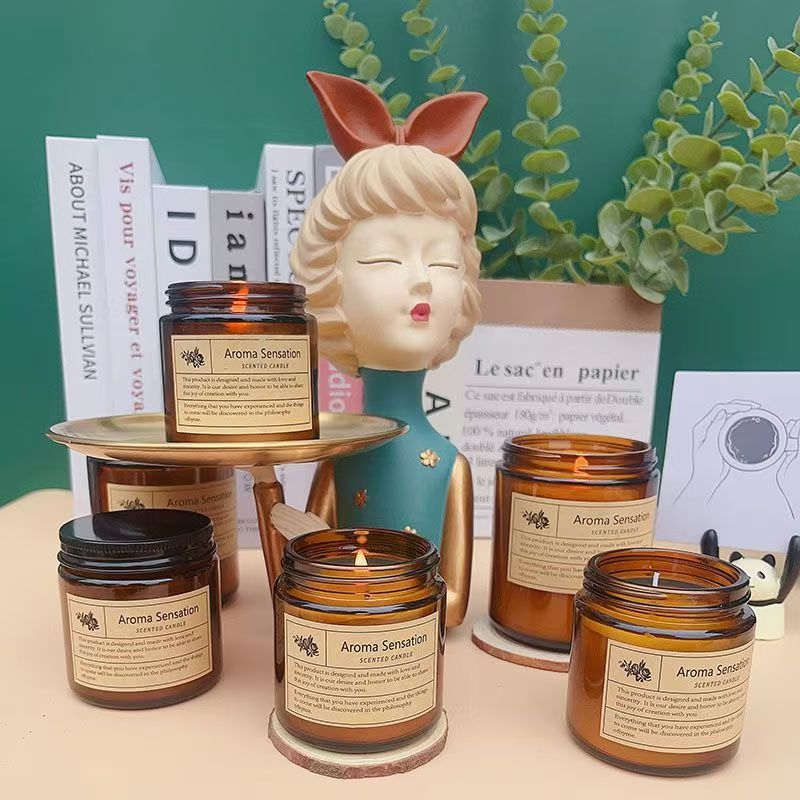
 INTERACT WITH US
- Phone:+86-15888548612
- Tel:+86-0574-88408268
- E-mail:[email protected]
- Address:312 Kemao Road, Jishigang Town, Haishu District, Ningbo City, Zhejiang Province, China.



