
 English
 Español
 عربى
عربى
Winter Scent Guide for Home Fragrance Buyers: Reed Diffusers, Candles and Sourcing
Content
- 1 What Buyers Actually Mean When They Say Winter Scent
- 2 Why Cold Air Rewrites How a Winter Scent Behaves
- 3 How Long Each Format Holds a Winter Scent
- 4 Matching the Format to the Room It Will Live In
- 5 Formulating Winter Scents for Cold, Dry Interiors
- 6 Compliance, Labelling and Transport Documentation
- 7 Sampling, Minimum Order Quantities and the Seasonal Calendar
- 8 Quality Control Checks Before a Winter Order Leaves the Factory
- 9 Retail, Hospitality and Gifting Scenarios
- 10 Frequently Asked Questions About Winter Scent
- 10.1 What is the best winter scent for a bedroom?
- 10.2 Do winter scents last longer in a reed diffuser or in a candle?
- 10.3 Why does my reed diffuser smell weaker once the heating is on?
- 10.4 Can a winter scent be made without alcohol?
- 10.5 Do winter scents have to be sweet or spicy?
- 10.6 What is the minimum order quantity for a private label winter collection?
- 10.7 How should winter home fragrance products be stored before the season?
- 10.8 Are winter scents the same as holiday or Christmas scents?
- 10.9 How long does it take to develop a custom winter fragrance?
- 11 Further Reading and Next Steps
A buyer who signs off a winter home fragrance range in September is not really choosing a smell. They are choosing how a fragrance will behave in a room that sits at 18 to 20 degrees Celsius, with the windows shut, the heating running, and relative humidity sitting somewhere between 30 and 45 percent. Get that behaviour wrong and the same oil that smelled rich and full during a warm July sampling session will read thin and flat on a January evening, and the complaints will arrive in the second half of the season rather than the first.
So here is the conclusion first: winter scent performance is decided less by the note list on the box than by three engineering decisions. Those are the format the oil is poured into, the balance between the top, heart and base notes in the formula, and the conditions used to test the product before it ships. Everything below explains why those three decisions carry so much weight, what typical values look like in production, where buyers usually lose money on seasonal programmes, and how to plan a winter scent line so that samples, compliance paperwork and bulk production all land before the season does.
A winter scent line succeeds or fails on format, note balance and test conditions, not on the story printed on the label.
What Buyers Actually Mean When They Say Winter Scent
Listen closely to a seasonal brief and the phrase "winter scent" almost never describes a single note. It describes a family of accords that share two properties: they feel warm or sweet on first contact, and they finish on a dense, slow-moving base that survives dry indoor air. Vanilla and tonka sit at one end of that spectrum, balsam fir and cedar at the other, and most commercial winter ranges are built by pairing the two.
In practice, four families cover the majority of winter home fragrance briefs we see from retailers and brand owners in Japan, the United States, the European Union and the United Kingdom. Gourmand accords lead with vanilla, caramel, tonka bean, dried fig and sometimes a light cocoa note. Warm spice accords build on cinnamon, clove, cardamom and nutmeg. Resinous woody accords lean on balsam fir, pine needle, cedarwood, sandalwood and frankincense. Smoky and leather accords use birch tar, tobacco leaf, suede and a controlled amount of smoke. A fifth group, amber and oud with soft musk, is often used as the base layer that holds the whole collection together and makes gift sets smell related to one another on a shelf.
What separates a professional winter scent from an amateur one is usually restraint in the spicy top notes and generosity in the base. Cinnamon and clove are strong, cheap to overdose and easy to identify, so over-dosing them is a common shortcut. The result is a product that smells impressive in the bottle, aggressive in a small bathroom and exhausted after three weeks. A better construction keeps the spice at a level where it reads as warmth rather than heat, and spends the budget on base materials that keep releasing for the whole season.
| Scent family | Typical winter notes | Formats that suit it | Practical note |
|---|---|---|---|
| Gourmand | Vanilla, caramel, tonka, dried fig, cocoa | Reed diffusers, scented candles, sachets | Sweet bases often read stronger in cold air; dose carefully for small rooms |
| Warm spice | Cinnamon, clove, cardamom, nutmeg, ginger | Candles, sachets, room sprays | High impact and low cost, but easy to overdose and quick to feel tiring |
| Resinous woody | Balsam fir, pine, cedar, sandalwood, incense | Reed diffusers, candles, gel beads | The most versatile family for hospitality and year-round retail listings |
| Smoky and leather | Birch, tobacco, suede, smoked wood | Candles, solid fragrance, gift sets | Strong character; better in premium or male-skewed ranges |
| Amber, oud and musk | Amber, oud, labdanum, white musk | Reed diffusers, sachets, aroma beads | Works as the collection anchor that makes several SKUs smell related |
A useful rule when building a six to ten piece winter collection is to make two gourmands, two spices, three resinous woods, one smoky statement and one amber or musk base piece. That mix gives the shelf variety without confusing the shopper, and it also spreads risk: if one family underperforms in a test market, the others still carry the range.
Winter scent is a construction, not a single note: pair a sweet or spicy opening with a resinous or musky base that keeps releasing in dry air.
Why Cold Air Rewrites How a Winter Scent Behaves
Temperature and humidity change the physics of evaporation, and that changes what the customer smells. This is the part of winter scent development that gets skipped most often, usually because sampling happens in a warm office in summer.
Cold throw and warm throw are two different products
In candles, cold throw is what you smell from an unlit candle in its container; warm throw is what the room smells like once the wax pool has formed. A candle can have an excellent cold throw and a disappointing warm throw, or the reverse. Winter programmes should be validated on warm throw in a closed room at roughly 18 to 20 degrees Celsius, because that is the condition in which the end customer will actually use it. The same logic applies to reed diffusers: the liquid has to be able to travel up the rattan and evaporate at room temperature, and a base that is too viscous will slow that process.
Heating drops humidity, and low humidity flattens perception
A heated living room in January can sit at 30 to 40 percent relative humidity, while the same room in July may reach 55 to 65 percent. Dry air carries fewer fragrance molecules to the nose per breath, and many people also report that their sense of smell feels duller when their nasal passages are dry. The practical consequence is that a formula which measured well in humid conditions can land noticeably weaker in a heated room, especially in diffusers and solid formats where diffusion depends on ambient humidity and airflow.
Closed rooms concentrate the scent and accelerate nose fatigue
Shutting a window reduces air exchange, so concentration builds up in the first hour. That sounds helpful, but it also drives olfactory fatigue: after roughly fifteen to twenty minutes in the same room, most people stop registering a scent at full strength even when the measured concentration is unchanged. Winter formats should therefore aim for steady, moderate output rather than a strong initial burst, because a burst that fades feels like a defective product to the customer.
Why winter fragrances often smell stronger in the bottle than on the shelf
Alcohol-based room sprays and high-top-note formulas evaporate fast and can read as intense in a sealed sample bag. Once they are diluted into a diffuser base or a wax pool, the top notes are the first thing to disappear. A winter scent that will be retailed in February needs a tested mid and base performance, not just a strong opening impression in a sampling meeting.
Validate every winter scent at 18 to 20 degrees Celsius in a closed room; a fragrance approved in a warm, humid office is not yet a winter fragrance.
How Long Each Format Holds a Winter Scent
Duration is the number buyers ask about first, because it drives the claim printed on the packaging and the replacement cycle a retailer plans for. The chart below shows typical continuous scent windows for the main non-flame formats under normal indoor winter conditions, based on the ranges we normally see in production sampling rather than on laboratory maximums.
The pattern is consistent across the seasons we have sampled: liquid diffusion through rattan tends to hold a fragrance longest per unit of retail price, because the oil reserves are larger and evaporation is spread over weeks rather than days. Gel beads and solid formats sit in the middle, and they are usually chosen where spill risk or freight restrictions make liquids inconvenient. Sachets have the shortest continuous window, which is why they are normally positioned for drawers, wardrobes and car interiors rather than for open rooms, and why they are often sold in multipacks so the customer replaces them once and stays satisfied.
Candles are measured differently and should never be described in days. A 200 gram soy wax candle typically delivers 35 to 45 hours of burn time, and perceived scent strength is usually highest in the first third of the jar because the fragrance load near the top of the wax is exposed first. A customer who trims the wick to about 5 millimetres, lets the first burn run long enough to melt the full surface, and avoids draughty positions will usually report a stronger winter scent than a customer who lights the candle for twenty minutes at a time and creates a tunnel down the centre.
One caution about claims: a duration figure is only meaningful together with the room size, the number of reeds or the burn habit assumed. A reed diffuser quoted at 75 days in a 15 square metre bedroom may exhaust in five weeks in a hallway with constant air movement. It is safer to publish a range, or a room-size qualifier, than a single optimistic number that generates returns later in the season.
Quote duration as a range with a room-size or usage qualifier; an unqualified day count is one of the most common sources of seasonal returns.
Matching the Format to the Room It Will Live In
Format selection is a room-by-room decision. The same winter scent oil can be excellent in a hallway diffuser and poor in a candle, because diffusion chemistry and burn chemistry are not the same problem.
Reed diffusers: the default for bedrooms, halls and hotel rooms
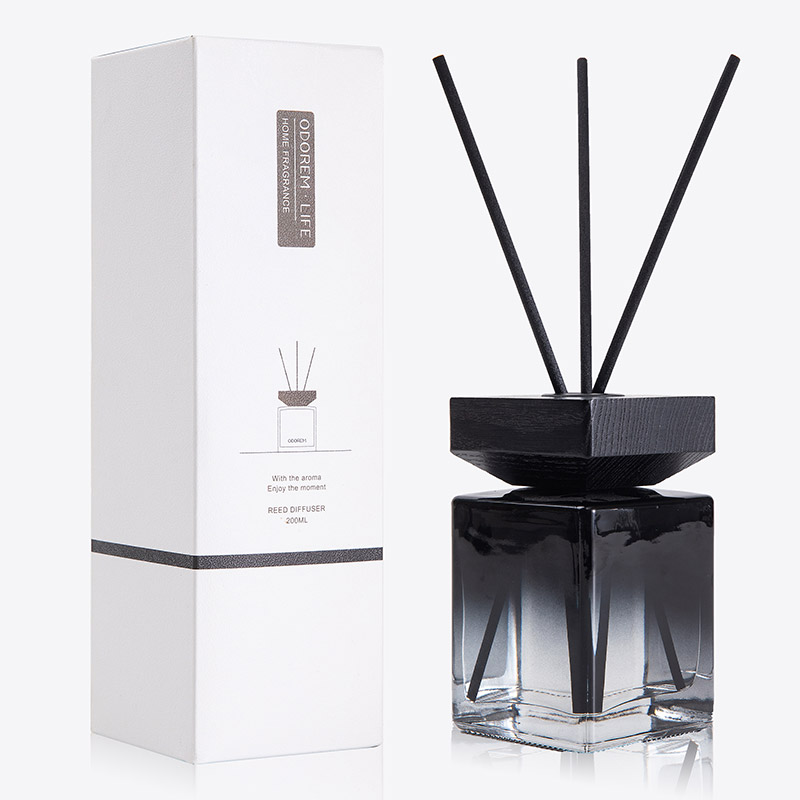
A reed diffuser is the safest way to deliver a continuous winter scent in a space where nobody is watching a flame. Typical capacities of 150 to 250 millilitres with six to eight rattan reeds will scent a bedroom or a hotel room for roughly two months, and flipping the reeds once a week refreshes the wicking surface. Placement matters more than most buyers expect: at least half a metre from a radiator or heat pump outlet, out of direct sunlight, and on a stable surface where it cannot be knocked over. Tall narrow bottles with dry flower decoration are popular for gift and hotel programmes because they photograph well without needing a burner or a plug. A typical bedroom specification in this category is a 180 ml bottle with dried flower styling and a fire-free construction, which is a natural fit for hotel and home use.
 180ml Household bedroom fireless reed diffuserPlant Extract Volatile SolutionView Product →
Scented candles: warm throw, atmosphere and gift appeal
Candles are the only common format that adds light and visible movement to a winter scent, and they carry a strong emotional pull during the darker months. Wax choice drives the experience: an organic eco soy wax candle burns cooler and cleaner than a paraffin-heavy equivalent, and it usually produces a softer, more gradual release of fragrance rather than a hard burst. A 200 gram container with a cotton or wood wick and a decorative outer vessel is the workhorse size for gift sets and seasonal endcaps. The main failure modes are a wick that is too large for the vessel, which overheats the glass, and a first burn that is too short, which tunnels the wax pool and wastes a third of the usable scent. Decorative soy wax candles with a printed or textured vessel also let a retailer build a visually coherent collection across several scent families.
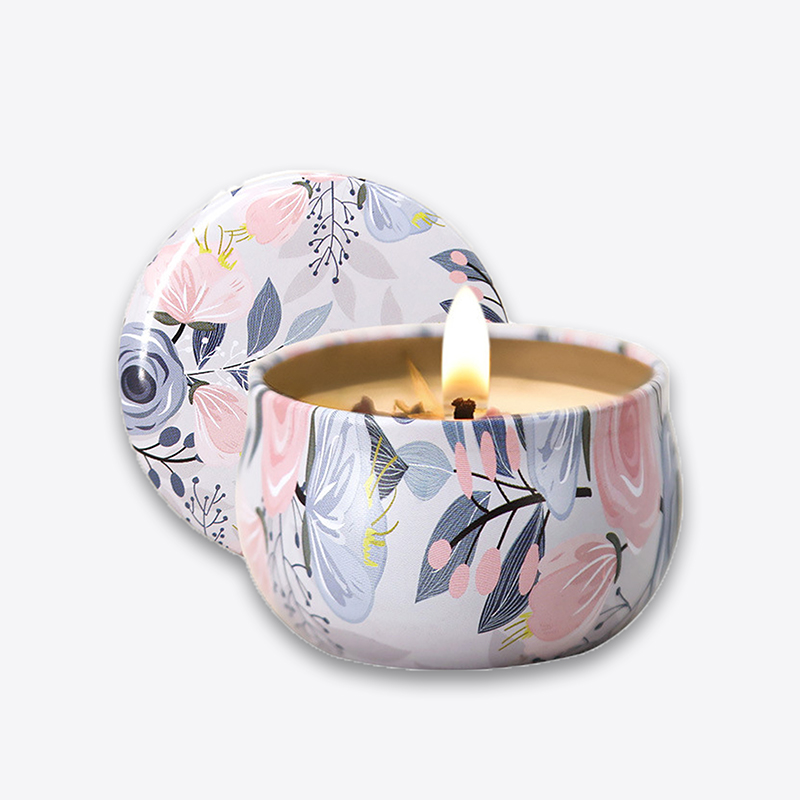 Exotic Luxury Home Scented CandleL5070B Ogranic Eco soy wax Decorative Scented candles is a highlight product in Habest's home fragrance series. The candle uses 100% natural soy wax, breaking the limi...View Product →
Solid fragrance, aroma beads and gel beads
Non-liquid formats solve specific operational problems. Aroma bead jars release scent slowly and can be topped up by shaking, which suits bathrooms and closets. Crystal gel beads hold a large amount of fragrance in a small space and are usually sold in open jars for entryways. Solid air fresheners are compact, freight-friendly and rarely leak, which makes them a reasonable add-on SKU in a winter collection even if they are not the hero product.
Scented sachets and room sprays
Sachets are the cheapest way to extend a winter scent into drawers, luggage and wardrobes, and they pair well with textile-focused gifting. Room sprays give an instant reset for kitchens, entryways and bathrooms, but alcohol-based versions bring flammability classification, transport paperwork and storage rules that a reed diffuser avoids entirely. If a programme already carries a liquid base, a spray may be more trouble than it is worth unless the retailer specifically wants one.
Choose the format from the room and the risk profile first, then build the winter scent around what that format can actually release.
Formulating Winter Scents for Cold, Dry Interiors
Once the format is fixed, the formulation work narrows to a short list of measurable parameters. These are the adjustments that most often separate a sample that passes a smell test from a product that still performs in week six of the season.
Adjust the pyramid, not just the dose
Raising the total fragrance load is the blunt instrument, and it brings side effects such as leakage, surface oil, allergic labelling thresholds and cost. The more precise move is to rebalance: reduce the sharp citrus and light aromatic top notes that vanish quickly in dry air, strengthen the heart with materials that have moderate evaporation rates, and add enough resinous or musky base to keep the fragrance present as the weeks pass. In many winter briefs the base share ends up noticeably higher than in an equivalent summer brief, which is why a winter diffuser can smell quiet on day one and still smell correct on day forty.
Carrier, viscosity and reed contact
In reed diffusers, the solvent determines how easily the fragrance climbs the rattan. Dipropylene glycol and isopropyl myristate blends are common because they carry fragrance well, evaporate slowly and are not classified as flammable in most formulations, which simplifies shipping and retail storage. Viscosity that is too high starves the reeds; too low and the product evaporates early and empties the bottle in a month. Fragrance loads in the region of 12 to 20 percent are typical for a well-behaved winter base, although the correct figure depends on the strength of the concentrate supplied by the fragrance house.
Wax, wick and burn temperature
In candles, the wax blend, the fragrance load and the wick size have to be tuned together. Soy wax holds fragrance less readily than paraffin, so a high-load soy candle can sweat oil if it is poured too warm or cooled too quickly. A wick that is one size too small produces a narrow melt pool and a weak warm throw; one size too large produces soot, a hot vessel and an unpleasant burnt note that customers notice before they notice the winter scent. Burn testing in a still room gives more reliable results than testing in a draughty workshop.
| Parameter | Typical winter range | Why it matters |
|---|---|---|
| Fragrance load in diffuser base | 12 to 20 percent | Below this the scent fades early; above it the risk of oil separation and label issues rises |
| Base note share of the formula | 35 to 50 percent | Keeps the fragrance present in dry, cold air after the top notes have gone |
| Carrier for reed diffusers | Dipropylene glycol and isopropyl myristate blends | Affects wicking speed, evaporation rate and flammability classification |
| Wax type for candles | Organic eco soy wax, soy and coconut blends | Controls burn temperature, soot level and how gradually the scent is released |
| Fragrance load in candle wax | 6 to 10 percent | Higher loads improve throw but increase sweating, sooting and cost per unit |
| Reed count and diameter | 6 to 8 reeds, 3 to 4 mm | Determines the surface area available for evaporation and therefore perceived strength |
One more point that rarely appears in briefs but matters commercially: the same winter fragrance will smell slightly different in each format. A concentrate that performs beautifully in wax may read sweeter in a glycol base, and a scent built for beads may lose its smoke character entirely in a spray. Test the concentrate in the final carrier before approving artwork, not after.
Rebalance the note pyramid and tune the carrier before you raise the fragrance load; more oil fixes the smell and breaks something else.
Compliance, Labelling and Transport Documentation
Winter collections ship in the busiest freight window of the year, and a missing certificate in November can cost a retailer the entire season. The paperwork pack should be agreed at sample stage, not after the purchase order.
- Fragrance safety documentation from the fragrance house, including IFRA conformity statements against the current standards for the product category and concentration in use.
- Safety data sheets for the finished product and for each fragrance compound, updated to the current revision date and matching the exact formula shipped.
- Classification and labelling information under the EU CLP Regulation for any product that carries a hazard classification, plus the allergen declarations required for the relevant product type and market.
- REACH statements covering SVHC content and, where requested, a declaration of the fragrance allergens present above the applicable threshold.
- Transport documentation for flammable liquids and aerosols, including flash point data and limited quantity marking where the format requires it.
- Social compliance and factory audit reports, which is where certifications such as BSCI and WCA come in and why they are usually requested before a first order rather than after.
- Market-specific requirements such as California Proposition 65 statements for the United States and market-specific chemical notifications for other regions.
Two practical warnings. First, allergen labelling thresholds differ between leave-on and rinse-off cosmetic products and air freshener categories, so a formula copied from a body care project is not automatically compliant in a home fragrance format; the classification has to be confirmed for the actual intended use. Second, alcohol-based room sprays and some highly loaded diffuser liquids can fall into flammable classifications that change warehousing, courier acceptance and retail shelf rules. A glycol-based reed diffuser with a non-flammable classification is often the simpler commercial choice for exactly this reason.
Documentation also has a second life. Retail buyers increasingly ask for the same pack again when they renew a listing, and a supplier that can reissue a consistent, version-controlled set of documents a year later saves the buyer a week of chasing.
Lock the compliance pack at sample approval; chasing IFRA, CLP and transport documents in November is how seasonal programmes miss their shipping windows.
Sampling, Minimum Order Quantities and the Seasonal Calendar
Winter home fragrance is a dated product. Everything has to be on shelf in October and November, which means the development work belongs in spring and early summer. Working backwards from a September delivery, a typical programme runs like this.
- Brief and reference samples exchanged, including scent direction, target room, format and packaging concept.
- Formula options presented with indicative costings, usually two or three directions per brief so the buyer can react quickly.
- Lab samples produced in the final carrier and container, typically a small set of pieces per direction for panel testing.
- Internal testing: cold and warm throw panels, burn tests for candles, stability and leak checks, plus review of labelling implications.
- Sample approval, artwork confirmation and purchase order with deposit.
- Bulk production, commonly 25 to 35 days depending on component availability and whether the bottle or vessel is a stock mould or a new tool.
- Final inspection, third-party inspection if the buyer requires one, then booking and consolidation for sea freight.
- Sea freight transit of roughly 20 to 35 days depending on destination port, with air freight as the fallback for late top-ups.
On minimum order quantities, the honest answer is that they depend on two variables: whether the fragrance is a stock scent or a custom development, and whether the bottle, cap and carton already exist. Stock-scent programmes with existing components can start at relatively modest volumes, which suits test launches and smaller chains. A custom winter scent built to a retailer's own brief carries a higher minimum, because the fragrance house has a compounding minimum and the factory has to run a dedicated batch. The usual way buyers reach a workable volume is to spread one approved fragrance across several containers or sizes within the same collection, rather than ordering a single SKU at an uneconomically low quantity.
Two calendar traps catch new buyers every year. The first is Chinese New Year, which falls in early February and slows production, staffing and inland transport for roughly two to three weeks; winter orders need to be completed and shipped well before that slowdown begins. The second is component lead time: glass vessels, decorated caps and printed cartons for a new design can take longer to produce than the fragrance itself, so packaging decisions should not be left until the scent has been approved.
Work backwards from the shelf date, not forwards from the brief; packaging lead time and the Chinese New Year slowdown, not the fragrance, decide whether a winter range arrives on time.
Quality Control Checks Before a Winter Order Leaves the Factory
Because winter products are stored and shipped in cold conditions and then opened in heated rooms, testing has to cover both ends of that range. The checks below are the ones that most often catch problems before they reach a customer.
| Check | Condition or method | What it catches |
|---|---|---|
| Cold throw panel | Unlit candle or sealed diffuser assessed at 18 to 20 degrees Celsius | Weak opening impression on arrival, before the customer even lights the product |
| Warm throw burn test | Full burn cycle in a still room with wick trimmed to about 5 mm | Tunnelling, sooting, overheating vessels and weak scent in the melt pool |
| Accelerated aging | Storage at elevated temperature for several weeks | Colour drift, formula separation and scent change during retail shelf life |
| Low temperature storage | Cold storage for 24 to 72 hours then return to room temperature | Crystallisation, cloudiness and wax cracking after winter transit |
| Leak and drop test | Filled units inverted and dropped in transport packaging | Cap seal failure, which is the most common cause of a spoiled carton |
| Wicking rate check | Reed uptake measured over several days | Reeds that starve or flood, producing either no scent or a short service life |
| Batch retention samples | Sealed units retained per production batch | Provides an evidence base if a customer reports a problem months later |
The value of these checks is not the pass and fail sheet itself, it is the trend data. A factory that records wicking rates and burn results across batches can tell a buyer in advance that a particular fragrance concentrate is running slightly heavier than last season, which gives the buyer time to adjust the claim on the packaging rather than react to returns.
Retention samples deserve a specific mention for winter ranges. Because these products are often stored in a warehouse from September to December before being opened, keeping a sealed reference unit from each batch makes it possible to distinguish a genuine production fault from a storage or handling issue at the retailer's end.
Test at both temperature extremes and keep retention samples; most winter complaints are settled by evidence, not by opinion.
Retail, Hospitality and Gifting Scenarios
Different channels want different things from the same winter scent, and the format mix usually follows the channel rather than the fragrance.
Chain retail and discount formats
High-volume retailers need predictable costs, consistent quality across repeat orders and packaging that survives dense stacking. Stock-scent winter programmes with printed cartons and known container moulds tend to win here, and the supplier relationship is judged on delivery reliability as much as on the fragrance. A manufacturer that also acts as a wholesaler on standard components, with social compliance audits already in place, removes a layer of risk for buyers who do not want to manage a first-time factory.
Hotel and serviced apartment programmes
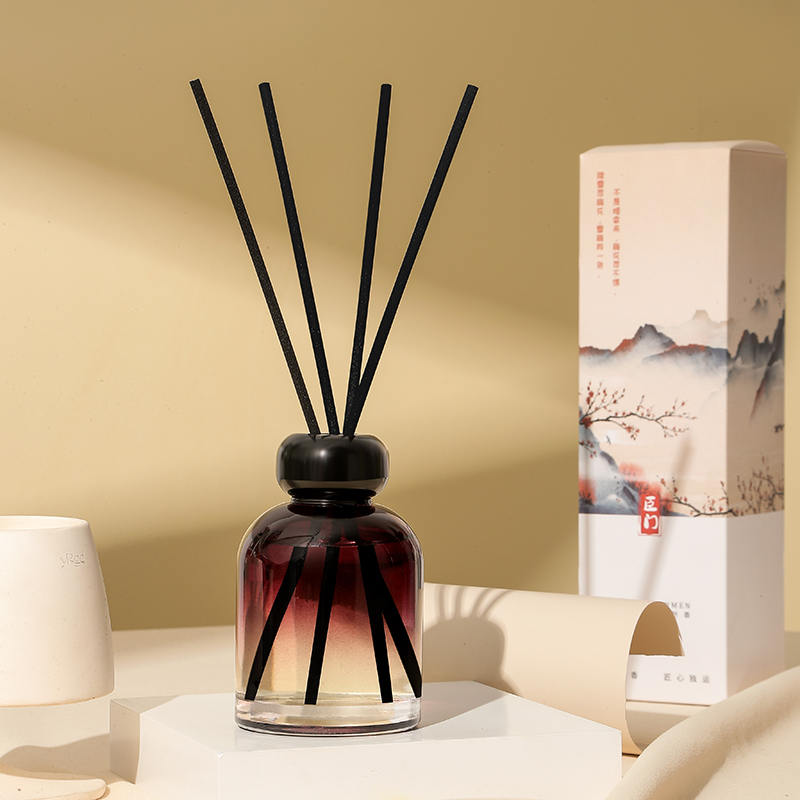
Hospitality buyers usually choose flame-free formats for two reasons: fire risk and housekeeping simplicity. A reed diffuser in a decorative bottle can be placed in corridors, lobbies and guest bathrooms, replaced on a fixed cycle, and restocked without any staff training. Bottles with dried flower decoration and a dark glass finish suit premium interiors, and the scent itself is often a resinous woody or amber family that works across a wide range of guest preferences.
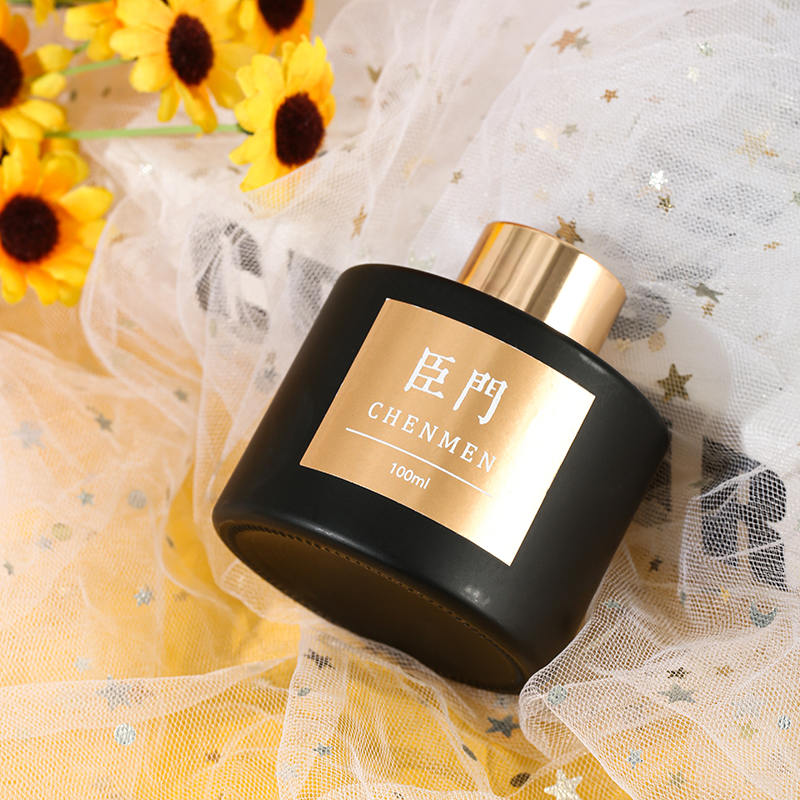 Black bottle dried flower hotel no fire reed diffuserApproximately 2 monthsView Product →
Gift sets and subscription boxes
Winter gifting rewards presentation and scent coherence over novelty. A three-piece set built around one amber or musk accord, for example a candle, a small diffuser and a sachet, reads as a designed collection rather than three unrelated products, and it usually achieves a better margin per carton than the same items sold separately. Subscription boxes prefer two-reed or small-bottle formats that fit a narrow mailer and survive automated handling.
What buyers should specify in the brief
- Target room size and the format's expected replacement cycle.
- Whether the scent is a stock accord, an adaptation or a fully custom development.
- Container volume, reed count, wick type and wax specification.
- Claim language and whether a duration range or room-size qualifier is required.
- Compliance pack, audit reports and inspection requirements at the sample stage.
- Shelf date, shipping mode and destination port, agreed before production booking.
Match the format to the channel and specify claims, compliance and shelf date in the brief; those three items cause more delays than the fragrance itself.
Frequently Asked Questions About Winter Scent
What is the best winter scent for a bedroom?
Soft resinous and amber accords generally work best, because they stay present without demanding attention during sleep. A balsam fir or cedar base with a light vanilla heart is a common and reliable choice. Very strong spice or smoke accords tend to feel heavy in a small room, especially when the door is closed and the heating is on.
Do winter scents last longer in a reed diffuser or in a candle?
They are measured differently. A 150 ml reed diffuser with six reeds typically releases scent for around two months of continuous use, while a 200 gram candle delivers about 35 to 45 hours of burn time. In terms of cost per scented hour, the diffuser usually wins; in terms of intensity and atmosphere, the candle usually feels stronger while it is lit.
Why does my reed diffuser smell weaker once the heating is on?
Heated indoor air is drier, and lower humidity carries fewer fragrance molecules per breath. At the same time, warmer air near a radiator can accelerate evaporation at the top of the bottle and shorten the product's life. Moving the diffuser away from heat sources and flipping the reeds weekly is usually enough to restore perceived strength.
Can a winter scent be made without alcohol?
Yes. Glycol and isopropyl myristate based carriers are widely used in reed diffusers and do not carry the same flammability classification as an alcohol-based liquid, which simplifies warehousing, courier acceptance and retail shelf rules. Alcohol remains common in room sprays because it evaporates quickly and gives an instant burst.
Do winter scents have to be sweet or spicy?
No. Resinous woody and smoky leather accords are equally at home in winter and often perform better in larger spaces, where sweetness can become cloying. Many collections include both and let the shelf position, rather than the season label, do the sorting for the customer.
What is the minimum order quantity for a private label winter collection?
It depends on whether the fragrance is stock or fully custom, and whether the bottle, cap and carton already exist. Stock-scent programmes with existing components can start lower, while a custom winter scent typically requires a larger run because of compounding minimums at the fragrance house. Spreading one approved fragrance across several containers within a collection is the usual way buyers reach an efficient volume.
How should winter home fragrance products be stored before the season?
Keep them out of direct sunlight, away from heat sources and ideally below 25 degrees Celsius, with cartons sealed until dispatch. Extremes of cold are less damaging than repeated temperature swings, but a diffuser liquid that has been stored below freezing should be allowed to return to room temperature slowly and inspected for cloudiness before it is sold.
Are winter scents the same as holiday or Christmas scents?
They overlap but are not identical. Holiday scents lean into pine, spice and sweet bakery accords and are tied to a short selling window. General winter scents use warmer, softer profiles such as amber, vanilla, balsam and musk, which can be sold from October through February without looking out of place in January.
How long does it take to develop a custom winter fragrance?
From brief to approved sample, three to six weeks is a reasonable expectation when the fragrance house has a suitable base to work from. A completely new accord, a new container tool or a new printed carton each add time, which is why winter programmes are normally briefed in spring rather than in late summer.
Most winter scent questions come down to format, storage and expectations; answering them on the packaging prevents the same questions arriving as returns.
Further Reading and Next Steps
If you are planning a winter scent collection and want to move from a brief to physical samples, two pages are worth opening next.
- New winter home fragrance arrivals ready for seasonal sampling
- How aroma ingredients shape the scent profile of a fireless reed diffuser
As a manufacturer of home fragrance and reed diffuser products based in Ningbo, we develop and produce winter scent programmes for retailers, brand owners and importers across Japan, the United States, the European Union and the United Kingdom, covering reed diffusers, scented candles, solid fragrance, aroma beads and related home fragrance items. Factory audits under BSCI and WCA are in place, and ODM and OEM development is handled from concept through to shipping documentation.
A winter scent programme is a seasonal engineering project with a fixed deadline. The fragrance has to survive cold transit, dry heated air, closed rooms and weeks of shelf storage, and it has to do so in a format that suits the room and the channel it is sold into. Buyers who define the format, the note balance and the test conditions early, and who lock compliance documents and packaging alongside the fragrance approval, consistently launch more successfully than those who treat the scent as the only decision that matters.
If there is one habit worth copying from experienced seasonal buyers, it is this: approve the winter scent at 18 to 20 degrees Celsius, in the final container, with the compliance pack already on the table. Everything else in the calendar gets easier once that step is done properly.
Approve the fragrance in its final container at winter temperatures, with documentation ready, and the rest of the season takes care of itself.


 INTERACT WITH US
- Phone:+86-15888548612
- Tel:+86-0574-88408268
- E-mail:[email protected]
- Address:312 Kemao Road, Jishigang Town, Haishu District, Ningbo City, Zhejiang Province, China.



